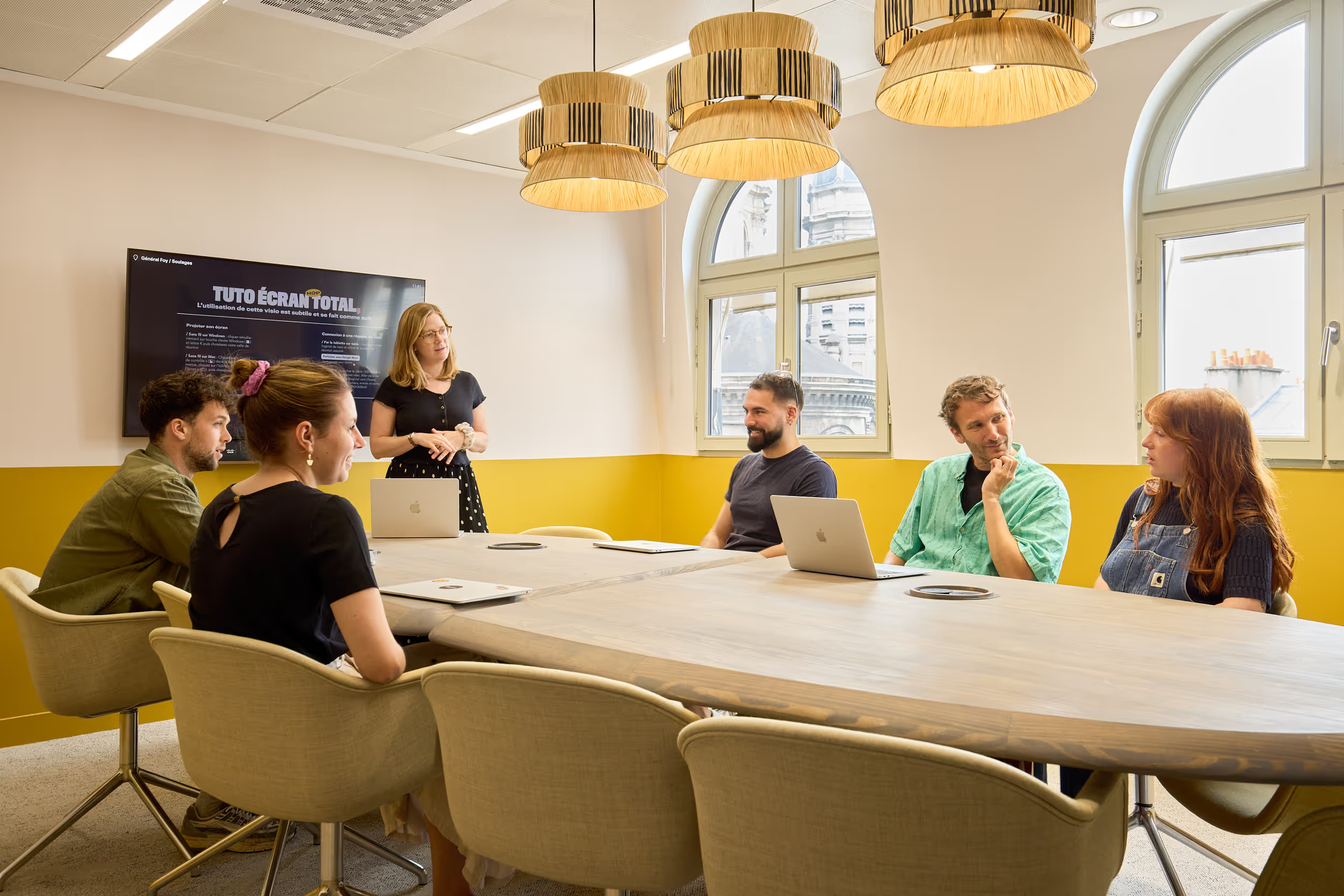


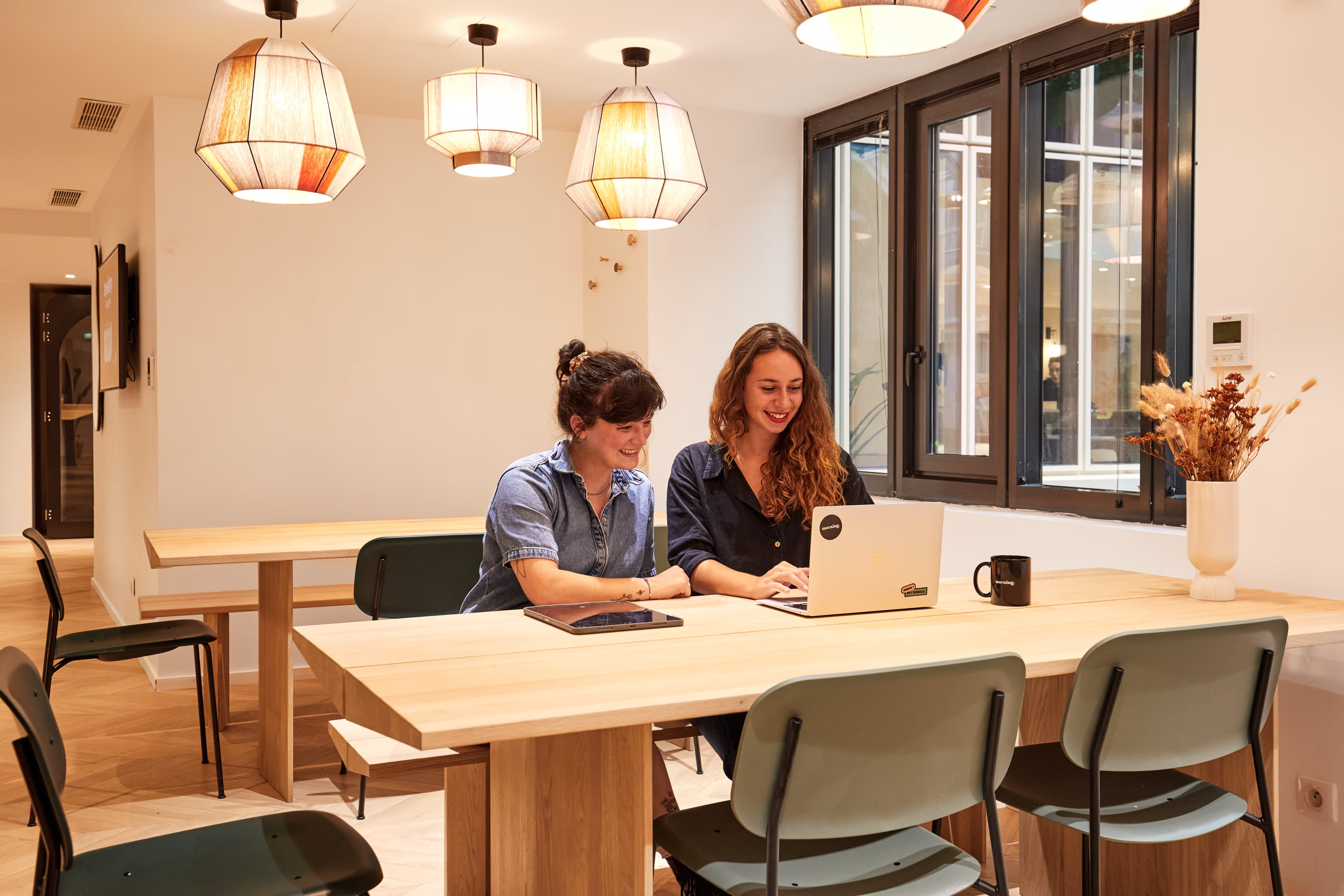
This was the subject of the latest Bureau des Talents panel discussion, held in June 2025 at Morning Trévise. Alongside Mélanie Nabucet (HR, Morning), two guests with complementary backgrounds: Catherine Guizol (Director of Workplace Transformation & Innovation at Ipsen) and Léa Fergui (HR Director at Wecasa). Both shared - before an audience of HR managers, CEOs and workplace managers - real-world experiences and concrete tips for bringing the troops together in the office.
At the heart of the subject: engagement and the sense of belonging. One of the reasons for bringing the troops back to the office is to keep the company’s culture and values alive. When there is too much remote work, difficulties with engagement appear, as does the loss of a sense of belonging to a collective.
What action can you take to get the in-person machine running again, after the golden age of full remote and mostly remote work? Choices need to be considered at company, team and individual level. Many levers can be pulled, and we share a few of them here.
Take an educational approach.
First, take the time to explain why being present in your workspaces matters, why it is in keeping with your values (if it is ;). Engagement and creativity feed on exchanges on site. Restate your point of view regularly at collective meetings, and at important moments such as onboarding. Illustrate your point with concrete, personal examples.
What are the benefits for employees of coming back to the office? Exchanges on site nourish engagement and creativity, encourage spontaneous collaboration and strengthen the sense of belonging to the team.
Formalise the rules of hybrid working
Start by defining what hybrid working means for your company and your workspaces. Which places, what rhythm for which team? Should everyone be treated the same?
For example, if you set three days of remote work per week, let each department adapt its own rules to suit its needs (frequency of meetings, client contact, phoning, important moments of exchange, need for concentration). This approach lets you bring every employee into building the rules of hybrid working, the recipe for which is a balanced blend of personal needs and company life.
Take care, however, to ensure these decisions are consistent with the overall occupancy of your workspaces. The aim is to spread out attendance to avoid deserted days or, conversely, overcrowded spaces. To achieve this, make it easy for managers to talk to one another so as to synchronise each team’s practices.
Train teams in hybrid working.
Training is key to embedding hybrid working deeply into your company culture. Offer your managers targeted workshops, for example to spot the signs of disengagement or to better organise tasks between in-person and remote work. Encourage them too to share their experiences with peers in order to find concrete solutions together.
Do the same for your employees! Organise practical workshops on using the right tools and remote collaboration methods. Adapt the themes to the teams’ needs and favour participatory formats so that everyone takes ownership of best practice and grows in confidence.
Work out the right number of workspaces
Once hybrid working practices are in place and attendance is well spread out, set or adjust the number of workspaces to suit the reality of your company, rather than the total number of employees. On average, you should allow for between 60% and 70% of workspaces relative to the overall headcount.
Remember, too, to set aside part of the space for other needs: meeting rooms, quiet zones for concentration or creative areas. Finally, keep an eye on the occupancy rate, because the feeling of overcrowding appears even before every workspace is taken. It is therefore essential to design open, pleasant spaces to ensure everyone’s comfort.
Design fluid, flexible workspaces
To support the flow of employees in flex office, your workspace has to keep up. Alongside the open-plan areas, you need enough meeting rooms for the size of your company. Bear in mind that a headcount of 100 people should have (on average) at least 3 meeting rooms. Wherever possible, group them on the same floor to limit movement and maximise encounters.
Give real importance to so-called “communal” spaces: lounge, meeting point, welcome desk, dining room... Your communal spaces as a whole should take up 30% of the total floor area. Even the smallest corridor can accommodate a coffee table and a few small seats for improvised catch-ups. Don’t hesitate to multiply informal meeting places to make sharing easier.
Many other areas can be considered; it all depends on the size of your space, your means, your headcount, and so on. Stay attentive, and don’t hesitate to canvass your team’s wishes!
Create a desirable workspace
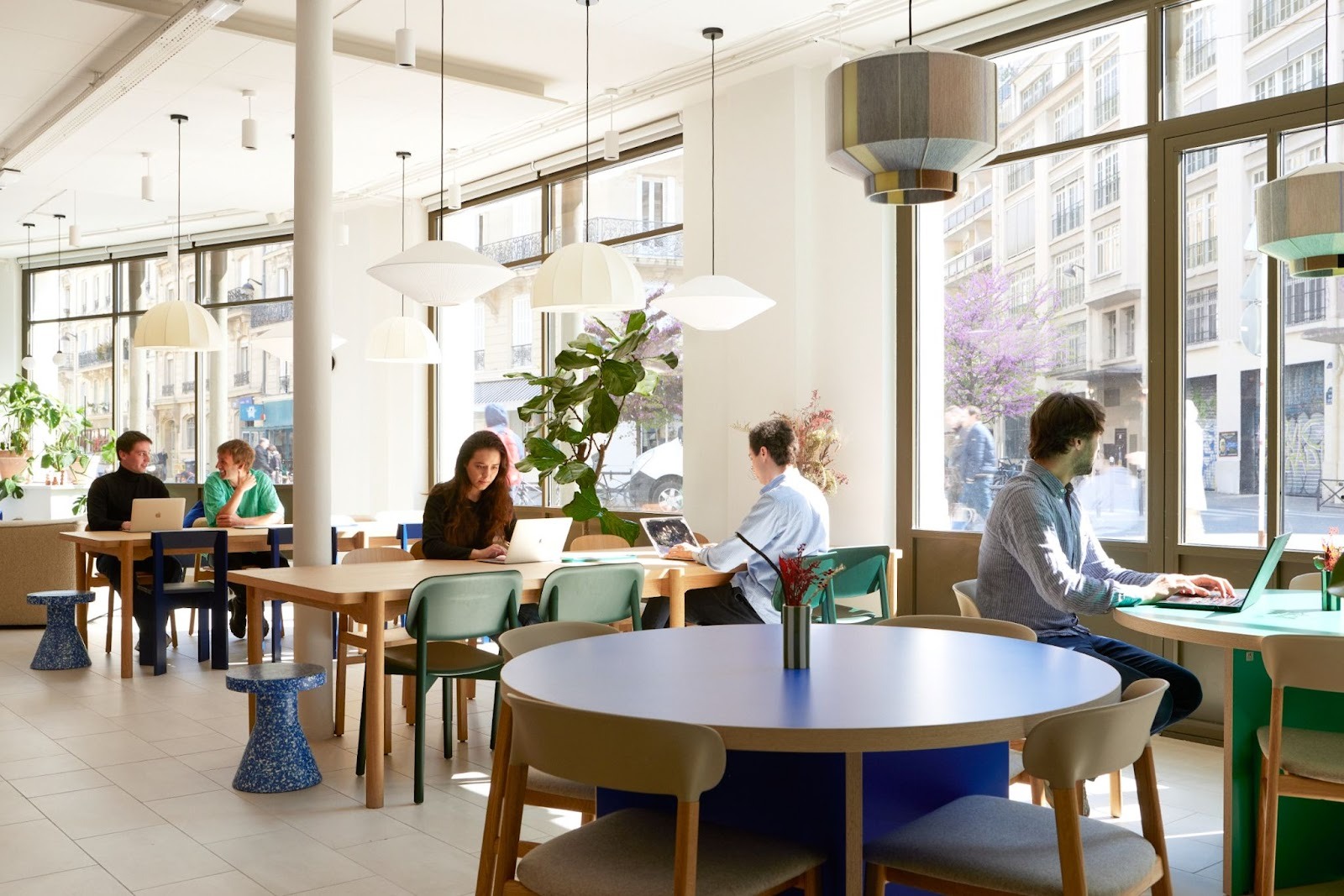
It is essential to make the workspace as pleasant and welcoming as one’s own cocoon. Employees need to be able to recognise the company culture in the office and to feel (almost) at home there.
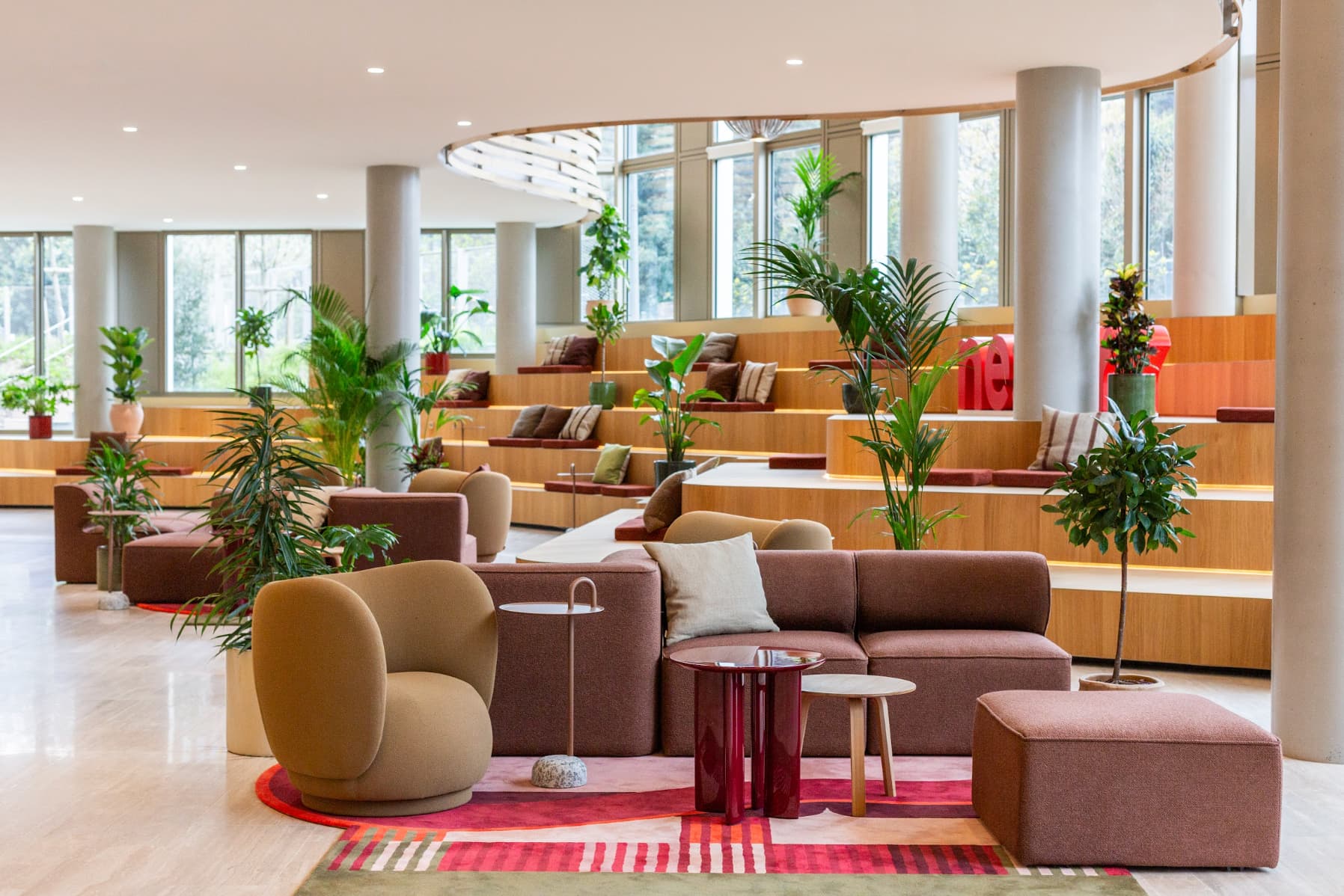
Provide open spaces, careful decoration, plants, a large, convivial cafeteria. Ensure calm with dedicated zones and invest in quality equipment. This last point can prove decisive, as ergonomic furniture may be lacking at home.
Don’t underestimate the importance of good catering, even outsourced: it is a real driver of conviviality and of coming back to the office. Finally, if you move, give as much thought to choosing the site as you would to choosing the ideal home.
Create “Happen spaces” that are worth the trip,
Arrange your offices to bring together the teams that need to collaborate and to make spontaneous exchanges easier. Multiply the places people pass through, such as a large cafeteria or a central coffee machine, to encourage informal encounters. Also provide suitable spaces for staging your big collective rituals, such as all-hands meetings.
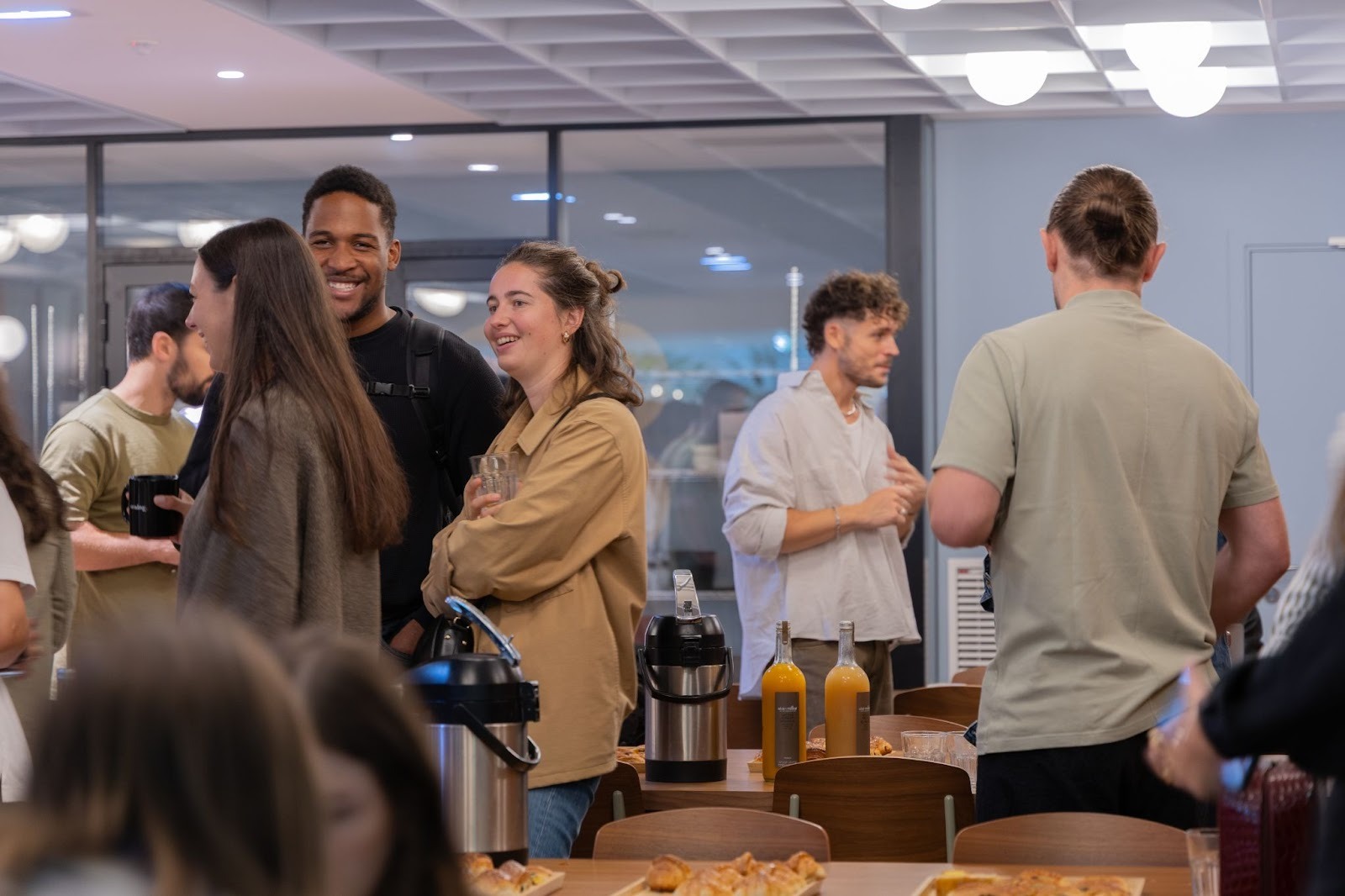
Beyond the layout, offer moments that make people want to come in. Establish regular rituals: breakfasts, meetings to share strategy or successes, and inter-team challenges. Offer a variety of activities to suit different tastes too: massages, sports classes, outside speakers, themed evenings.
The key is to create a positive FOMO (Fear Of Missing Out) and to give the trip meaning. Coming to the office then becomes an opportunity to enjoy informal exchanges, to co-create, to learn and to strengthen the sense of belonging. There is no need to lay on one exceptional event after another: favour regular, convivial get-togethers, which will become real highlights for your teams.
Proceed step by step and keep an agile approach
Adopt a “test-and-learn” stance: experiment, adjust, then make permanent what works, so as not to box yourself in with rules that are too rigid or unsuitable. Favour progress in stages, explaining the reasoning behind your decisions at each step and adjusting the set-up gradually.
Don’t give in too quickly to individual requests. Take care to avoid individual exceptions that could create a sense of unfairness among your employees.
Don’t hesitate to roll out your ideas without taboo, while fully owning your choices and sharing them transparently with the whole company.
Measure the impact and decide with data
Be sure to measure the impact of each change so as to adjust your actions in an informed way. Rely on concrete data to fine-tune your practices and make sound decisions, in step with the reality on the ground.
To gather data, survey your teams regularly on how they feel after each change. Every 6 months, Léa Fergui surveyed her teams a few weeks after Wecasa’s move. Even if it is a little early to draw definitive conclusions, some initial findings can be noted.
Thus, after the change of site, 86% of employees feel more productive and 56% more inspired, with a voluntary increase in days of attendance at the office.
Our team is available to assist you.

Download our new study
Nouveaux bureaux : ce qu'attendent les salariés
.png)

.jpg)