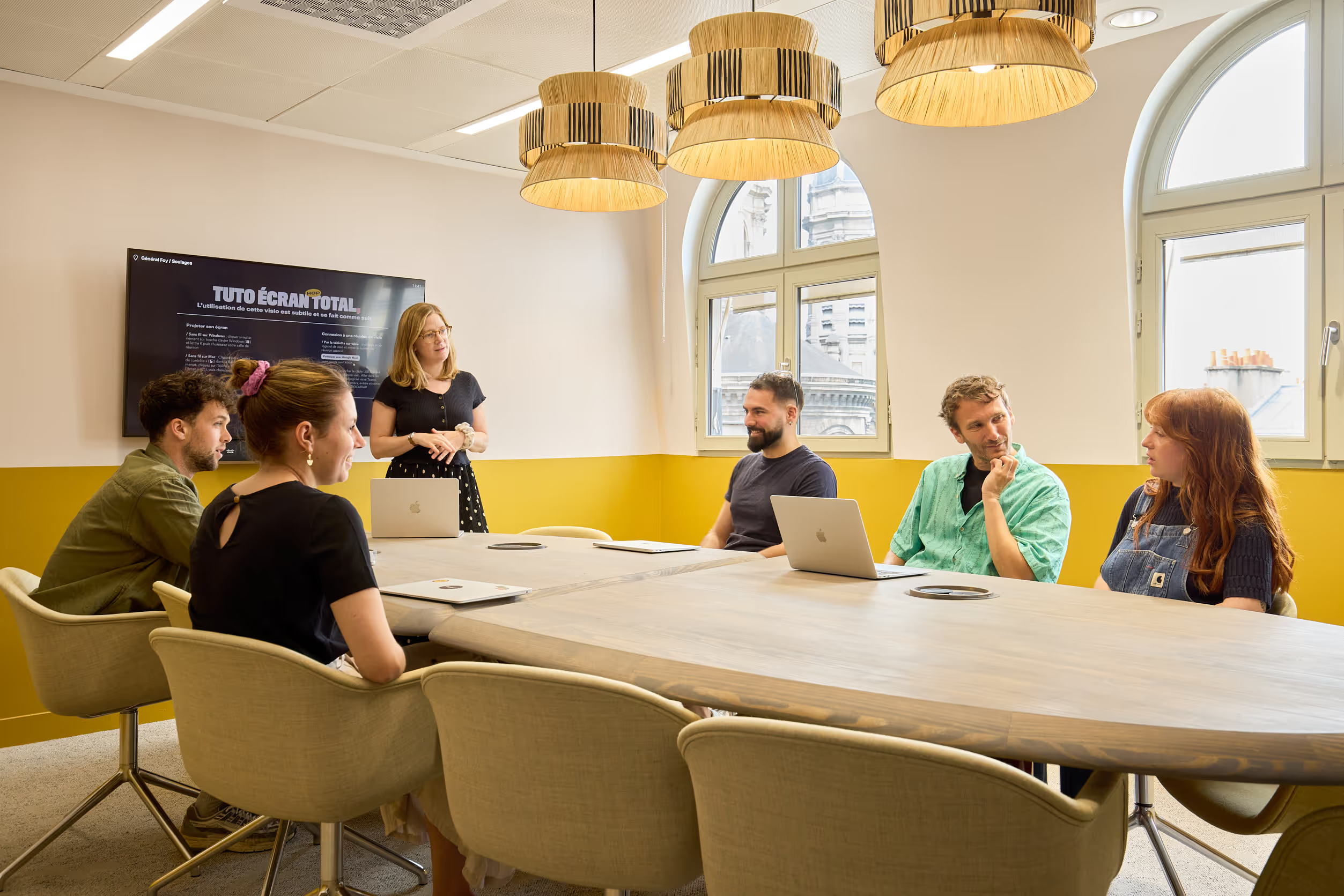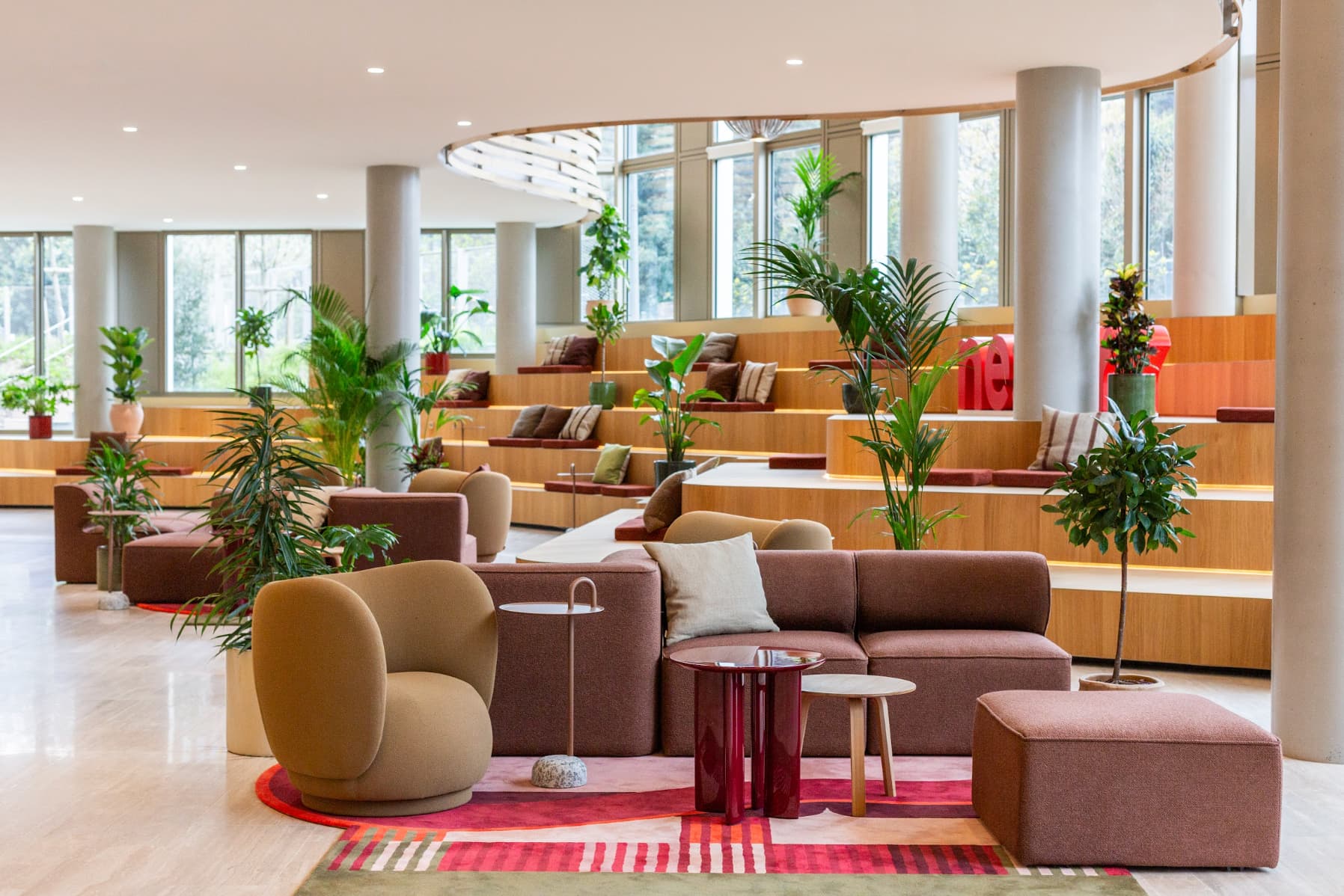


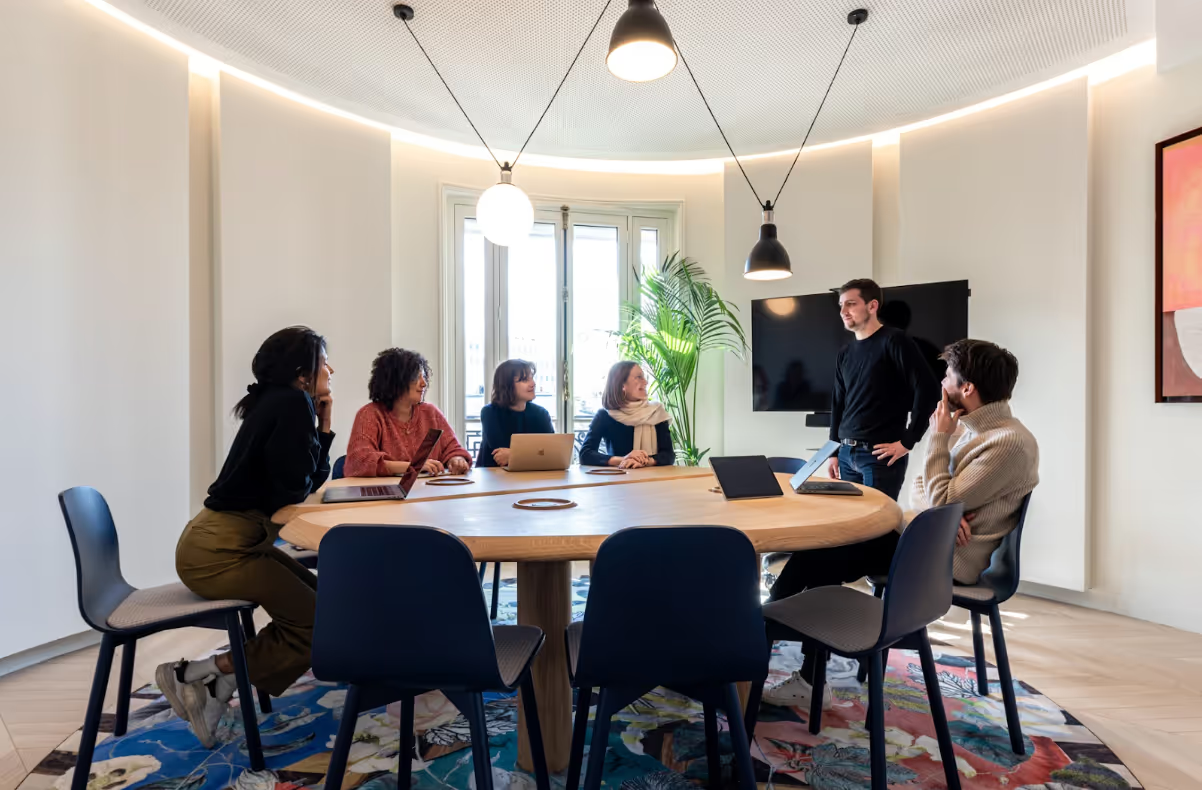
Digitalisation has paved the way for various ways of working that meet the expectations of future talent : flexibility, collaboration and mobility. Companies have adapted by revising their practices and rethinking the way they are run. Today’s job market is marked by the emergence of trends such as coworking, remote work and flex office, putting the well-being and flexibility of professionals to the fore. This marks the dawn of a new era of work.
Edenred SE, a French group specialising in payment systems for businesses, employees and merchants, carried out a study to analyse the emerging needs of French workers and to identify ways of improving their working conditions.
- 67% express a wish to adopt new approaches to work, particularly in managing time and workspace, and in the ways their teams collaborate.
- 69% consider that the evolution of technological tools is essential to improving their day-to-day efficiency.
- 74% are open to transforming their working environment when the opportunity is offered to them.
This article explores the trends in the working world, along with the changes in ways of working and the new vision of workspaces.
Recent changes in ways of working
Digitalisation, automation and the shifting needs of workers have revolutionised the way we approach our professional tasks. In response to growing demand from their employees, many companies have adopted these various innovative ways of working. At the heart of these approaches are the digital tools that have generated new dynamics. These adaptations reflect companies’ desire to stay at the cutting edge of professional efficiency.
The benefits of digitalisation in the working world
Digitalisation offers considerable benefits in terms of improving productivity at work. According to a government study, 81% of business leaders consider that digitalisation brought a real benefit to their company in 2022.
To make a success of this transition, it’s essential to adapt the way the company is run to the specific needs of each sector. The key steps in this digital transition include identifying and planning objectives, creating a new organisational culture, and innovating and enhancing digital processes.
Various tools aim to improve the automation of repetitive tasks, the centralisation of client data, time savings in carrying out tasks, collaboration within the team, marketing efficiency, as well as remote access to secure databases when working remotely.
An effective strategy for navigating this ever-evolving digitalisation is to surround yourself with specialists in the digital field and to adopt contemporary communication solutions. This will help support your company’s digital transformation and reap all the expected benefits.
The importance of flexibility at work
The move towards greater flexibility at work began well before the pandemic. Employees are looking to improve their well-being and to strike a better balance between work and personal life.
According to a survey by the APEC, more than half (52%) of women in management roles find it difficult to reconcile their personal and professional lives, and a third (31%) have turned down career advancement to preserve that balance.
Employers are increasingly open to creating new models of work centred on employees’ needs.
Flexibility in the workplace takes different forms, varies from one company to another and rests on the needs and culture of each organisation. A few concrete examples of flexibility at work include:
- The ability for employees to manage their own hours to promote a better work-life balance.
- Reducing employees’ commuting time to boost productivity and well-being.
- Optimising meetings through prior preparation, up-to-date participant lists and clear agendas.
- Introducing annual performance reviews for everyone involved in a project or business activity, giving them an overview and a clear career path.
Flexibility at work offers many benefits, for employees and employers alike, fostering a dynamic and motivating working environment. It has become an essential part of modern company culture.
Towards new management techniques
The new ways of working, closely linked to new management techniques, are transforming our professional approach. They put collaboration, creativity and employee autonomy to the fore, encouraging better productivity and a climate conducive to innovation. Managers take on the role of facilitators and coaches, guiding teams towards excellence. These approaches aim to foster growth, productivity at work and employee well-being, while adapting to the ever-changing challenges of the working world.
Various management techniques can be put in place; here are a few:
=> Collaborative management focuses on the human side, placing individuals at the heart of decisions. In this style of management, it’s essential to establish clear communication as well as genuine active listening.
=> Smart working values emotional and collective intelligence by championing humility, humanism, attention to emotions and an understanding of their impact.
=> Team cohesion through the creation of activities designed to strengthen bonds and promote well-being at work. This includes initiatives such as physical activities, afterworks, events, challenges and workplace well-being programmes.
(See also: Kindness and well-being at work)
A new way of working with collaborative workspaces
In seeking to attract talent, companies are innovating by offering new models that address a growing concern: quality of life at work. This criterion has become essential for workers, and their perceptions of and expectations for their work are evolving in unprecedented ways. This underlines the importance of creating a stimulating and pleasant professional environment to retain employees and stay competitive.
(See also: 4 reasons to transform your workspace)
Coworking, the space where work is done as a team
Coworking is booming in France. In 2022, France had 3,420 coworking spaces, a 23% increase on the previous year, according to data from Ubiq. This trend is set to continue in the years ahead. Coworking spaces have become sought-after working environments for freelancers, entrepreneurs and remote-working employees alike, offering optimal working conditions and a setting conducive to exchange, collaboration, innovation and collective intelligence.
Coworking rests on two key elements:
- sharing a workspace;
- exchange between professionals.
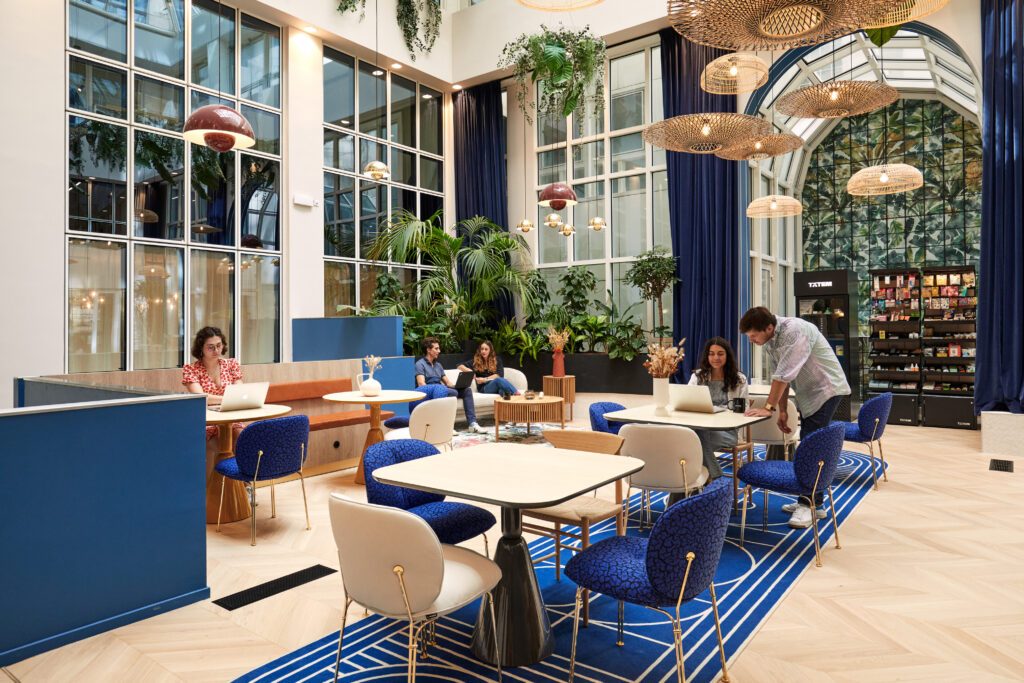
It’s a collaborative approach that sits somewhere between working from home and working in a company, ideal for independent workers, entrepreneurs and even employees. These spaces offer far more than a shared desk; they foster creativity, cooperation and a sense of belonging to a dynamic professional network. The coworking offers a flexible, collaborative solution for professionals in search of a stimulating working environment.
Remote work, the office that comes to you!
Remote work is now one of the most popular ways of working. It gives employees great flexibility to carry out their professional tasks from home, while allowing companies to cut their premises-related costs. This approach has transformed the way we think about work, and it continues to evolve as companies seek to reconcile flexibility with team cohesion.
The emergence of hybrid working, a blend of remote work and on-site working, is part of this evolution. This approach gives employees the option of working independently, whether remotely, at the office or under a hybrid model. According to a study by the CIPD, an association of human resources professionals, 40% of employers had anticipated that more than half of their staff would regularly work from home after the pandemic, and that proved to be the case.
Remote work makes it possible to reduce home-to-work commuting, to better reconcile work and personal life, and to work at more productive and flexible hours.
Flex office, the bespoke workspace
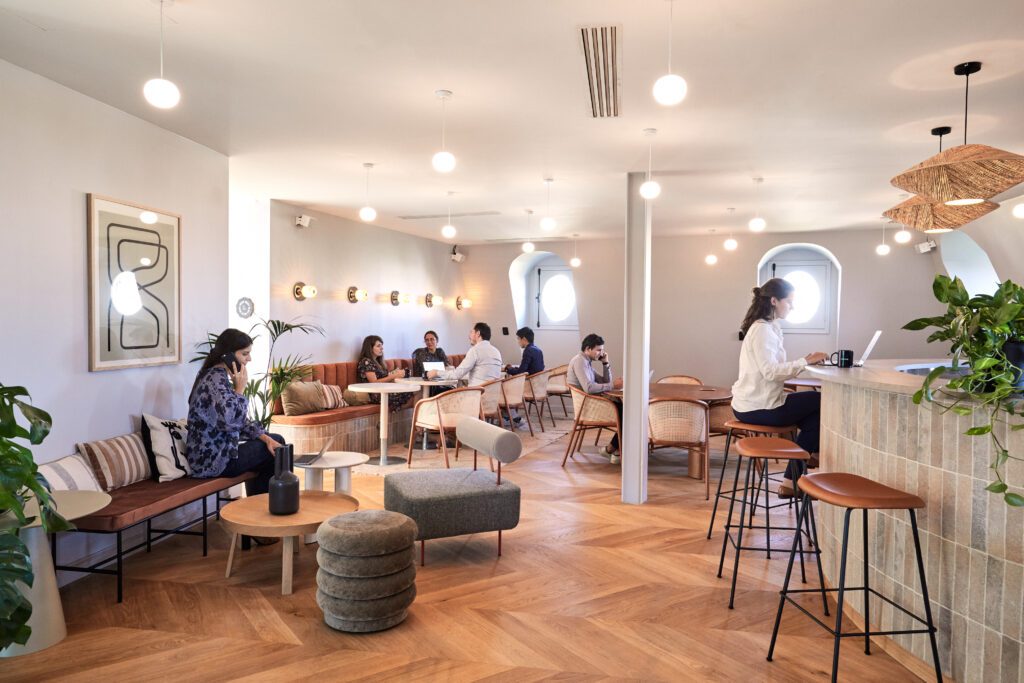
The flex office gives employees the freedom to choose where they work, whether in a meeting room, a work booth, the rooftop or elsewhere, with no assigned desks. It promotes mobility and conviviality and breaks the habit of staying put. Also known as “desk sharing”, it allows several employees to share the same workspaces on a rotating basis, thereby reducing companies’ property costs.
(See also: 5 tips for designing a convivial workspace)
Flex office isn’t merely about reorganising the premises. It gives companies and public bodies the opportunity to put in place more flexible and agile ways of working, promoting internal communication and teamwork. Here are a few benefits of adopting flex office in a company:
- better internal communication,
- enhanced well-being at work,
- greater employee motivation
- increased flexibility for work-life balance.

As we’ve seen, the new ways of working are bringing about changes in the way companies are run. Future models of work will focus more on individuals than on working environments. The aim will be to create a flexible environment for employees, fostering their fulfilment and smart, non-standardised working.
******
You now know pretty much everything about the processes put in place at Morning to allow everyone to choose the way of working best suited to them. If you have ideas to enrich the topic, do feel free to share them with us in the comments field below!
***
Our team is available to assist you.
Download our new study
Nouveaux bureaux : ce qu'attendent les salariés
.png)
.jpg)