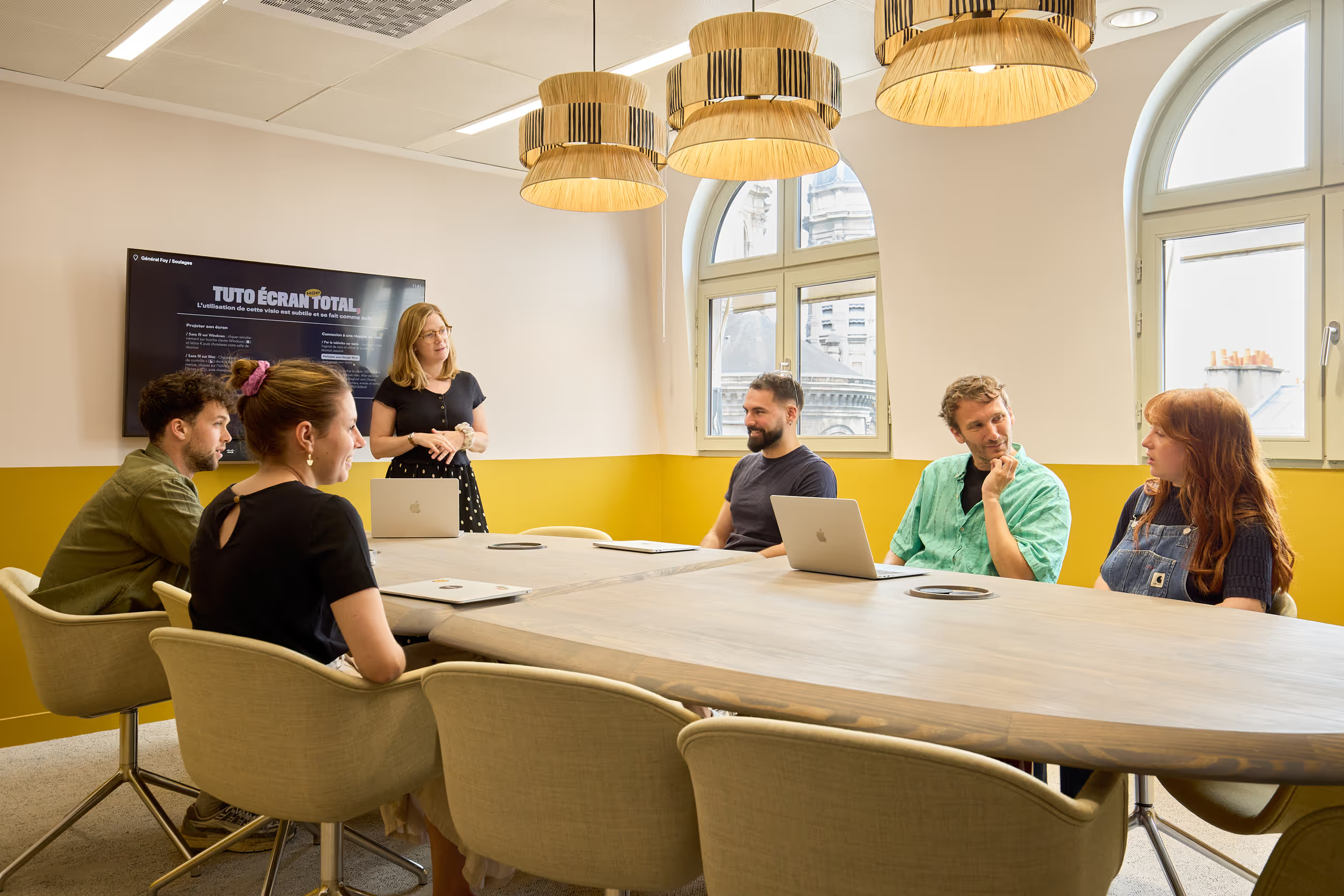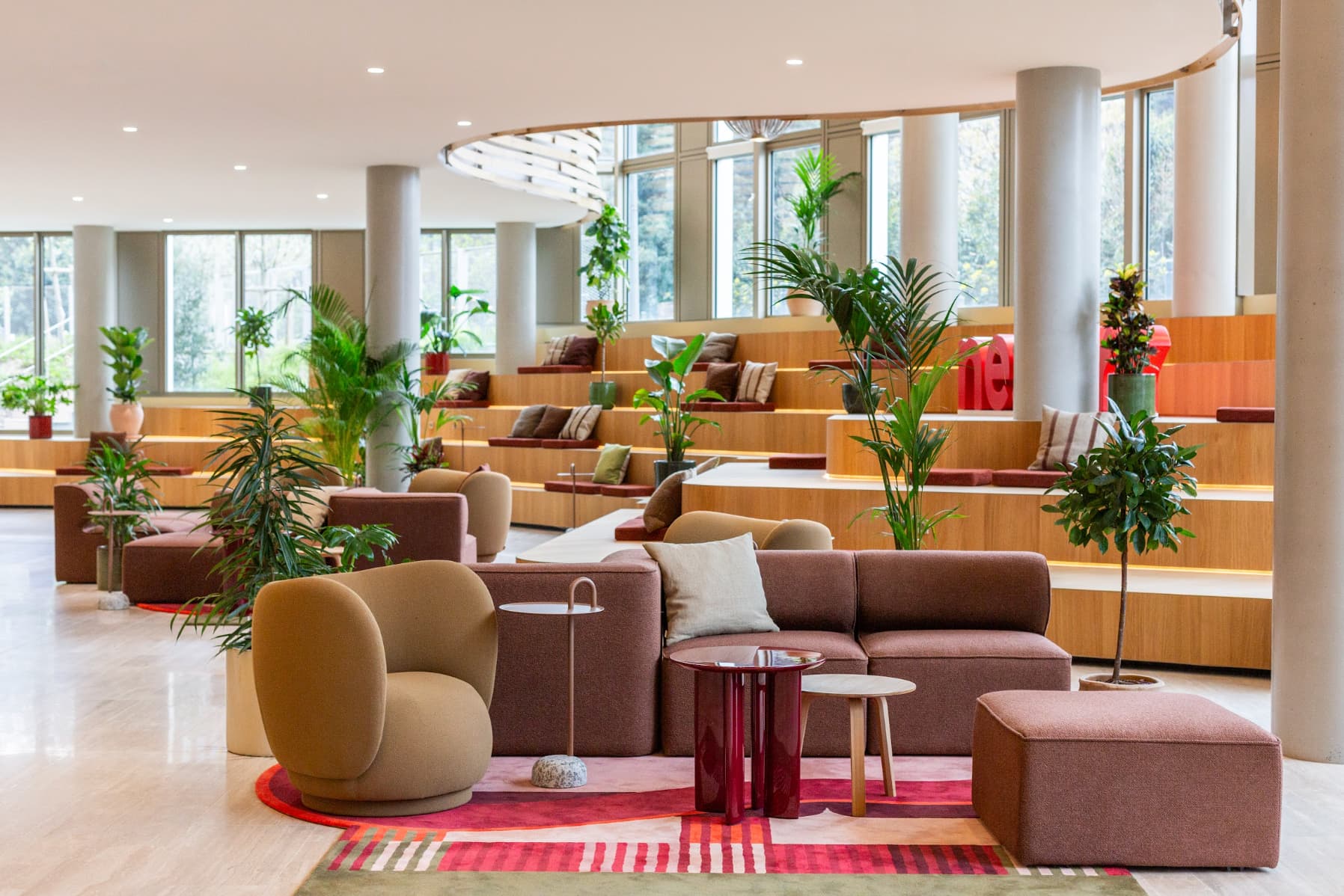


Every year in France, nearly 250,000 tonnes of office furniture are thrown away. Behind that figure lies a reality that often goes unseen: a large share of this equipment is still perfectly usable.
At a time when companies are looking to reduce their environmental footprint, the question of furniture nonetheless remains an afterthought. It is, in fact, a lever for immediate action, both environmental and economic.
The fit-out of Morning Trocadéro was an opportunity to explore an alternative to buying everything new: refurbished furniture with adopte un bureau.
A blind spot in the environmental impact of offices
Renewing office furniture is rarely questioned. Relocations, rebranding, changing ways of working: the reasons for replacing it are many. But these rapid cycles carry a high environmental cost.
For 100 workstations fitted out with new furniture, the carbon footprint from manufacturing alone comes in at between 12 and 15 tonnes of CO₂e. On top of that comes the pressure on resources: metals, plastics and foams, whose extraction and processing are particularly energy-intensive.
Furniture thus becomes a blind spot in CSR strategies, even though alternatives do exist.
Reuse makes it possible to extend the life of products that have already been made, with a reduction in carbon footprint of up to 80% compared with new. It sits squarely within a circular-economy logic: produce less, use for longer, make the most of what already exists.
Building a reuse supply chain
Not all furniture lends itself to refurbishment. The original quality is decisive. That is why some players have chosen to focus on high-end professional furniture, built to last.
For the past decade or so, adopte un bureau has specialised in this segment. The company selects well-known names — Herman Miller, Steelcase or USM Haller — before restoring them in its workshops in the Paris region and in Albi.
The process follows an industrial logic: assessment, dismantling, replacement of faulty parts with original components, cleaning, quality control. The furniture is then put back on the market with a 24-month guarantee.
This approach makes it possible to reach a level of quality on a par with new, while significantly cutting costs. Depending on the item, savings can reach 30 to 50%, with a catalogue broad enough to equip an entire workspace: ergonomic chairs, desks, storage units and even acoustic booths.
Morning Trocadéro: choosing refurbished furniture
As part of the fit-out of Morning Trocadéro, several criteria guided the choice of furnishings: guaranteeing a high level of comfort, staying consistent with the company's environmental commitments, and keeping costs under control without diminishing the perceived quality. As a certified B Corp, Morning is committed to upholding high standards of social and environmental performance. Turning to refurbished furniture made it possible to meet these requirements.
Ergonomic chairs from Herman Miller (the Sayl model), along with Forma 5 chairs, have been brought into the spaces. This kind of furniture, designed from the outset to last, lends itself particularly well to refurbishment. It retains its ergonomic performance while sitting firmly within a reuse logic.
Beyond the environmental impact, the choice of refurbished furniture also contributes to a broader coherence in the way the spaces are designed: favouring sustainable solutions, avoiding wholesale replacement, and setting the fit-out within a long-term horizon.

Towards a new norm?
Refurbished furniture is no longer an alternative or a niche solution. It is becoming a credible option for companies looking to reconcile performance, impact and budget control.
The appeal lies precisely in this balance: cutting the carbon footprint, gaining access to quality furniture and optimising investment costs.
Certain practices round out this approach, such as taking back existing furniture, which helps avoid waste while feeding the reuse supply chain.
As environmental requirements tighten, these models should gradually establish themselves as an obvious choice. The question is no longer simply how to fit out offices better, but how to rethink the way they are equipped.
Our team is available to assist you.

Download our new study
Nouveaux bureaux : ce qu'attendent les salariés
.png)
.jpg)