

No longer have time to take your children to school? Easily irritable from one day to the next? Is your work diary taking over your private life? If you answered "yes" to any of these questions, it is time to pause and take stock of your "work / life" balance.
And you will not be the first to want to take back control of your life! According to The Workplace of the Future report, published in February 2023, 53% of employees place greater importance on their well-being at work than they did before the Covid-19 pandemic. Employees are unanimous: it is essential to strike a balance between personal and professional life. This calls for being clear about your convictions and your wishes, and for making certain decisions. So, how do you achieve this balance? That is the question we explore in this article.
Understanding the work-life balance
In 2024, the balance between professional and personal life remains a major challenge for many employees. Far from being merely a question of time spent at the office versus at home, this concept now encompasses ideas of flexibility, autonomy and the search for meaning in work.
Definition and importance of balance
There is no clear scientific definition of the ideal balance between professional and personal life, which can make it harder to put into practice. However one approaches the notion, the essential thing lies in personal satisfaction, avoiding any excess of effort in both the private and the professional sphere.
According to a study by Forum engagement, 41% of employees would like a better work-life balance. A factor that could prompt more than a third of those surveyed to change employer tomorrow.
Achieving a healthier balance is not just a passing trend. Post-Covid studies, notably that of David Hickman Partner Ltd in June 2021, point to a shift in the trend around the balance between professional and personal life. Since the crisis, many feel they are devoting too much time to work, at the expense of their personal life, largely because of how widespread remote work has become.
An imbalance that can lead to what the World Health Organization describes as "burn-out", defined as: "Occupational burnout, a syndrome conceptualised as resulting from chronic workplace stress that has not been successfully managed."
The impacts of an imbalance
Finding harmony between professional and personal life has become a real headache for many employees. This constant juggling act can have serious consequences: chronic stress, the risk of burnout, falling productivity and social isolation.
But why is this work-life balance so important? First of all, it helps preserve mental and physical health. It also helps improve productivity over the long term and fosters both personal and professional fulfilment.
(Read also: Mental health at work: a societal issue)
To improve your work-life balance, several strategies are possible: setting clear boundaries, practising digital disconnection, prioritising tasks and building well-being activities into our daily lives.
It is an ongoing process that calls for regular adjustments, but one that can significantly improve our quality of life.
The factors influencing balance
Several factors influence this work-life balance, affecting our well-being at work and our performance.
An excessive workload and permanent connectivity are often the first things to disrupt it, blurring the boundaries between work and personal life. Parenthood adds a further layer of complexity, demanding meticulous organisation. Remote work, while flexible, can also blur the lines between the professional and personal spheres.
Maintaining a satisfactory work-life balance requires setting clear boundaries, managing your time effectively and communicating your needs openly. Everyone has to find their own formula in the face of these modern challenges in order to preserve their overall well-being.
The benefits of a good work-life balance
At work, a rested and replenished mind boosts your creativity and your effectiveness, allowing you to accomplish more in less time. This productivity is a valuable asset for your career.
In terms of health, reducing chronic stress improves your physical and mental well-being. You gain energy and are better able to withstand the risk of burnout. On a personal level, you rediscover the pleasure of devoting time to your loved ones, your hobbies and your passions, enriching your life outside work.
Work-life balance for employees
.jpeg)
On the employee's side, many levers can be put in place to make it easier to strike a balance between personal and professional life.
☞ Define your priorities (and share them with your team) :
To stop the professional from encroaching on the personal, it is crucial to define your priorities and make sure they are respected. Need to clear your head? To see your children more often? Tell your team and organise yourself accordingly. A must-have half-day of remote work each month to volunteer for a charity? Sometimes this means turning down certain tasks at work in order to devote more time to your personal life, and vice versa.
☞ Separate your personal and professional spaces:
Whether you work from home or at the office, it is crucial to pay attention to your working environment. Even if the layout of your office is not within your control, take care to keep your workspace tidy and to give thought to the arrangement of your home so as to create a soothing atmosphere for when you get back.
☞ Establish "non-negotiable" rituals:
By setting up recurring moments, you establish rituals that will gradually become part of your routine. Questioning these moments will become harder, thereby protecting your personal time despite professional pressures.
For example, set aside one evening in the week for a sporting activity, or plan to cook a good family meal on a Friday evening… These rituals will become indispensable to your week, offering precious moments after a productive day at the office.
☞ Formalise professional and personal time:
By structuring your working week, you gain a clear picture of the time you can devote to your personal life. Imposing an excessive workload on yourself every week can lead to professional exhaustion and burn-out. Set more realistic goals to keep your energy balanced between work and personal life.
Plan your time off in advance, schedule rest days on a regular basis, rather than aligning them around particular events such as holidays or public holidays.
Strategies for improving the work-life balance
On the company's side, many initiatives can be implemented to help employees achieve a balance between their personal and professional life.
☞ Formalise rules:
One of the most effective approaches to fostering well-being at work is to introduce a charter dedicated to Quality of Working Life. The concept is simple: through a concrete document, you set out the key principles aimed at ensuring your employees' well-being. This charter will highlight your commitments at various levels:
– Working hours and breaks
– Creating a working environment conducive to well-being
– Adopting management methods
☞ Cultivate mutual trust:
In recent years, greater use of remote work has heightened the risk of an imbalance between professional and personal life within companies. On the one hand, employees, freed from commuting time, devote more hours to work from home. On the other, managers are less inclined to spot the signs of an excessive workload, given that they do not have their staff in front of them.
This is where a remote-work charter comes into its own. In particular, it should place the emphasis on the right to disconnect and on managing working time day to day.
☞ Ensure a healthy workload for employees:
The role of management is unquestionably one of the essential factors in ensuring that employees do not find themselves overwhelmed day to day.
This is why today's manager must be able:
– To organise employees' working time and schedules
– To practise active listening on a daily basis in order to spot the early warning signs of emotional overload or burn-out.

☞ Take the temperature regularly:
To understand how to improve your employees' well-being, there is nothing more effective than asking for their views directly.
At Morning, the HR team takes the teamperature every month. Behind this fine pun lies a questionnaire sent out each month, to every member of the team, to gauge everyone's well-being. The questions asked are always the same, for example: "On a scale of 1 to 10, how are you feeling this month?" – "On a scale of 1 to 10, are you happy to get up in the morning?" Each month, the HR team can see the variations and act accordingly.
(Read also: Kindness & well-being at work)
Whatever the size of your company, you too can send out satisfaction surveys to your employees on a regular basis. Invite them anonymously to share their experience of the balance between professional and personal life within the company. Encourage them, too, to provide you with ideas and suggestions for improving their Quality of Working Life.
The role of employers and managers

As an employer or manager, your role is crucial in promoting the work-life balance within your company. To create a fulfilling and productive working environment, several key strategies are open to you.
Let us start by bidding farewell to the myth of presenteeism. The real solution for your company is effectiveness. Value effectiveness over long hours on site, and you will see your teams' motivation soar.
Next, offer your employees flexibility. Remote work, adjusted hours, a 4-day week… Let them choose their ideal rhythm.
Improving communication is another important pillar. Establish clear rules on communication hours, avoid late emails and respect your employees' right to disconnect. Healthy communication contributes greatly to the work-life balance.
As a manager, it is up to you to lead by example. Adopt a good balance between your professional and personal life yourself. Your behaviour directly influences the company culture and encourages your employees to do the same.
Do not forget to look after your employees. Offer them well-being programmes, anti-stress training, or set up relaxation corners at the office. These small touches will make all the difference.
Tools and resources to support balance
Many tools exist to help you achieve this much sought-after balance.
☞ Time-management apps:
- Asana: to organise your tasks and projects visually.
- Todoist: to plan and track your daily tasks.
- RescueTime: to analyse how you spend your time and identify distractions.
☞ Calendar apps:
- Google Calendar: to plan your meetings and personal events in one place.
- Microsoft Outlook: to bring together your professional and personal calendars.
But be careful, balance does not come down to a simple question of organisation! Companies need to invest in more holistic solutions with well-being-at-work offerings:
- Well-being sessions for meditation breaks
- Coaching to define your priorities
- Digital concierge services to handle your personal tasks
☞ Flexible solutions:
Remote work and flexible hours, supported by remote collaboration and communication tools such as Slack and Google Meet, offer greater freedom in organising your time.
☞ Right to disconnect:
Smart software can block your work notifications outside working hours, sparing you from answering that urgent email at 11pm (which probably was not all that urgent).
A little reminder: the perfect balance does not exist, but these tools can help you get closer to it. It is up to you to explore them and find the combination that suits you best!
Flexible and ergonomic workspaces

Flexible and ergonomic workspaces transform the balance between professional and personal life. These innovative environments meet workers' varied needs by offering them solutions suited to different working styles.
Flexibility is at the heart of these spaces and allows users to choose the working environment that suits them best. This variety of options fosters productivity and creativity by making it possible to change environment over the course of the day.
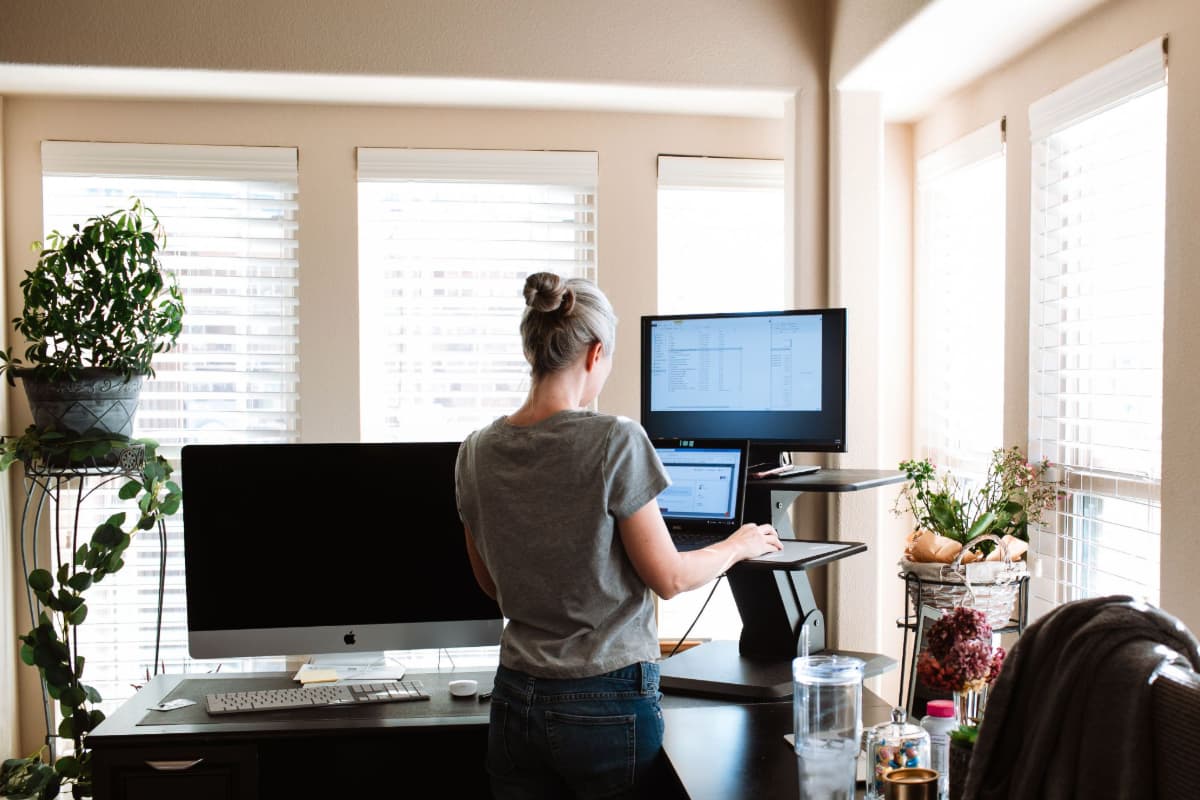
Ergonomics play a crucial role in the design of these spaces. Adjustable equipment, such as height-adjustable desks and ergonomic chairs, along with optimised lighting, helps preserve users' health and well-being by reducing fatigue and muscle tension.
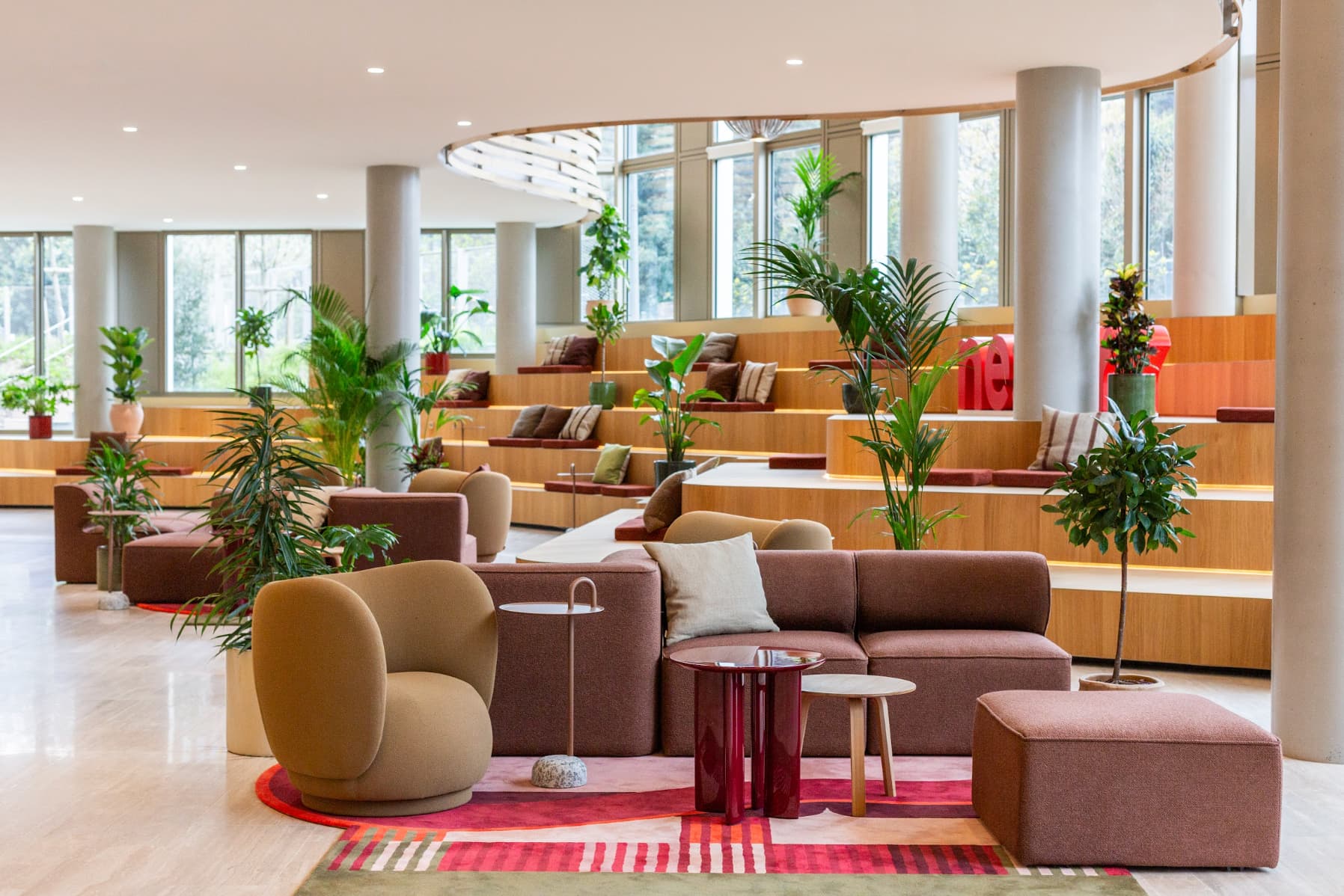
These workplaces go beyond mere functionality. They incorporate relaxation zones, well-being spaces, fitted kitchens, coffee bars and many other offerings to allow professionals to take invigorating breaks and maintain a healthy balance.
******
You now know pretty much everything about the processes Morning has put in place to help everyone find their work-life balance. If you have ideas to add to the conversation, do share them with us in the comments field below!
Our team is available to assist you.

Download our new study
Nouveaux bureaux : ce qu'attendent les salariés
.png)
.jpg)