

What makes a day at work a good one? This question, at once simple and essential, reveals a reality that is complex and deeply personal. Today more than ever, in a context where 29% of employees work remotely* at least one day a week, office workers expect their environment to support both their efficiency and their wellbeing. That expectation is all the stronger because the office is no longer merely a place to work: it is becoming a strategic space for collaboration and team cohesion.
It is against this backdrop that Morning and Appinio have carried out, for the first time, the “Bruits de couloir” (Water-Cooler Talk) study among 500 people working in an office.
The aim: to understand what, in their eyes, makes for a good day at work. Layout, wishes, remote work, flexibility, sticking points… The results sketch out a new model, in which work is experienced as a holistic, highly personalised experience.
*According to a study carried out by Statista
The key figures to remember
- 44% of French workers would like to change the layout of their workstation
- 60% are bothered by noise at the office
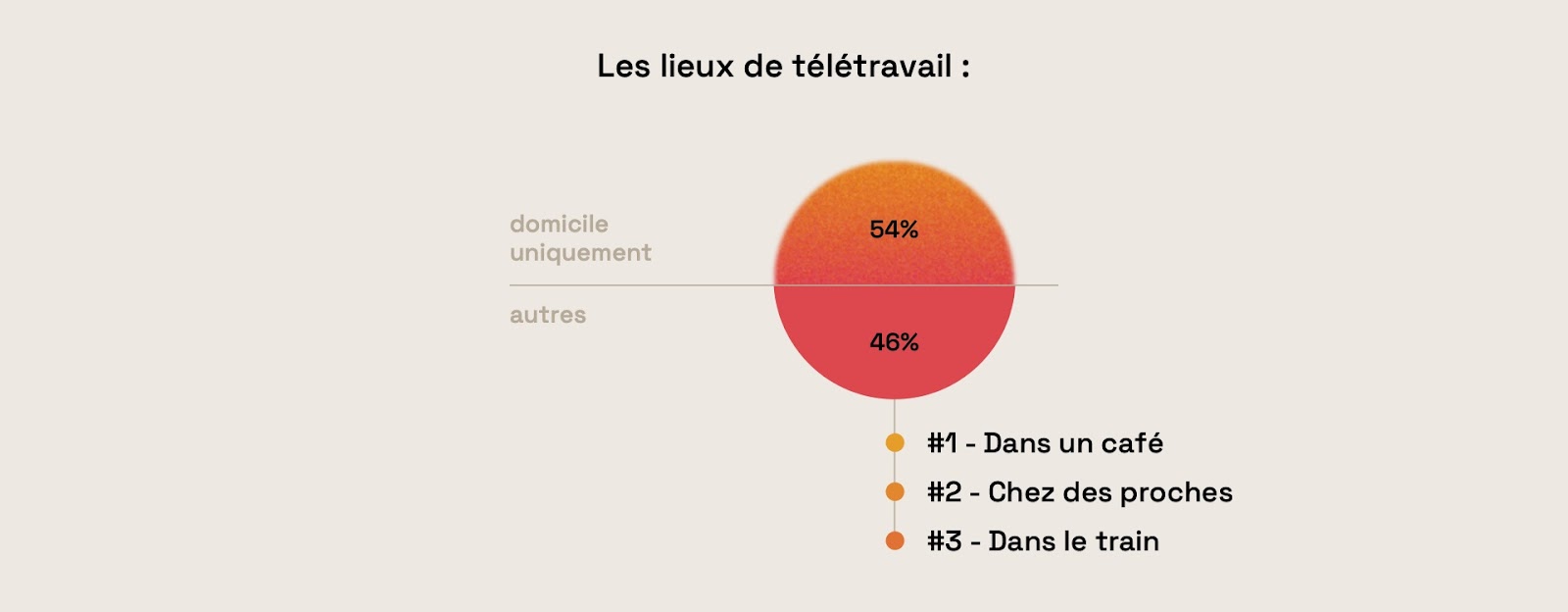
- 46% of remote workers go to third places
- Flexible hours are the #1 perk French workers are looking for
The office: a social space first and foremost
The study reveals that 70% of respondents work in a shared space, whether open-plan, coworking or a closed office, while only a quarter enjoy a private office. Tellingly, barely 4% work in a company with no physical offices at all.
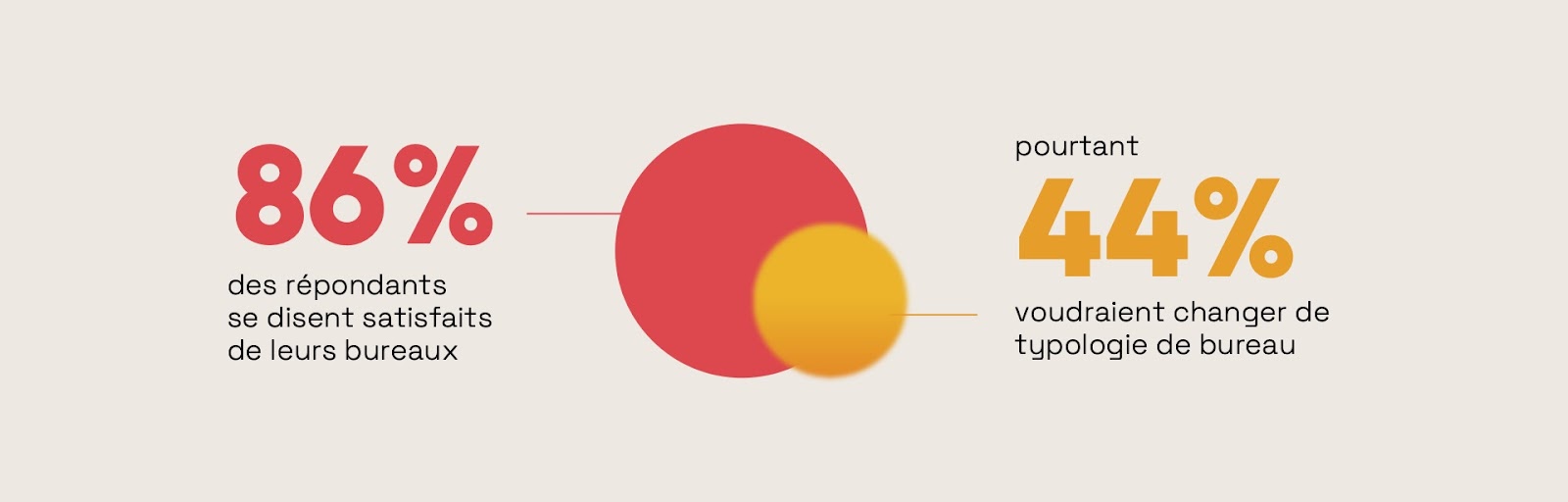
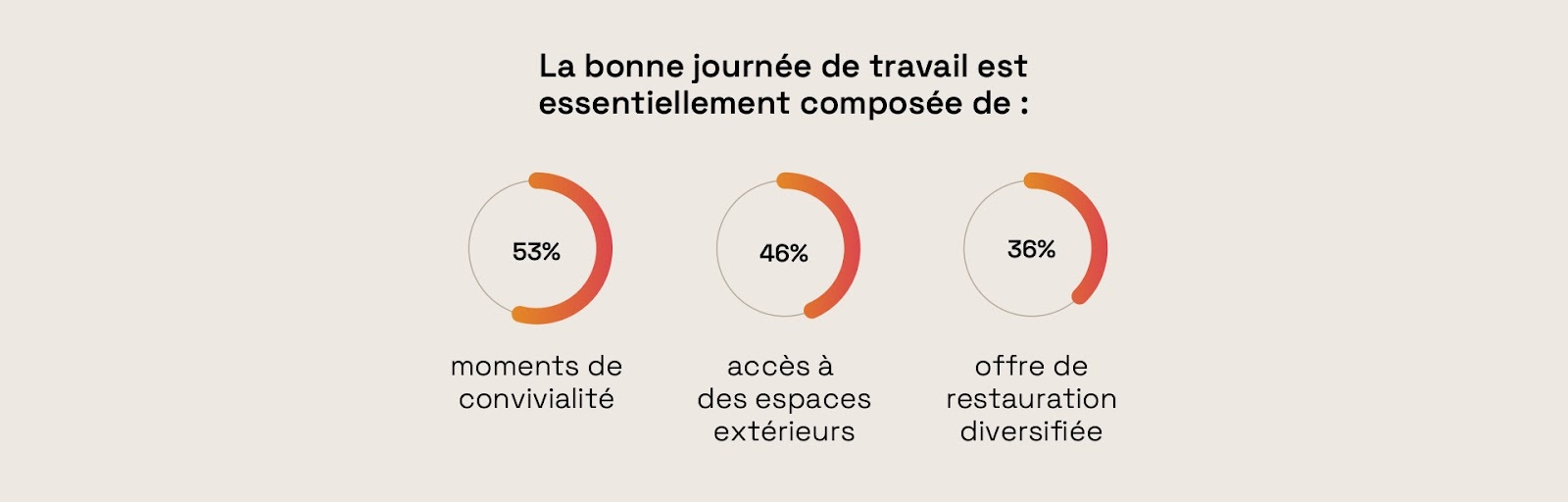
While 86% of those surveyed say they are satisfied with the layout of their workstation, almost half (44%) would nonetheless like to be able to change it. Their preference? A private, closed office or working remotely 100% of the time. Yet when it comes to defining the ingredients of a good day, conviviality wins out: 53% put sharing moments with their colleagues at the top of the list. Their best professional memories are, in fact, tied above all to these shared highlights: friendships or romances struck up, away-days, team lunches…
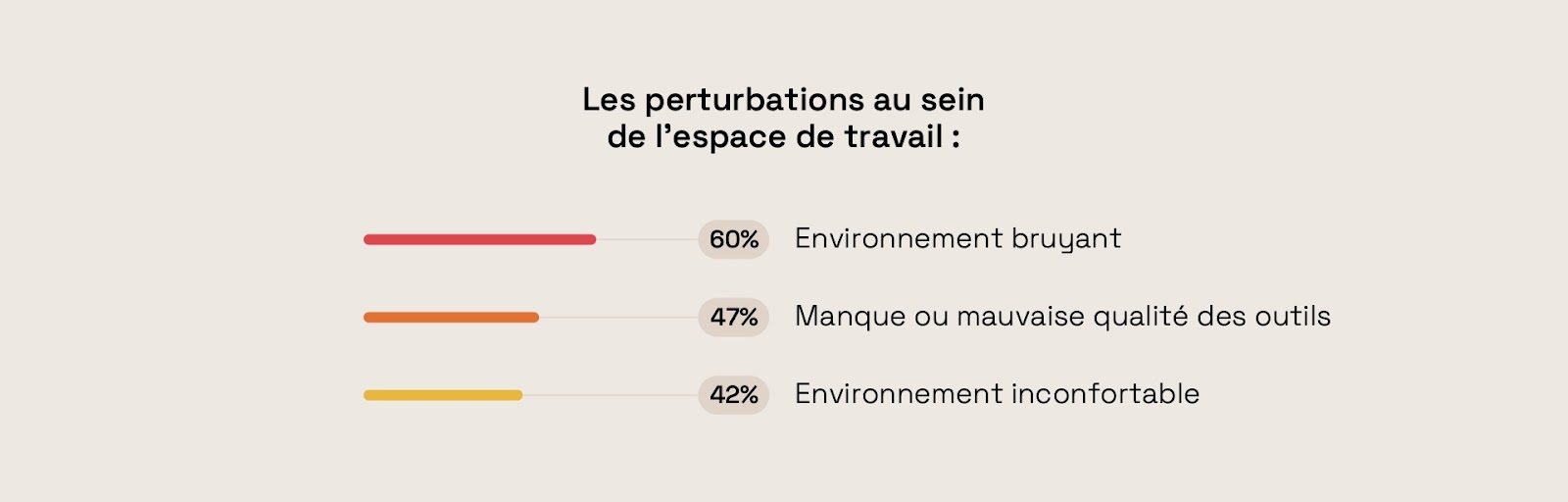
The study therefore reveals a paradox among those surveyed, who are at once keen to come to the office to share time with their colleagues, and to step away from it in order to withdraw and work better. This need for balance is explained by the main sources of disruption at work: noise (60%), a lack of, or poor-quality, IT tools (47%) and an uncomfortable environment (42%).
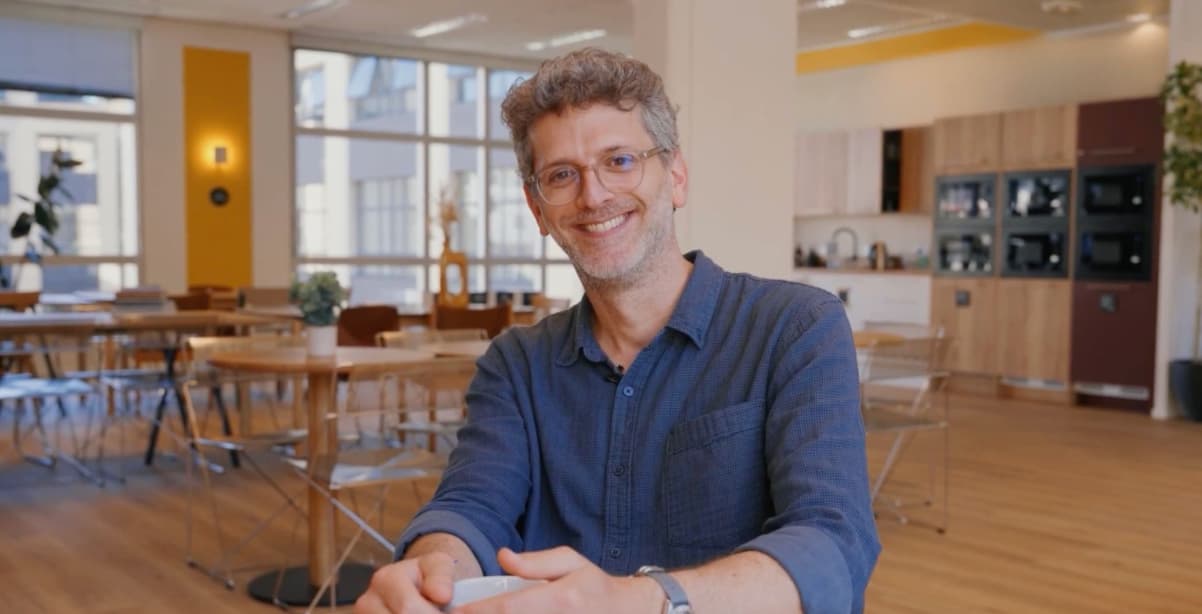
For Aude Valtier, workspace design project manager at Morning, it is essential to distinguish between conviviality and overcrowding. Social connection remains central to employees’ wellbeing, but it must not come at the expense of comfort. The office must therefore offer a hybrid model, with spaces suited to individual work as well as to collaboration, and areas designed for socialising. Coworking spaces, for example, are prized for their variety of zones (meeting rooms, acoustic booths, informal lounges…), which allow everyone to find their place according to their needs of the moment.
Remote working: a practice opening up to new horizons
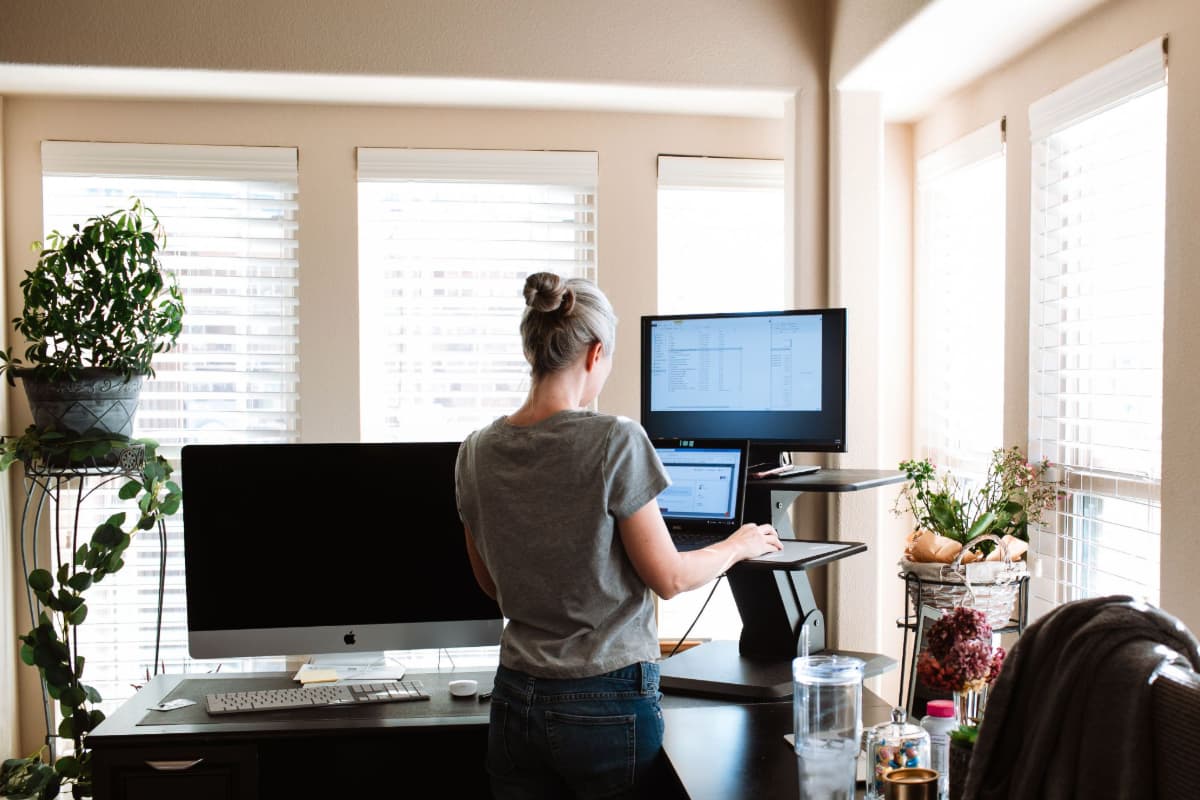
Today, according to our study, almost three-quarters of workers are allowed to work remotely, and nearly all of them do so regularly. However, preferences vary by profile: men, Generation Z and managers feel more productive at the office, while women, Generation X and non-managers favour remote work for their efficiency.
Mobility is also gaining ground: 46% of remote workers opt for third places, such as cafés, coworking spaces, holiday homes or even the train. Generation Z stands out in particular for its ability to work anywhere. Among those who work remotely exclusively from home, 40% would like to be able to change their surroundings, whether to break the routine, protect their mental health or avoid isolation.
Aude Valtier points out that the home is an appreciated setting, but the study highlights a strong expectation of flexibility, notably through access to a range of places to work. The challenge for companies is therefore to support this mobility, by offering an open and adaptable work ecosystem, capable of adjusting to the diversity of needs and profiles, while safeguarding everyone’s wellbeing.
Flexibility, the absolute priority
When it comes to non-financial perks, flexibility comes out well ahead of workers’ expectations. Respondents want, above all, greater autonomy to organise their time and place of work, extra holiday, or even a four-day week.
Jean-Yves Laffon, Director for France & Benelux at Appinio, stresses that this first study highlights the need to strike the right balance between autonomy and social connection. Employees are looking for a framework that clearly distinguishes between times for concentration and moments for exchange. The office, far from being outdated, retains a central role, provided it becomes a “chosen destination”, designed to offer conviviality, collaboration and concentration all at once.
Today, the workplace is viewed in a broader, more agile way. Remote work, whether from home or in third places, appears as a natural complement, synonymous with flexibility and wellbeing, both professional and personal.
Study methodology
The study was carried out in France in April 2025 among 500 office workers aged 18 to 65, using a methodology designed to ensure national representativeness: quotas by age, gender, socio-professional category (manager/non-manager split), region and size of urban area.
We’ll leave you with Emilie Dumas, Director of Research for France at Appinio, who was invited to tell us about the study at the Bureau des Talents conference on “How to get your teams back to the office?”
Our team is available to assist you.

Download our new study
Nouveaux bureaux : ce qu'attendent les salariés
.png)
.jpg)