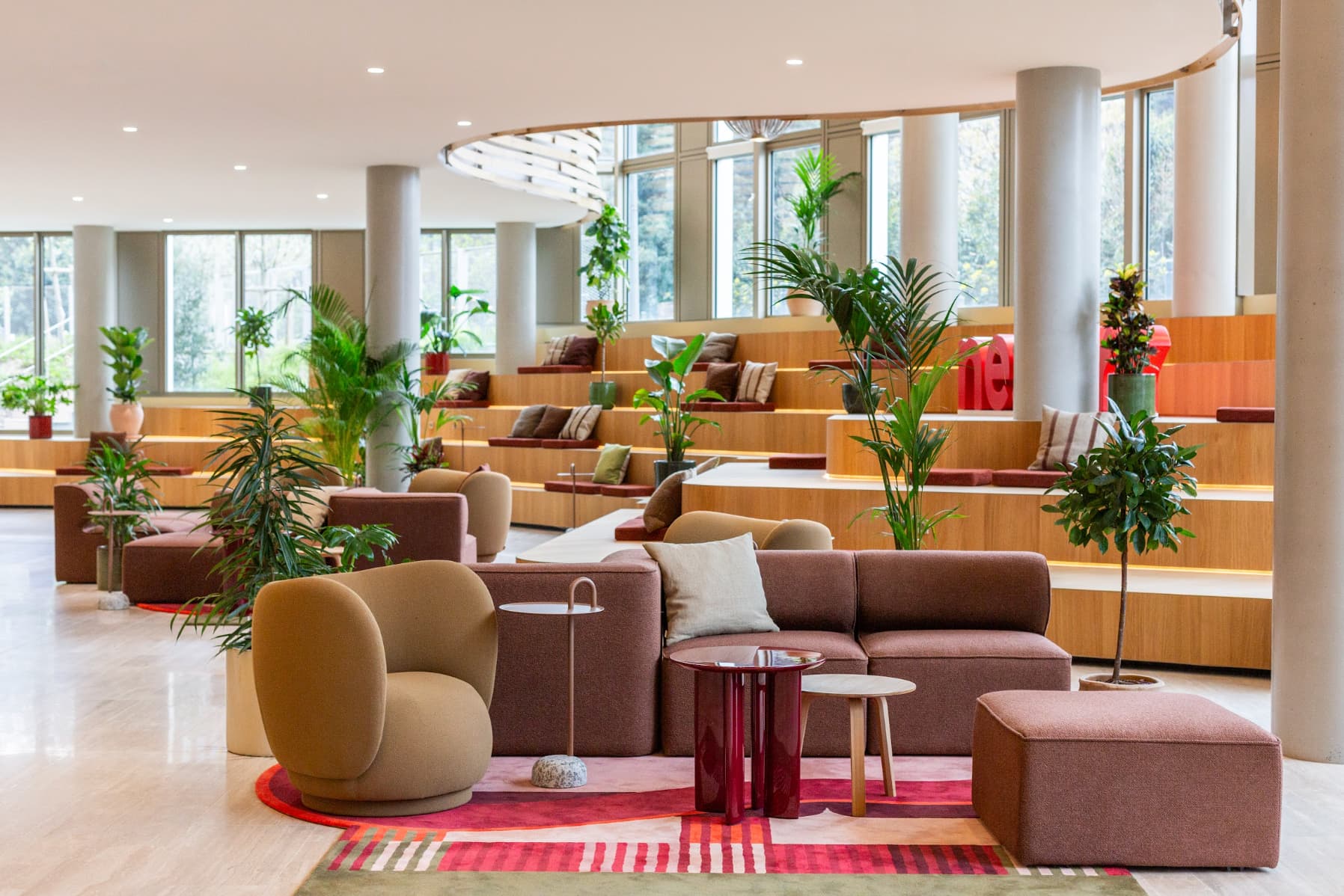


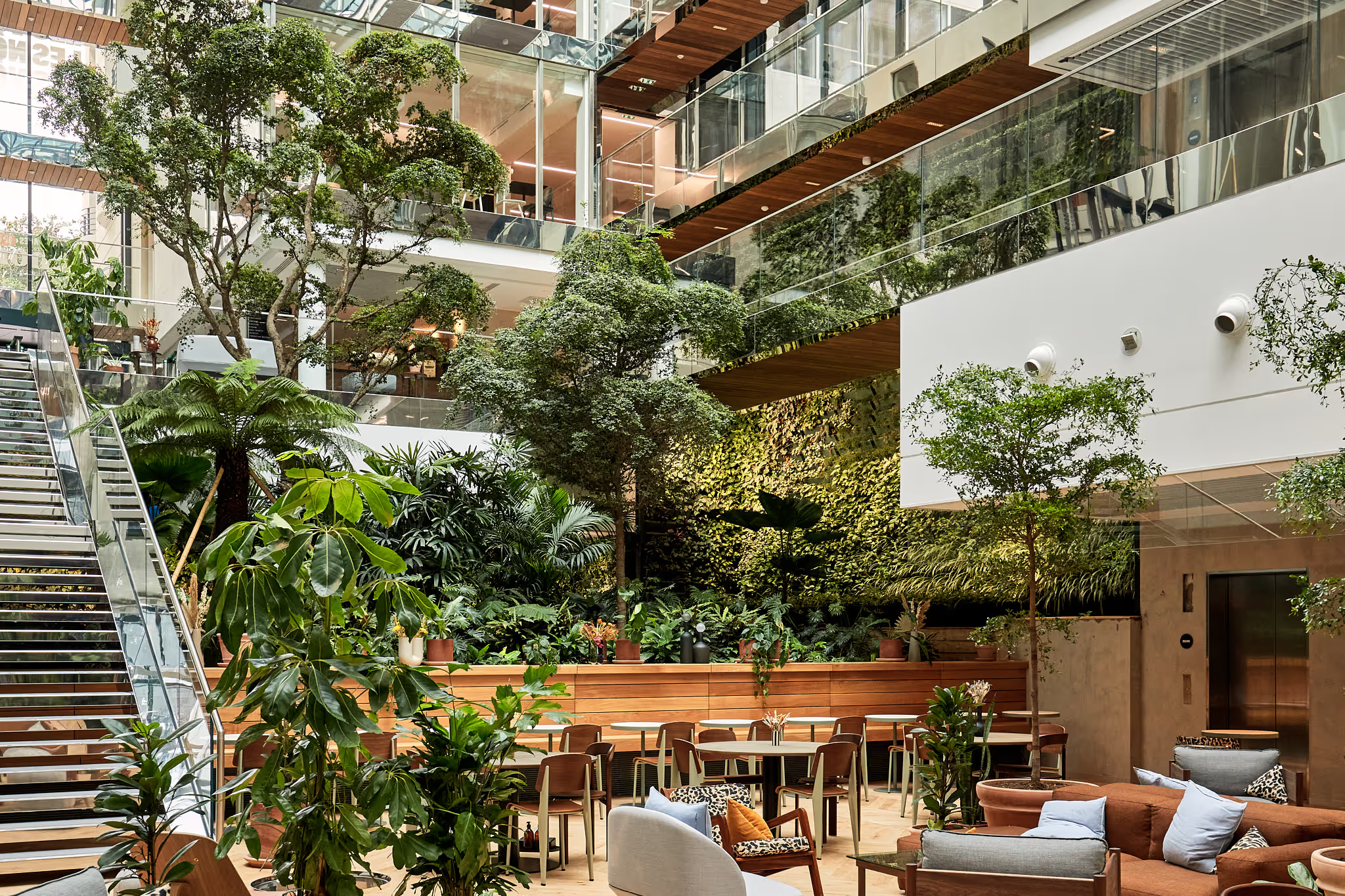
Plants at the office are not just a decorative detail; research has brought to light their positive impact on workers. A study carried out by Cardiff University in 2014 showed that the presence of plants increased our productivity by 15%. More telling still, a Norwegian study published in 1998 revealed a 23% reduction in symptoms of fatigue and discomfort among employees working in greened offices.
This improvement is explained by our innate connection with the plant world. Researchers speak of "visual micro-breaks": those moments when our gaze meets a leaf gently moving, offering our brain a natural pause between two tasks.
To offer you a practical approach to bringing greenery into the office, we have brought together the advice of Corentin Foucray, landscape gardener on the Morning team. From practical care tips to their place in team life, here is a mini-guide to greening your office successfully.

4 tips for creating your green space at the office
Understanding biophilic design: an all-round approach to nature in the workplace
Before choosing your plants, it helps to understand the framework that greening fits into: biophilic design. This school of design starts from a simple principle: human beings have a fundamental need for connection with nature, and the built environment can meet that need.
In practical terms, biophilic design is not limited to plants. It encompasses the use of natural materials (wood, stone, linen), the maximisation of natural light, the integration of water, organic shapes in the furniture, and of course greenery. The aim is to recreate, within a workspace, the sensory stimuli found in nature, those that reduce stress, foster concentration and improve well-being.
Plants are therefore the most accessible way into this approach. They do not require rethinking the architecture of a space entirely. A few well-made choices are enough to set a tangible effect in motion.
Choosing the right plants for each space
Even before choosing your plants, start by observing your space. Light is the number one criterion: the lower down a building you go, the less natural light there is. Good air renewal is also crucial - it is even an indicator of your plants' future health. Based on these observations, you can then find the varieties particularly well suited to your space:
- Dracaenas: renowned for their ability to purify the air
- Zamioculcas: particularly hardy, perfect for beginners
- Monstera: bringing a graphic touch while remaining easy to care for
- Spathiphyllum: ideal even in spaces with little light
Positioning your plants according to the architecture of the place
Urban architecture has a strong influence on where you place your plants. Between the ground floor and the 4th floor (roughly), don't hesitate to place your greenery near the windows, as these will bring them only indirect light thanks to the shadows of the neighbouring buildings. From the 4th floor upwards, however, avoid placing your plants directly behind the glass. Light filtered through the glass can create a magnifying-glass effect that is harmful to the foliage. Favour a position set slightly back, where they will benefit from indirect but sufficient light.
Planning a reasonable budget
How much should you set aside to green your workspace? For a fine plant of 1m50 grown hydroponically (a system that uses clay pebbles and water), allow around €285. This price may seem steep, but it is easily explained: you are investing in quality plants and an installation system that guarantees them a long life. As for the ratio of plants per square metre, allow around 1 plant every 8/10 m2.
On the equipment side, you will need a few tools, starting with a moisture meter - your best ally for tailored watering. The initial costs may seem daunting, but these are investments that quickly pay for themselves when you see the positive impact of plants on the working atmosphere.
Worth knowing: the prices of materials for plants are climbing slowly but surely, owing to environmental challenges, particularly around peat, this fossil material that has become precious to the sector.
Day-to-day care: the keys to success
Favouring regular rather than intensive care
The key to good care lies in regularity rather than in the intensity of the attention given. Establish an observation routine: a simple daily glance is enough to spot the signs that call for action - yellowing leaves, drooping stems or suspicious marks.
For watering, keep to a two-week cycle, allowing the root ball to dry out between waterings. This alternation fosters healthy root development and better absorption of nutrients.
Using a moisture meter for precise watering
The moisture meter is your best ally for suitable watering. This simple instrument measures the moisture of the soil deep down. By pushing it into the compost, you assess the moisture level precisely and adjust the amount of water needed. More reliable than your finger and less risky than intuition, it tells you exactly when to water.
Adopting natural solutions against pests
Faced with pests such as mealybugs, natural solutions exist. A mix of lemongrass essential oil, black soap, hot water and 70-degree alcohol makes for an effective and environmentally friendly treatment. This solution creates a protective barrier on the foliage while eliminating the unwanted visitors.
To apply it, start by cleaning the foliage with a cloth. Then spray your plant generously with your homemade solution. This natural preparation creates a protective barrier on the leaves and smothers the pests, even those nestled in the nooks and crannies. Repeat the operation two to four weeks later for an optimal result.

Creating a collective momentum around plants
Appointing someone in charge of the plants
Identify someone in your team who already has green fingers or who shows a natural interest in plants. This person will become your "plant lead", responsible for coordinating the care and sharing their enthusiasm. The advantage? By entrusting this role to someone motivated, you ensure that good practices will be well understood and passed on: the right amounts of water, how often to water, the use of fertiliser...
Putting a collective routine in place
Establish a simple but regular watering schedule. There is no need for complex actions: a well-established routine is worth more than intensive one-off interventions. Absolutely avoid uncoordinated individual initiatives such as improvised top-ups.
Organising continuity of care
Plants don't take holidays! Set up an effective handover system for time off. A good practice? Organise a short handover session before the lead goes off on holiday each time. It is the chance to share the particularities of each plant and the essential care they need. A watering can and a few clearly noted tips are enough to ensure continuity of care.
Greening a workspace is an adventure open to everyone, one that lastingly transforms our working day-to-day. With the right tools and a little collective organisation, your future plants are just waiting for you to green your spaces!
Would you like to entrust the greening of your office to professionals? Discover the greening offer from Club Morning and let expert hands take care of it for you.
Our team is available to assist you.

Download our new study
Nouveaux bureaux : ce qu'attendent les salariés
.png)


.jpg)