

Work after lockdown: the Morning study
Over the two months of lockdown, we ran a survey among our coworkers to find out about their new working habits, as a way of taking the temperature and anticipating their return to the office. 220 of them responded, so we were able to slip on our lab coats and analyse the answers. Here are a few of the trends we found under the microscope.
The rise of remote work:
The findings are unequivocal: 99% of respondents say that the remote work imposed during these two months of lockdown shook up their habits and ways of working. And remote workers seemed fairly satisfied with this new situation: 97% of them say they are in favour of continuing to work remotely from home, including 42% at least several times a week.
Nevertheless, while the experience proved simpler and more practical than we might first have thought, remote work still has two major drawbacks:
- First, isolation. Working remotely apparently weakens social bonds. 69% of coworkers felt distant from their team members, despite the wealth of tools made available for remote working during this period. This distance also had a direct impact on team productivity: that is what 52% of respondents experienced.
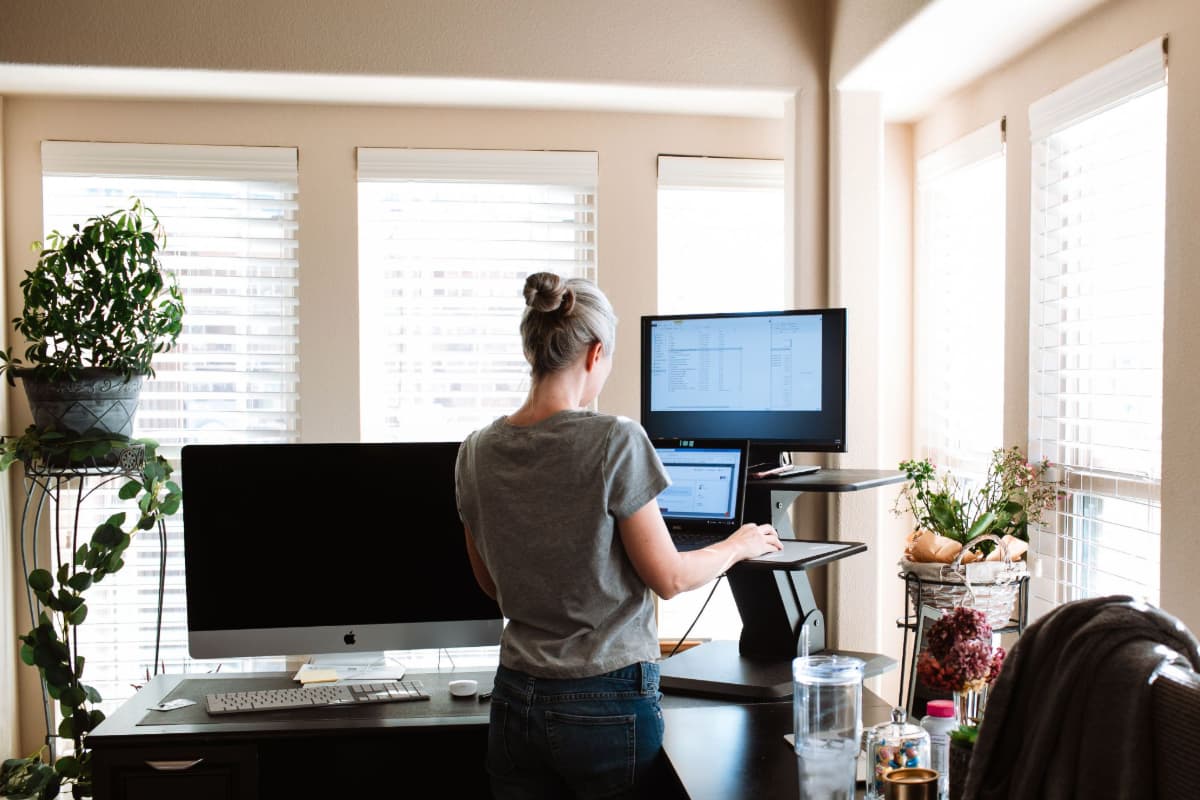
- Second, a lack of equipment. Not all of us are well equipped to cope with two months of remote work. Some employees had to make do with this lack of equipment. 36% of respondents therefore invested in dedicated equipment to boost their efficiency (34% bought a screen, 54% a keyboard or mouse), but also their comfort: 50% of respondents said they needed ergonomic furniture in order to work in the best possible conditions. To meet this need for equipment, Morning worked with Agora Place, a marketplace of refurbished products for professionals, to give our coworkers exclusive access to the platform. And it works: more than a hundred coworkers have already ordered IT equipment.
Remote work thus took over almost entirely during this period. The office of tomorrow will very probably feel the effects. There will be a before and an after for the office. That, at least, is the view of the 61% of surveyed coworkers who say that workspaces will be changed forever by this crisis.
The end of the office?
So, are we heading for the end of the office? The workspace as we know it will certainly be turned upside down, but it seems to be heading for a transformation rather than an extinction. While Google, Facebook and Twitter have told their staff that there will be no return to the physical office before 2021 at the earliest, this crisis has highlighted the benefits of sociability in the working environment. Humans, it seems, remain social animals.
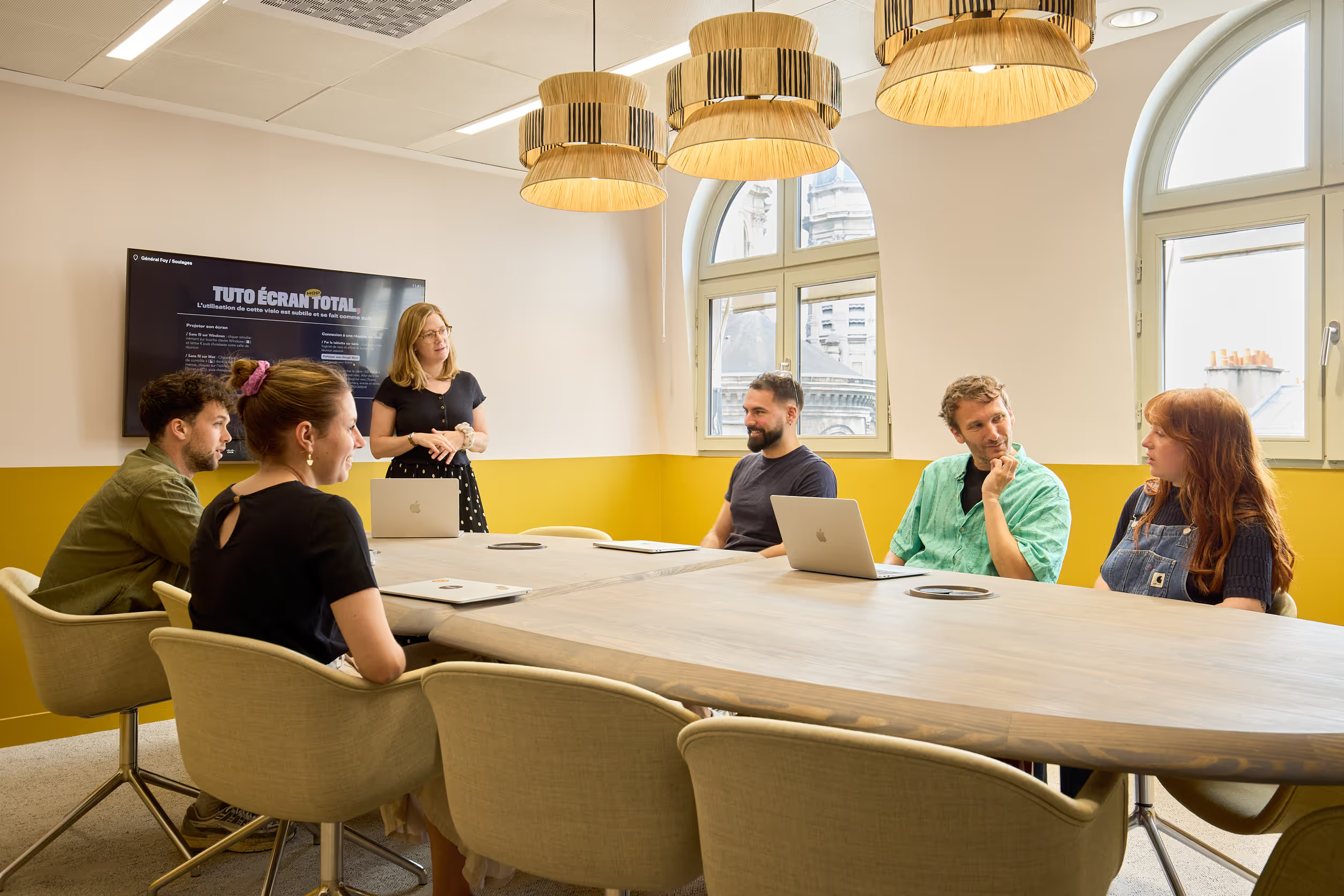
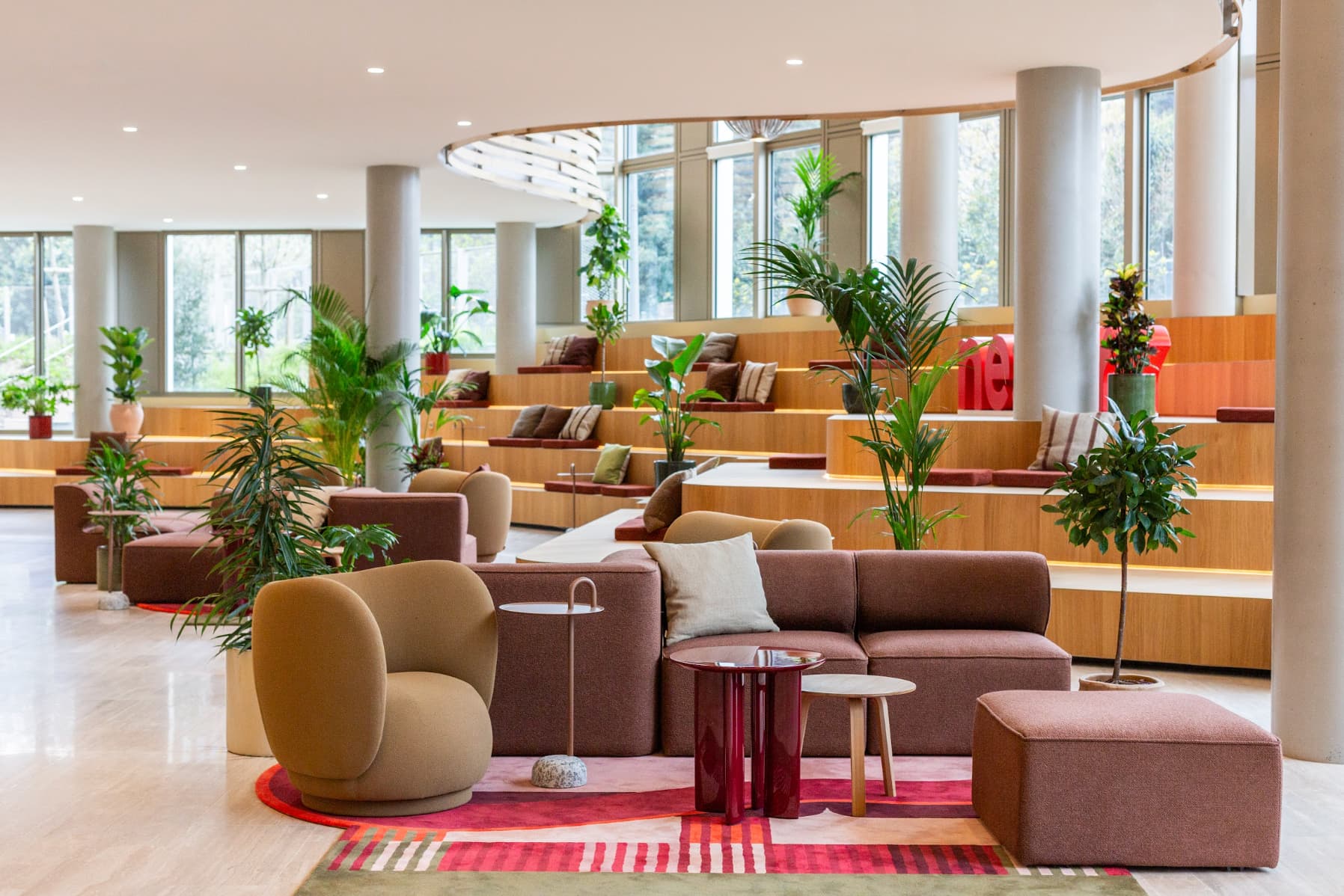
Respondents want to see their workspaces adapt to their new habits and thus become places for exchange and collaboration. Half of respondents would like to have more collaborative spaces in their offices in future. And 40% of respondents would like to prioritise face-to-face meetings through moments of conviviality. As Clément Alteresco, the founder of Morning, points out in an op-ed, “the office of tomorrow will be less a place of production and more a space for expression”.

The revival of nomadism:
The study also shows a shift in our relationship with the workplace, with a growing emphasis on nomadism, an approach that is more flexible and less focused on being physically present. And it is company leaders who say so: 40% of the leaders surveyed want to introduce flex office (the absence of an assigned desk in the workplace). 60% of leaders are also considering extending remote work, at least once a week. And finally, 50% of respondents want to ask their management for nomadic access to coworking spaces.
Flex office, nomadism and occasional remote work will certainly push companies to rethink the size, layout and optimisation of their workspace. So here again, Morning got to work. Drawing on our experience in fitting out coworking and workspaces, we developed a wonderfully simple calculation tool that, based on the actual occupancy of your offices, estimates your needs in terms of the number of workstations and floor space. In just a few clicks, the Morning calculator gives a precise result showing what the office perfectly suited to your team and ways of working should look like.
(Discover our coworking spaces.)
Methodology
Survey conducted between 30 April and 10 May 2020 among 6,000 coworkers, with 220 respondents.
Also worth reading: "C'est pas ça le télétravail", the op-ed by Clément Alteresco
Our team is available to assist you.

Download our new study
Nouveaux bureaux : ce qu'attendent les salariés
.png)
.jpg)