



The property sector’s carbon footprint is one of the largest around. In this "fine" league table, Morning has its share of responsibility. For a few years now, things have been changing. The whole team has taken up the subject, and eco-friendly practices are being woven into the life cycle of our spaces. To understand where its priorities lay and truly measure the effect of our actions, Morning carried out its first carbon assessment.
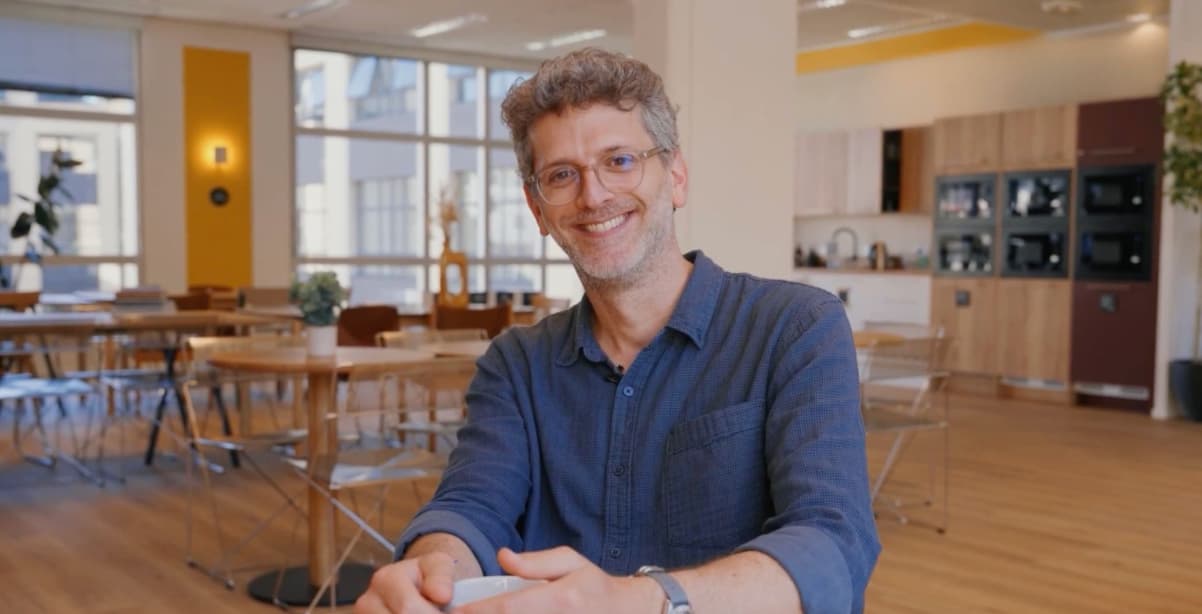
To get there, the team drew on the expertise of Magelan.Tech and its co-founder Adrien Destrez, who helps companies grow while building in an environmental strategy equal to the challenges of climate change.
Working closely with Margaux Gaillet (Head of Impact at Morning), Adrien Destrez presented our first carbon assessment, carried out for the period from 01/10/2019 to 30/09/2020. The results came in early in the year, as a fresh starting point for our future actions.
The carbon assessment: why and how?
A carbon assessment means accounting for all the greenhouse gas (GHG) emissions linked to an organisation. It sets out to calculate direct emissions (a space’s electricity use) but also indirect emissions (transporting furniture). All this data is then translated into aggregated emissions under a common denominator: the tonne of CO2 equivalent. Such an assessment makes it possible to gauge an organisation’s real impact in terms of GHG emissions, so as to put in place an action plan to reduce them.
Our carbon assessment covered the period running from 1 October 2019 to 30 September 2020. The data was aggregated over the following weeks under the expert eye of the Magelan teams. The whole point of a carbon assessment is to be complete, to take in all our activities. Both the activities linked to our coworking spaces (fit-out, sales and operation) and the activities of our teams (transport, food, digital use).

A quick note on methodology from Margaux Gaillet: “To carry out this assessment effectively, you need to identify, function by function, the people who hold the data essential to the calculations.” No fewer than 8 people contributed to gathering the data, all from different roles: accounting, works & fit-out, purchasing, events… The exercise is complex and time-consuming, but Margaux is keen to reassure other businesses hesitating to take the plunge: “Measuring this consumption isn’t easy, but the exercise gives you very concrete levers for action and brings the team together around shared challenges. It’s extremely valuable.”
Enough to see things more clearly!
The total footprint calculated across all Morning activities is 2,362 tCO2e between 1 October 2019 and 30 September. Broken down to a single workstation, per year, that comes to 284 kgCO2e.
For comparison, 284 kgCO2e is roughly 1,500 km driven by car, 17 smartphones, or 62,000 sheets of A4 paper (Source: "Mon convertisseur CO2" by ADEME ).
Fit-out works on opening account for 54% of the total. Amortised over the lifespan of a space, they are the main source of emissions at 1,251 tCO2e. The calculation method, which involves amortisation over the lifespan – actual or, to date, expected – of each space, highlights how important the lifespan of spaces is. These emissions vary by a factor of x20 depending on the space (light works heavily amortised vs. major works barely amortised over time).
The carbon footprint linked to operating the spaces reveals significant consumption. Emissions from heating (electricity, gas) and air conditioning are the main source in the average operation of the spaces. There is, however, a wide variance between spaces owing to the presence or absence of gas heating.


Measuring certain sources proved tricky, as Adrien Destrez (Magelan) explains to us: “The works side was a real challenge! We had to track down quantities of materials (paint, carpet, and so on) across 30 workspaces before diving into specialist databases. The aim was to find the right CO2 conversion factors. A colossal task. Luckily the Morning team is superbly organised. We were able to dig up spreadsheet archives and works records to build a data reference framework. The result: a fine spreadsheet with more than 5,000 rows.”
This first assessment gives us an order of magnitude across our entire value chain. In the years to come, the idea will be to carry out more precise studies for each area of expertise.
Our actions for 2021
Carrying out the carbon assessment is the first step, the opening snapshot. We’re now giving ourselves a few months to finalise our reduction strategy with each team and to measure the impact of our actions. That’s the key difference from previous years. Being able to measure how effective the actions taken are, then to continue, expand or drop them depending on the results. It’s a new stage on the horizon for Margaux’s team: “It’s about working both on projects as technical as optimising energy use and on projects tied to low-carbon options at our coffee bars.”
Three main priorities have now been identified:
☞ The length of our property leases
☞ Our energy use
☞ The choice of more virtuous fit-out materials

A new stage lies ahead, according to Margaux Gaillet: “We need to work on technical projects such as optimising energy use, but also on what we serve in the cafes of our spaces.” This will mean, for instance, rolling out presence detectors and low-energy bulbs as standard, and setting the right temperature in the offices by tracking our consumption closely. At the coffee bars, the teams will extend composting practices, challenge suppliers on optimising deliveries and raise awareness among the community of coworkers in the fight against food waste. Cutting down on single-use packaging and choosing responsible caterers are also firmly in their sights.
The works and fit-out team will also press on with its actions across every area: choice of materials, selection of suppliers, and the way our furniture range is designed.
An enormous amount remains to be done, and every member of the team is becoming aware of their own responsibility. Each will also act on their own scale internally. Also on the agenda of good things to come (among others): less beef at lunch, ever more sustainable transport and reconditioned IT equipment, repaired where possible and given away when no longer in use.
****
To go further:
☞ Magelan’s services to activate your climate strategy.
☞ A detailed rundown of the IMPACT actions carried out by Morning
☞ The interview with Augustin Boulot, Managing Director of B-Lab France, who looks back on the importance of measuring our actions.
Our team is available to assist you.

Download our new study
Nouveaux bureaux : ce qu'attendent les salariés
.png)

.jpg)