

Eco-design is a topic that is taking up more and more of the conversation within businesses. The stakes are so high that every sector and every profession is affected. Here we bring together 10 essential questions to try to shed a little light on it.
1. What is the definition of eco-design?
According to ADEME – the French Agency for Ecological Transition (Agence De l’Environnement et de la Maîtrise de l’Énergie), also known as the Agence de la Transition écologique – eco-design “means designing a range of products that are more environmentally friendly”. In other words, a product is eco-designed when reductions in environmental impact are built in from the design stage onwards. The aim is to minimise its negative impact across its entire life cycle.
To achieve this, you have to do more with less, while maintaining the product’s performance. A genuine tool of the circular economy, eco-design sets out to limit waste and reduce the use of resources even before the manufacturing stage. Again according to ADEME, the idea is to draw “as little as possible on non-renewable resources, favouring instead the use of renewable resources and the reuse of materials or waste.”
2. Why embark on an eco-design approach?
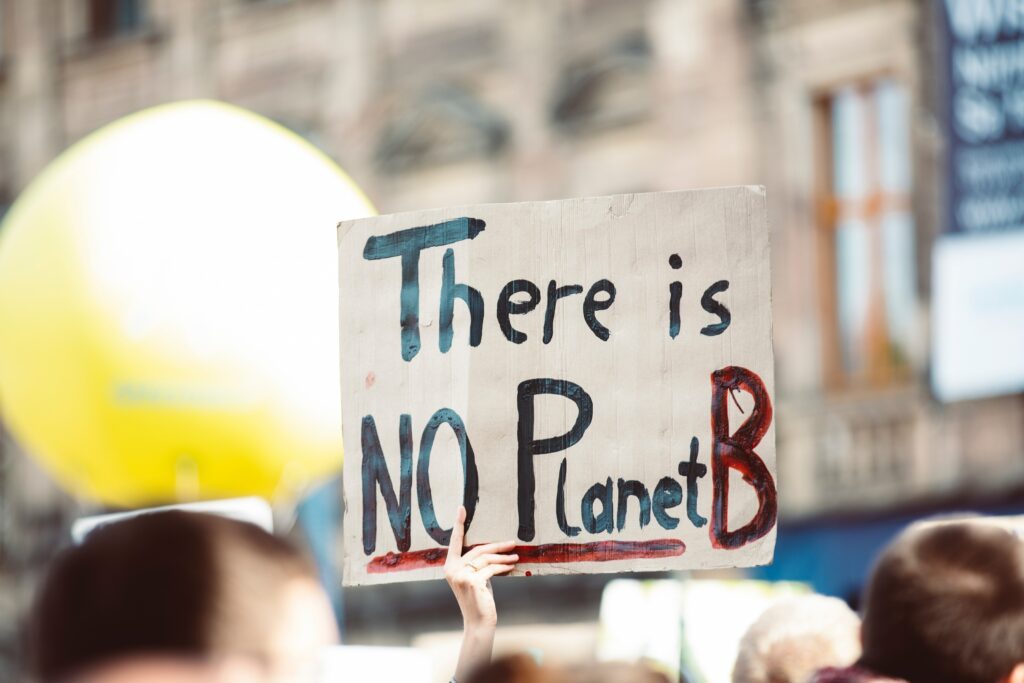
Sadly, the reasons for embarking on an eco-design approach are many. Like all jet engines, we often need a push before we act… So here are a few compelling arguments to get you started. Needless to say, the list is far from exhaustive:
– Every year, 24 million tonnes of waste are produced by French factories.
– According to the Living Planet Index, the overexploitation of natural resources has caused a 60% decline in biodiversity since 1970.
– Since 2020, the mass of human-made material (which is close to 1,100 billion tonnes) has exceeded the weight of the Earth’s biomass.
Beyond these rather sobering figures, there are also plenty of positive reasons to begin an eco-design approach. Today, the range of eco-designed goods and services is still far too limited. Organisations absolutely must reinvent themselves and rethink the way they produce. Growing demand is a commercial opportunity to be seized by innovating at every stage of design, manufacturing and distribution.
This innovative framework will also give meaning to your research, with an overall view of your products’ life cycle. Richer, more committed exchanges with your suppliers are set in motion, relationships improve and become more constructive. Eco-design becomes a powerful lever for internal motivation, because it is a genuine common cause within the business, championed by every trade and discipline.
The “great resignation” in the wake of Covid and the search for meaning among younger people have highlighted the need for businesses to be more appealing. What is more, an economic player that manages to think differently will be able to create fresh momentum within its sector by triggering a virtuous – or even regulatory – competitive response… So many good reasons to embark on an eco-design approach.
3. What are the challenges of eco-design?
Any organisation can lay claim to an eco-design approach without necessarily reducing its carbon footprint in any meaningful way. This reality highlights one of the key challenges of eco-design: measuring your actions.
But in reality, this measurement is not there to prove your good intentions to the world; above all, it is there to better steer your actions and validate your choices. There are any number of methodologies for measuring your actions: the SQLCA matrix (Simplified Qualitative Life Cycle Assessment), LCA (Life Cycle Assessment), the Brézet Wheel, and the 5 Rs strategy (Reduce, reuse, recycle, rethink, refuse). It is up to each of us to choose our method.
At Morning, we opted for the LCA method, which sets out to measure the environmental impact of a product throughout its life cycle, “from cradle to grave” as the English say. Raw materials, manufacturing, transport, use, end of life… Nothing is left out! For each stage, 5 indicators are measured: greenhouse gas emissions, particulate matter, freshwater ecotoxicity, fossil fuel consumption and the use of non-renewable resources.
In December 2019, the Morning team carried out the LCA of its entire furniture range. By identifying the most “costly” areas, we were able to prioritise our actions, quantify our targets and announce our first results this year. As a result, the 2021 edition of our desk has a carbon footprint 17% lower than its predecessor. It is also 15.2% lighter thanks to a 53% reduction in the weight of steel.
4. How do you get started with eco-design?
To get started with eco-design, you first need to identify the product or service to be eco-designed. Then it is very important to seek support and advice from specialist bodies and consultancies. It is project managers who are used to working with ADEME who will be best placed to point you in the right direction. At Morning, we called on the services of Evea, Standard Deviation and Scala Circulaire to get started in the best possible conditions. Thanks to their expertise, we were able to prioritise our actions and respond to ADEME’s calls for projects in order to benefit from financial support.
5. Which levers should you pull in an eco-design approach?
Right from the earliest stage, it is important to ask the right questions. And with good reason: 80% of a product’s environmental implications are determined during the design phases. This is where the key questions arise – which, of course, vary from one sector to another.
For furniture design, for example, here are a few fundamental questions: How can we optimise the amount of material used? What shape should we adopt to minimise offcuts? Which assembly system should we choose to ensure the components can be separated? Each new edition must reduce its impact without diminishing its qualities in use – quite the opposite. The cutting shapes are simplified to minimise waste; the quantity of materials consumed is optimised; the number of materials is reduced to make the product easier to recycle. Below, we present the film featuring the eco-designed Morning desk:
Assembly systems are also a key point to challenge. They ensure the components can be separated and therefore make them easier to repair and reuse! Another advantage worth noting: laying the parts flat helps to reduce the carbon impact of their transport. As part of the eco-design approach to its furniture, Morning offers a lifetime buy-back guarantee, allowing pieces to be reconditioned and put back into circulation.
6. Does an eco-design approach imply local manufacturing?
Eco-design does imply manufacturing on a local scale. Sourcing suppliers of materials and manufacturers is a crucial point. The impact of a local network is twofold: transport times are optimised and local employment is encouraged. This proximity also fosters dialogue with our manufacturers and gives us greater control over what we produce.
That is why Morning’s entire furniture range is made in France. Desks, meeting tables, trestles and storage chests are assembled by a company based in Ille-et-Vilaine. The lockers are made by another manufacturer located in the Val-d’Oise.
7. Is the use of recycled materials compulsory?
An eco-design approach implies progression, improving a score as innovations follow one another. Nothing is compulsory, and not everything can be done at once. The challenge is to target priority areas that will significantly reduce impact (such as replacing plastic with metal, for example).
That said, the aim of the approach is still to address the whole life cycle, the entire value chain. The ideal of an eco-design approach is to incorporate materials with a low environmental impact, and recycled materials are the best alternative to conventional materials.
Even though using 100% recycled materials is no easy feat, that should not stop you from getting started, even if it means aiming a little lower. The eco-designed Morning desk, for example, does not contain 100% recycled materials. So that it appeals to as many people as possible and its lifespan is maximised, we have incorporated several materials: recycled & recyclable materials alongside more traditional ones.
Our 2022 furniture catalogue includes a first product made from recycled materials. This is the Le Pavé tabletop, made from recovered and transformed plastic waste.
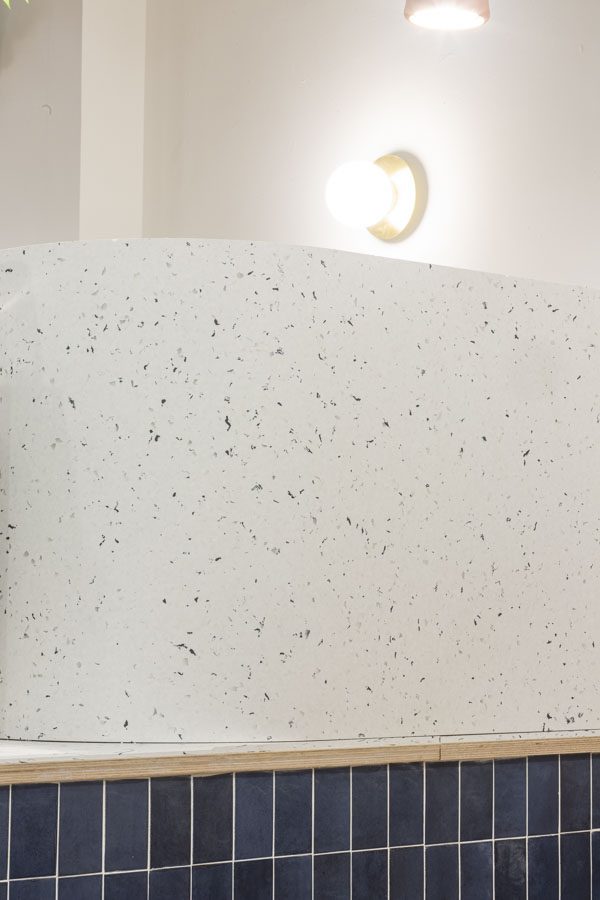

We also commit to buying back every piece we sell, at any time. The furniture will be repaired and certain parts replaced. Our clients will also have the option of changing just the tabletop or the legs. All the other parts will be repaired so they can be offered second-hand. In the future, more and more businesses will take up the transformation of waste streams to turn them into durable materials.
8. What support is available to launch your eco-design project?
A serious eco-design approach calls for resources. Financial support proves essential to allocate dedicated resources to the eco-design project and to formally write it into a team roadmap. This financial support will notably make it possible to surround yourself with technical experts, launch the Life Cycle Assessment of your products, develop your eco-design ideas, identify waste streams and communicate about your project.
Numerous forms of support encourage eco-design approaches. ADEME has, for instance, launched the “Businesses committed to the ecological transition” call for projects. It offered to support SMEs in the industrialisation and marketing of their eco-innovative solutions. A grant of 100,000 euros per business also covered bringing products to market, a crucial and often complex step.
As part of the France Relance plan, ADEME also launched the Springboard for the ecological transition for SMEs and micro-businesses. This is a grant ranging from €5,000 to €200,000 for any project involving waste reduction and management equipment; support for ambitious building renovation works; studies on greenhouse gas emissions and companies’ climate strategies… And of course support for eco-innovative projects!
More and more French businesses are building this virtuous approach into their strategy. ADEME has therefore developed an Eco-design Pack for eco-committed SMEs. This scheme notably includes support tools and exceptional funding to accelerate eco-design diagnostics, sustainable production and environmental labelling. While all SMEs can benefit from it, ADEME has listed three priority sectors with major environmental stakes: digital technology, food and sustainable fashion.
9. How do you obtain support to get started in eco-design?
All of ADEME’s support schemes are available on the Agir pour la transition platform. To maximise your chances of obtaining support, you will need to demonstrate a thorough knowledge of the subject (in-house expertise, an understanding of the market and ongoing monitoring), and show that you are surrounded by technical partners who will support you in delivering the project. Do not hesitate to highlight how rigorously you manage your project (a detailed timeline, details of the deliverables at each phase, details of responsibilities and teams).
The funding rate granted also depends on the nature of the expenditure, the size of the business and its turnover. Morning’s project to create eco-designed furniture was funded to the tune of 60%.
Beyond funding programmes, ADEME supports and advises decision-makers on their projects, develops methodological tools, helps to spread good practice, and trains, informs and raises awareness around issues linked to the energy transition and sustainable development.
10. Who are the most advanced players in eco-design?
The number of players investing in an eco-design approach is growing all the time. What is more, they operate across a wide range of sectors. To get an idea, do take a look at the companies that have obtained B-Corp certification. All of these organisations wave the same banner: using business as a force for good! These organisations build social, societal and environmental goals into their mission, their business model, their workforce and their products or services.

Whether it be Patagonia, Innocent Drinks, Les Deux Vaches, Alessi, Nature et Découvertes, Big Mamma, Ecover, Laboratoires Expanscience, Blédina, VEJA, Ben & Jerry’s, Ulule or La Ruche Qui Dit Oui… All of these players are alert to the challenges of eco-design. The only one missing is you. We really hope you are going to get started – the whole Morning team is right behind you!!!
***
☞ To find out more about eco-design, get in touch with Morning’s design team.
☞ Discover our site “Eco-designed? It’s possible!” with plenty of advice to help you get started.
☞ All the details on the art of the table by Morning
Our team is available to assist you.

Download our new study
Nouveaux bureaux : ce qu'attendent les salariés
.png)
.jpg)