

Ah, team cohesion! That little something that takes a team from "decent" to "exceptional". In a professional world evolving at breakneck speed, we all know that team cohesion has become an essential ingredient.
But what does it really mean? What are its benefits, and how do you create those bonds within your team that define it?
Team cohesion: what is it?
The Larousse dictionary gives us a first clue, defining cohesion as "the force that unites, the property of a whole in which all the parts hold together".
In the professional world, this definition takes on its full meaning.
Patrick Lencioni, an expert in team management, goes further in his book
"The Five Dysfunctions of a Team": he compares cohesion to a jigsaw in which every piece counts, and places trust as the foundation of any successful collaboration.
Day to day, this team cohesion shows itself across three essential dimensions:
- The social dimension: those shared moments that create a common history.
- The operational aspect: that natural way of working together, as if you could read each other's minds.
- The collective identity: that sense of belonging to something bigger than yourself.
The benefits of strong team cohesion
After years of increases, absenteeism in France is finally showing signs of improvement, with a rate that fell from 5.4% in 2022 to 4.8% in 2023 (sources: WTW). But a paradox persists: while the French attach great importance to their work (62% of them consider it "very important"), their level of engagement remains surprisingly low - only 7% of the French working population are said to be genuinely engaged (sources: Boson Project 2023).
To solve this problem, we need to pull one essential lever: the quality of human relationships at work. Studies show that when teams develop genuine bonds and true team cohesion, absenteeism naturally decreases in favour of stronger, more lasting engagement.
Reducing turnover
The Gallup "State of the Global Workplace 2024" study shows that engaged teams experience a significant reduction in turnover: up to 51% in low-turnover organisations and 21% in high-turnover ones.
This is the direct result of successful team cohesion: when teams are tight-knit and everyone finds their place, staff naturally commit for the long term. Management that pays attention to this team cohesion thus becomes a key factor in retaining talent.
Increasing employee engagement
When there is a good rapport within the team, it reduces stress, which makes staff want to come to work. This increased motivation leads to greater investment in projects, as members move from a "I have to do it" mindset to "I want to do it". As a result, there are fewer absences and a virtuous dynamic takes hold. Teams spontaneously put forward solutions, improvements and innovations.
Boosting performance
Again according to the Boson Project study, tight-knit teams are 17% more productive. This is the natural result of a team that works well together. Communication becomes more effective, ideas flow more freely, and solutions emerge more quickly. Tight-knit teams naturally benefit from better communication and a shared understanding of objectives, which allows problems to be solved more quickly and effectively.
Concrete actions to strengthen cohesion

Theory is all very well, but let's get down to the practical side!
Organising a company away day remains an excellent way to boost team cohesion. The idea is to create a moment apart, in a setting that breaks from the everyday, far removed from a simple PowerPoint in a gloomy room.
These moments allow you to blend work and conviviality, strategy and discovery. It is the perfect opportunity for everyone to show a different side of themselves.
Training managers
70% of a team's engagement depends directly on management. The figure gives pause for thought. In other words, managers hold the keys to collective motivation in their hands!
The first thing to note: technical training is no longer enough. Communication, empathy, leadership... These management skills cannot be improvised; they are learned and cultivated. And that is precisely where many companies miss the essential.
The good news? Role-play workshops, leadership seminars and mentoring programmes allow managers to develop these essential skills. The important thing is to create a continuous training pathway coupled with a company culture that sustains it, rather than a one-off training course that is forgotten as soon as it ends.
Set up a collaborative workspace
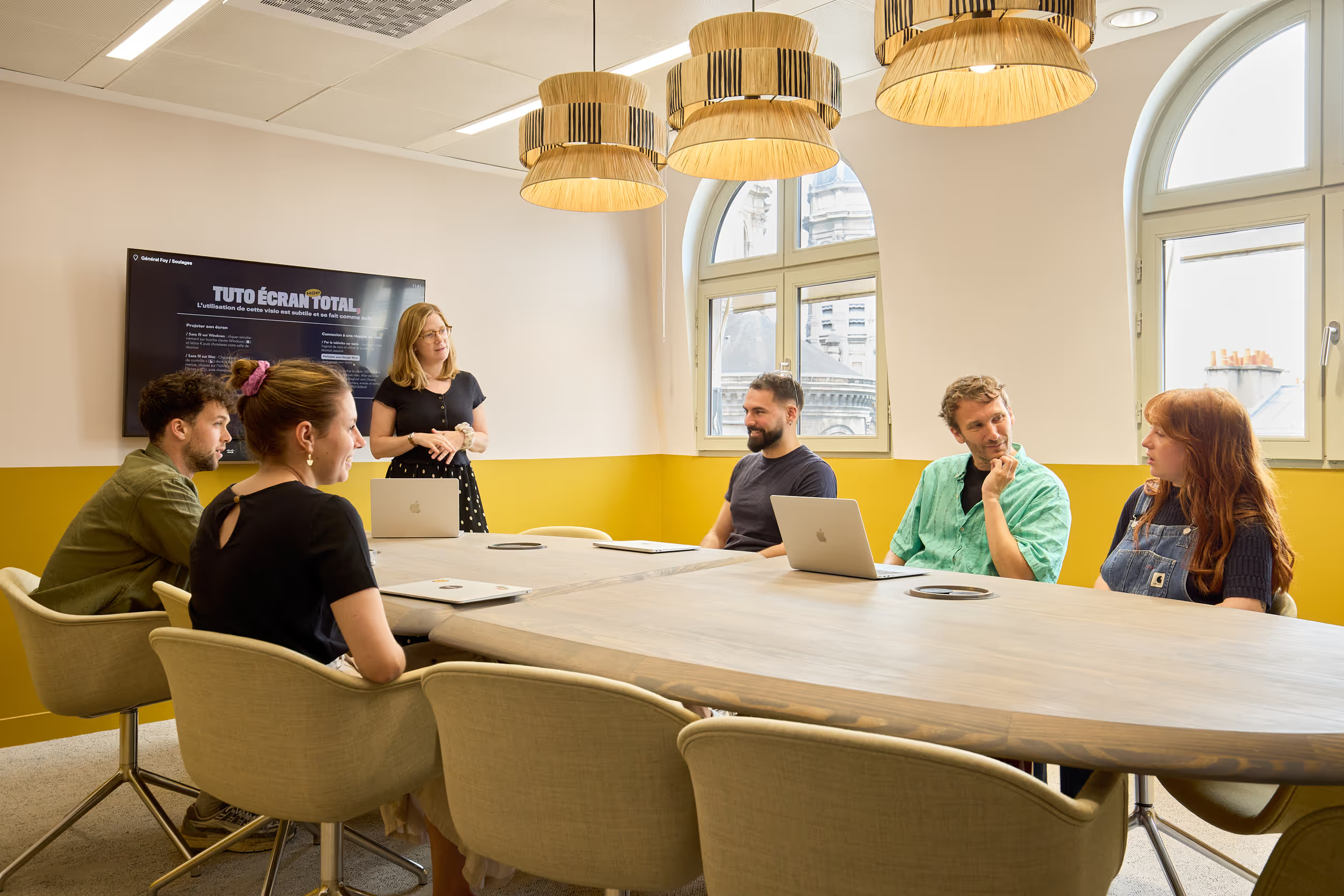
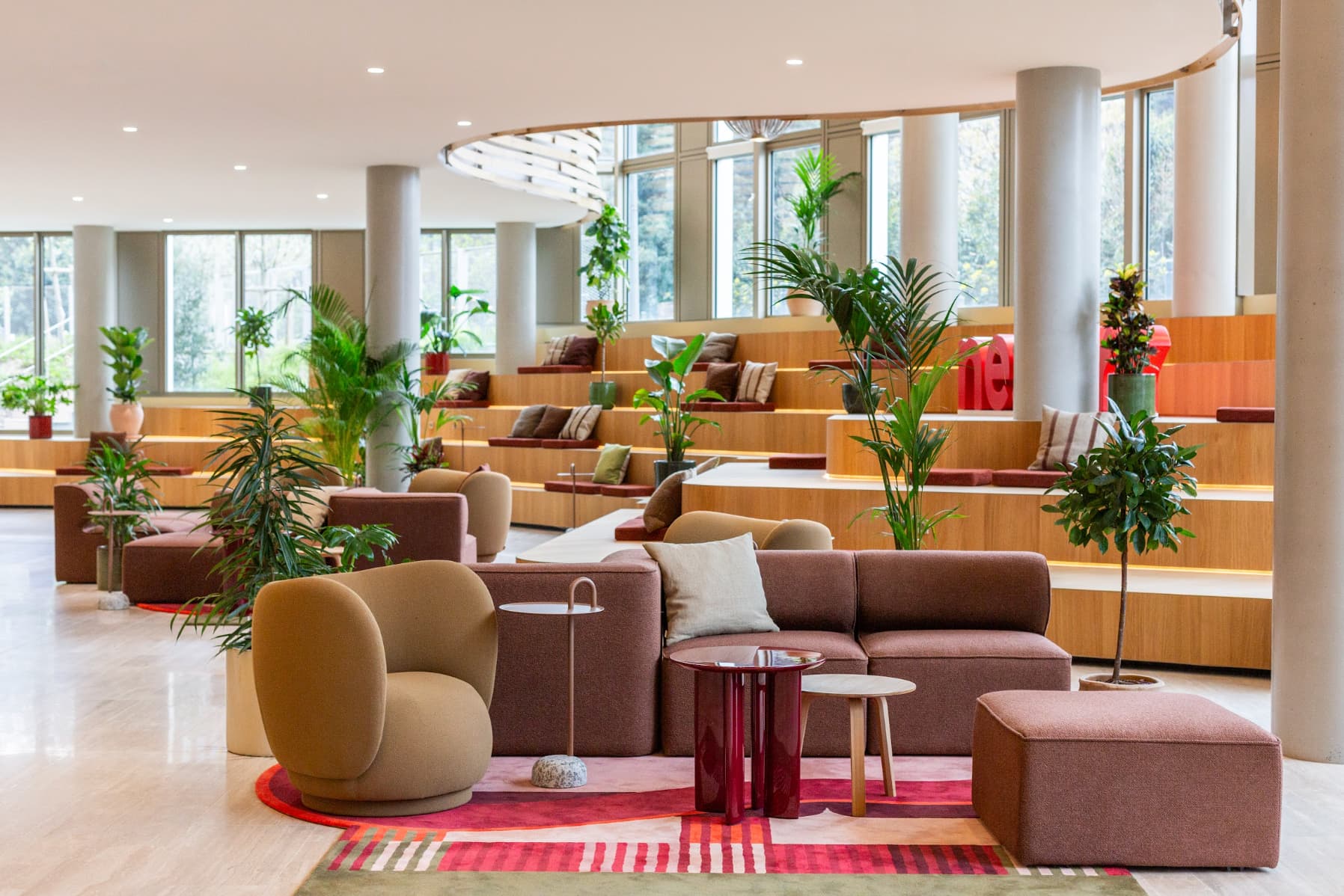
The design of workspaces also plays an important role in team cohesion. When it is well thought out, it helps to encourage collaboration, modularity and adaptability. When an environment is easy to live in, you save a great deal of time and energy.
Whether in an intimate team office or a lively open-plan office, each configuration has its part to play in creating bonds. For fast-growing companies, the choice between a whole office floor or a standalone building can make all the difference in building that cohesion. The key is to create spaces that match your company culture and encourage natural interactions. To give you an idea, for 100 people you should allow around 3 meeting rooms and 6 phone boxes to ease the bottlenecks... As for your shared spaces, allow around 30% of your total floor area. At Morning, we have developed a range of business solutions tailored to every need, so do feel free to get in touch.
Organise unifying moments

Beyond the day to day, teams need to share memorable experiences together. These special moments are built hand in hand with staff, the true architects of these collective occasions.
How to go about it?
Rather than imposing a format, launch a consultation with your teams. Preferences naturally vary: some will be enthusiastic about a cookery workshop, others are already picturing their next escape game. This diversity is what makes your programme rich. Each activity meets a specific objective. A hackathon turns a team into an incubator of ideas, a sports session creates collective momentum, a creative workshop reveals hidden talents.
The organisation itself becomes a unifying project: entrust it to willing members of staff or your office manager, whose closeness to the teams guarantees formats that resonate with your company culture.
Following up on these initiatives deserves as much attention as setting them up. A simple but effective dashboard makes it possible to measure their impact:
- Satisfaction surveys that capture the mood in the moment
- Regular monitoring of HR indicators (attendance, retention, involvement)
- Discussion sessions where everyone can suggest adjustments
This iterative approach makes it possible to fine-tune your formula gradually, for moments that are ever more impactful.
Fancy organising one? At Morning we take care of everything and you just have to enjoy it. It's that simple.
Everyday actions
Team cohesion is built day to day, through rituals that adapt to each company culture.
You can try out several approaches and see which one proves itself within your team. For example, if feedback is at the heart of your company culture, you can send out surveys each month, or several times a year, where each member of staff can anonymously express how they feel and what they need. This simple practice can prove effective for quickly identifying areas for improvement and, above all, for keeping an open dialogue.
You can also give your everyday a rhythm by setting up peer-to-peer training. These monthly sessions allow staff to share their knowledge on a range of subjects, from tech to design by way of project management. Beyond the sharing of skills, these moments create unexpected connections between teams.
And finally, you can also get together regularly for moments of exchange to discuss each team's news, your company's objectives or to review the results.
Other companies develop their own rituals according to their own culture. Some rely on short, dynamic daily check-ins, others prefer more in-depth weekly sessions. "Learning expeditions" between departments are gaining in popularity, as are "random coffees" that create unlikely encounters between staff from different departments.
The format of these exchanges can also vary: in-person meetings, video calls, or hybrid formats. The key is to find what resonates with your company culture.
The key to success? Staying attuned to your teams' needs and adapting these rituals in line with their feedback. A routine that works today may need to be adjusted tomorrow - it is this capacity to adapt that makes it possible to create authentic, lasting team cohesion.
Our team is available to assist you.

Download our new study
Nouveaux bureaux : ce qu'attendent les salariés
.png)

.jpg)