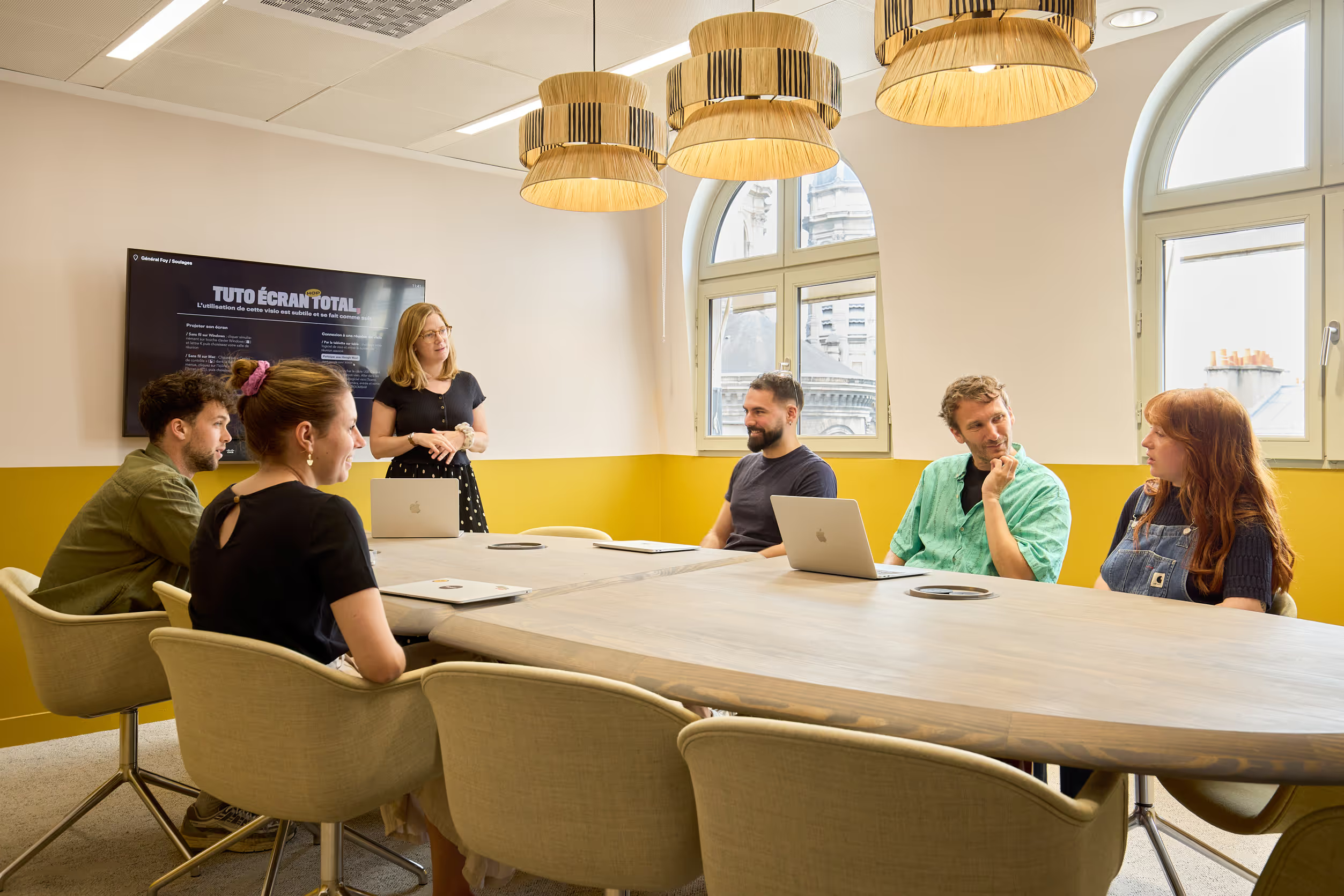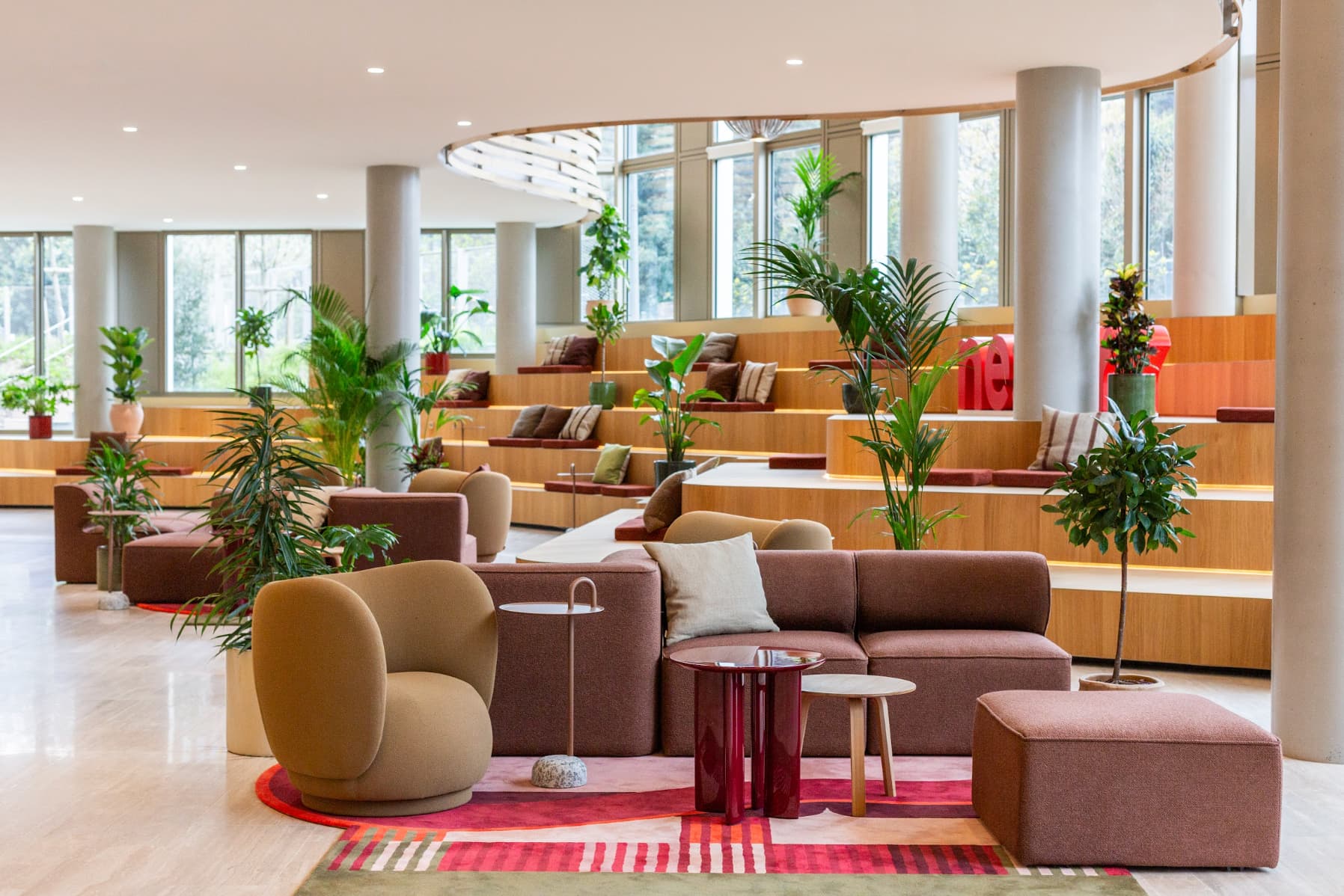


Picture yourself arriving each morning at a warm, comfortable office perfectly suited to your needs. Wouldn’t you feel more motivated and creative? That, at least, is what 72% of working people think, according to a study by ACTINEO. For them, the company should offer workspaces even better than home to make people want to come into the office.
Because yes, these spaces where we spend so much of our days are genuine second “homes”, which greatly influence our well-being and our productivity.
And the benefits don’t stop there! A carefully designed office fit-out projects a positive image of your company to your clients and prospects. It’s a real asset for building a climate of trust and boosting your performance.
In this article, we share 5 tips for optimising well-being and efficiency at work, all while conveying your company’s unique identity. Our team has already supported more than 30 clients on their refurbishment projects.
Tip no. 1: Choosing your location, in light of your criteria and your means
The working environment is a key factor that directly influences employees’ productivity, well-being and creativity. An ideally located and well-designed workspace can not only improve day-to-day efficiency, but also strengthen a sense of belonging and satisfaction at work.
According to a study carried out by HelloWork in 2021, location is an essential criterion for 79% of people in France when they’re looking for a job. More specifically, half of employees feel that the home-to-work commute shouldn’t exceed 30 minutes. These figures highlight the strategic importance of the choice of location for businesses.
But location is only one of the many levers to pull to enhance your workspace and strengthen your employer brand. The equipment on offer, the services available on site and a well-suited remote-work policy are all elements that help create an attractive and fulfilling working environment for your employees. (to find out more, see “The location of your workspace: an essential criterion?” )
If you’re looking for the ideal place for your company, explore our interactive map of available office spaces to find the perfect location, suited to your criteria.
The Morning teams support you through the Audit/Advisory phase of your projects, helping you to ask the right questions and define the criteria that matter for your company and your teams.
A strategic location: a major asset for your company
At a time when employees attach growing importance to their work-life balance, a company’s location and the services it offers are becoming decisive criteria for candidates. Companies must adapt to these new expectations to attract and retain talent.
Companies that set up near stations and public transport enjoy a significant competitive advantage. Indeed, employees increasingly regard commuting time as time wasted, and are actively seeking employers who allow them to cut these journeys. Marie Barbier, HR Director at Morning, notes a rise in the number of candidates who ask about the company’s remote-work policy from the very first interviews.
While not every company can afford a city-centre location or one right next to transport, there are nonetheless alternative solutions for boosting their appeal.
Companies located away from urban centres can make up for this drawback by offering services and activities that meet their employees’ needs. Indeed, while the home-to-work distance can’t be reduced, it is possible to cut, or even eliminate, other tiresome journeys: the gym, personal-development classes, the shopping, the nursery, and so on.
Tip no. 2: Assessing the number of workstations with precision

The most common definition of flex office describes a way of organising work that does away with closed offices and workstations assigned to each employee. In a flex office set-up, the company’s premises offer different workspaces, allowing employees to settle wherever they like in open-plan areas where the workstations are shared.
This practice is spreading more and more across various organisations. Experience of flex office reveals many advantages, but also certain limitations. Beyond the gains in space and the financial savings that follow, organisations also gain in cross-functionality and agility.
Flex office makes it possible to tailor workstations to everyone’s specific needs in terms of space and resources. It also reduces the number of workstations required. In general, open-plan workstations account for between 60% and 70% of the total headcount. However, it’s important not to overestimate the savings made, since some of the space freed up by reducing workstations will be turned into areas dedicated to other uses, such as meeting rooms, quiet zones or creative spaces.
Allowing for slightly more workstations than the identified need
Each company must define a workstation ratio suited to its specific needs, taking into account its remote-work policy and its recruitment plans. To ensure a successful transition to flex office, it’s advisable to allow for slightly more workstations than the identified need. This approach makes it possible to anticipate any changes in headcount, particularly in the case of a fast-growing company that might recruit up to 50 new employees in a year.
For organisations wishing to obtain a precise estimate of the number of workstations required, it’s possible to use a workstation calculator. This tool takes into account the various parameters specific to each company and lets you simulate different scenarios to optimise the layout of workspaces.
The size of the organisation will directly influence the number of open-plan areas to set up. These areas can be assigned by function (development, administration, marketing, communication), so as to meet the specific needs of each team.
Tip no. 3: Selecting ergonomic furniture for your office fit-out
If you spend long hours sitting at your desk, you may well become acquainted with musculoskeletal disorders. Those little aches that spoil our daily lives, often caused by poor posture. But rest assured, we have the solution to help you avoid being affected.
The secret is to design your workspace with ergonomic furniture and equipment. Choosing the right furniture for your office is crucial to maintaining good posture and boosting productivity. These small adjustments can work wonders in reducing the risk of back pain, aches in the trapezius muscles and the wrist, and even eye strain.
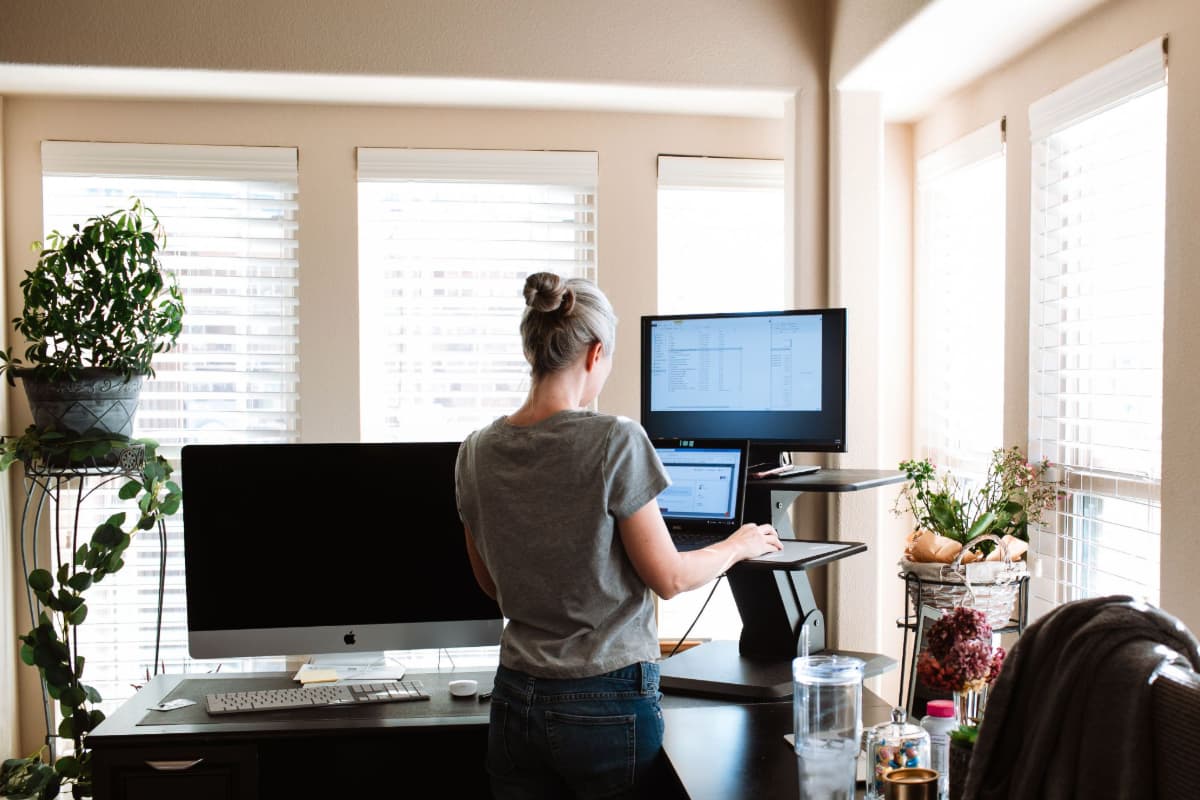
The real game-changer is height-adjustable desks, also known as sit-stand desks. These little marvels allow you to alternate between sitting and standing throughout the day, which boosts blood circulation and reduces the pressure on your back. It’s the trend of the moment, and it’s easy to see why!
Investing in a good office chair
Let’s start with the foundation of good posture at work: the office chair. It’s your best ally for working days without pain. It should fit like a glove, matching your build perfectly with good support for the back and arms. And above all, it should be fully adjustable to suit your every need.
But don’t stop there! Think of the little extras that make all the difference: laptop stands, height-adjustable screens to avoid a stiff neck, and even ergonomic mice and keyboards.
Careful, though – don’t choose your chair on looks alone. The most expensive models aren’t always the most comfortable. The secret is to check all the adjustment options available. An ergonomic chair worthy of the name should be able to adapt to all your activities.
As for budget, reckon on between 350 and 1,500 euros for a quality chair. It may seem like an investment, but believe me, your employees’ backs will thank you.
Criteria for choosing an ergonomic desk

Your well-being at work depends on an ergonomic desk that adapts perfectly to your build, like a little bespoke gem.
The ideal height when seated? Between 65 and 74 cm, no more, no less! And for an optimal experience, opt for a depth of 80 to 110 cm and a gap of 20 to 26 cm between the work surface and your seat. That’s the magic recipe for absolute comfort.
In our hectic professional world, staying seated or standing for hours can become a real challenge for our bodies. But rest assured, the solution is as simple as can be: just vary your postures and alternate between sitting and standing – that’s the secret to keeping a dynamic posture and improving your comfort and efficiency at work.
Height-adjustable desks are genuine allies in this quest for well-being. Thanks to their sit-stand function, they adapt to every build and every need. Whether you’re tall, short or somewhere in between, your workspace becomes your made-to-measure partner.
Tip no. 4: Connecting your space “Smart Office” style
As its name suggests, the smart office is an intelligent working environment. Combined with a host of innovative tools, it significantly improves the employee experience and indirectly strengthens the employer brand. Many companies are now opting for this innovative concept and all its benefits to support the roll-out of their flex office.
The smart office is generally a source of well-being for employees. It also helps make you more appealing in the eyes of talent. Providing working environments that are more technologically advanced is an effective way to attract and retain the most promising employees.
IT tools for better time management
The smart office is much more than a mere pile-up of high-tech gadgets. It’s a working environment designed to adapt to employees’ various needs, whether concentration, collaboration or creativity. By optimising every space, you end up with fulfilled and productive employees.
To help you make the most of your time and resources, several tools are at your disposal. We suggest, for example, putting in place a workstation-booking tool to organise flex office in your premises.
At Morning, we’ve developed an app to make our employees’ daily lives easier. It lets them book meeting rooms or nomadic workstations in one click across the various workspaces in Paris and the near suburbs. The app also makes it easy to sign up for internal events so as not to miss a thing. And in the event of a problem or a particular request, employees can contact the space’s lead directly via the app, so they never feel left to fend for themselves.
There are other tools too, such as:
– IoT sensors (more or less complex technology that measures data and detects changes in the environment) to monitor occupancy and air quality in real time,
– collaboration tools such as online whiteboards and video conferencing,
– community management apps such as Workplace to facilitate interactions between members,
– intelligent security systems for access control via a smartphone or a company badge,
– energy management platforms to optimise the environment,
– productivity apps such as Asana or Trello to aid concentration and reduce stress,…
Innovative tools at every level for a successful employee experience and an employer brand that appeals to talent.
Tip no. 5: Bringing in inspiring decorative touches

With the spread of the home office, employees are increasingly demanding about the quality of their workplace and expect it to be better equipped than their home. What’s more, the working environment must adapt to employees’ activities.
According to a study carried out by BVA for Salesforce, 59% of employees regard well-being at work as a major issue. And guess what? Well-designed, beautifully decorated offices boost the troops’ morale and reinforce employees’ sense of being valued. On top of that, they project a dynamic image of the company, which helps retain talent. What more could you ask for? You can also use the walls to display artworks or inspiring graphics that reinforce creativity and engagement.
What’s more, the presence of natural light can radically transform a workspace. So make sure your workspace enjoys good exposure to it. Sunlight is the jackpot for your mental health. It boosts your vitamin D synthesis and even reduces stress.
The importance of lighting and colours for an optimal working environment
Office fit-out calls for particular attention to three key elements: lighting, colours and the presence of plants. These factors directly influence employees’ well-being, productivity and creativity.
Quality lighting, combining natural and artificial light, is essential to creating a comfortable and stimulating working environment. Favour natural light by positioning workstations near windows and using blinds or curtains to modulate the light intensity. Round it off with artificial LED lighting, combining general lighting and individual desk lamps for optimal flexibility.
The choice of colours also plays a crucial role in office fit-out. Opt for neutral or pastel tones, such as ecru, cream white or taupe grey, to create a serene atmosphere conducive to concentration. Bring in touches of blue and green, renowned for their soothing qualities. Take care to align the colours with the company’s overall style for aesthetic consistency.
Don’t forget to add plants to your workspaces. They purify the air by absorbing chemicals and the waves emitted by electronic devices, while helping create a healthier, more pleasant atmosphere. The presence of plants fosters employees’ concentration, motivation and productivity, while strengthening the company’s employer brand.

By judiciously combining these elements, you’ll create an optimal working environment, a good place to work, create and unwind. The example of Morning Laffitte, with its large glazed and planted interior courtyard, perfectly illustrates the positive impact of a well-thought-out office fit-out on team well-being and performance.
Tip no. 6: Equipping your space for a well-being experience
The equipment and services offered by the company play an essential role in employee well-being. A well-equipped workspace, offering a range of services, can considerably improve professional quality of life and employee satisfaction.
At Morning, we create workspaces designed with employee well-being in mind, with meeting rooms fitted with video-conferencing technology, comfortable break-out areas, kitchen corners and well-equipped gyms. Our app gives employees access to services such as the nomad service, offering unlimited access to fully equipped workstations, as well as more than 40 meeting rooms. To improve their employees’ mental health, companies therefore have plenty of levers to put in place in-house.
If you’d like to benefit from our expertise for your project, discover our fit-out offering, which supports you from design through to completion.
4 levers to pull for employee well-being

☞ Bringing in as many services as possible
While the home-to-work distance often can’t be reduced, your workspace can help cut plenty of your employees’ other daily journeys. By bringing in carefully chosen services and activities, you can save them precious time.
An on-site gym, drama or personal-development classes, a concierge service for everyday errands, a company nursery… The possibilities are many for making your teams’ lives easier and strengthening their engagement. Your employees will no longer have to make multiple trips to access these services.
Don’t hesitate to canvass your employees’ expectations and needs directly. That way, you can design a workspace that best meets their wishes, for the greatest impact on their well-being and their efficiency. Turn your workspace into a genuine hub of services for a better employee experience.
☞ Adopting a flexible remote-work policy
Faced with the reticence of certain large groups when it comes to remote work, companies that choose openness stand out on the job market. By offering attractive remote-working arrangements, you can make up for a less favourable geographic location and attract the best profiles.
But remote work mustn’t come at the expense of social connection and team cohesion, both essential to engagement and performance. To make days on site at the office unmissable, invest in unifying and meaningful moments. Team building, co-development workshops, creative sessions…
So many opportunities to forge bonds, share and recharge. By intelligently alternating remote work and time at the office, you create a virtuous dynamic for your employees.
☞ Opening up your space
To make a success of the transition to flex office, your workspace must be rethought and adapted. This transformation happens along two complementary lines: functional layout and the creation of spaces dedicated to interaction.
On the fit-out side, make way for the equipment essential to flexible working: individual lockers for storage, modular shared desks, phone boxes for confidential calls… So many key elements for giving your employees a working environment suited to their needs.
But a high-performing workspace isn’t limited to its functional aspect. To foster team cohesion and creativity, open up your space by creating zones dedicated to exchange and events. Coworking spaces, coffee corners, creative rooms… Multiply the meeting points to encourage spontaneous interactions and the sharing of ideas.
☞ Taking care over the equipment and the office fit-out
In a hybrid working context, office fit-out is a key lever for encouraging your teams to come back to the office. To create an attractive and functional environment, invest in a layout suited to flex office.
Individual lockers for optimal storage, modular shared desks to adapt to the needs of the moment, acoustic booths for confidential phone calls… Bring in practical, ergonomic equipment to make your employees’ work easier.
But to foster interaction and team cohesion, go further by creating spaces dedicated to exchange and events. Convivial coworking spaces, break-out corners ideal for informal discussions, versatile rooms for meetings… Multiply the opportunities to meet and share. (on this subject, read: 5 tips for a successful “flexoffice” fit-out)
A well-equipped space with an attractive design will motivate employees to come on site for their working days. When it comes to equipment, ergonomic seating, well-equipped meeting rooms and a faultless network will all be powerful arguments for drawing employees in.
As for design, it’s crucial to give it proper thought. From the job interview onwards, the aesthetics of the space should make an impression. Even on job adverts, a warm space catches the eye.

Our team is available to assist you.
Download our new study
Nouveaux bureaux : ce qu'attendent les salariés
.png)

.jpg)