


In France, more than one in two mothers of children under the age of eight has stopped working after the birth of their children or has temporarily reduced their working hours – that is, by at least a month beyond their maternity leave. Only 12% of fathers have altered their working time beyond their paternity leave. This figure from Insee highlights the burden borne by women and the difficulty of balancing work and family life.
These are figures that also reveal room for improvement for companies. Organisations can and must help their employees to balance family and working life. The fulfilment at work of employees who are parents depends on it. There are many levers to pull: personalised support, more flexible hours, training for managers, and so on.
At Morning, parenthood is one of many issues linked to inclusion. The aim is always the same: to put in place practices to support and value all staff, whatever each person’s path and life stage.
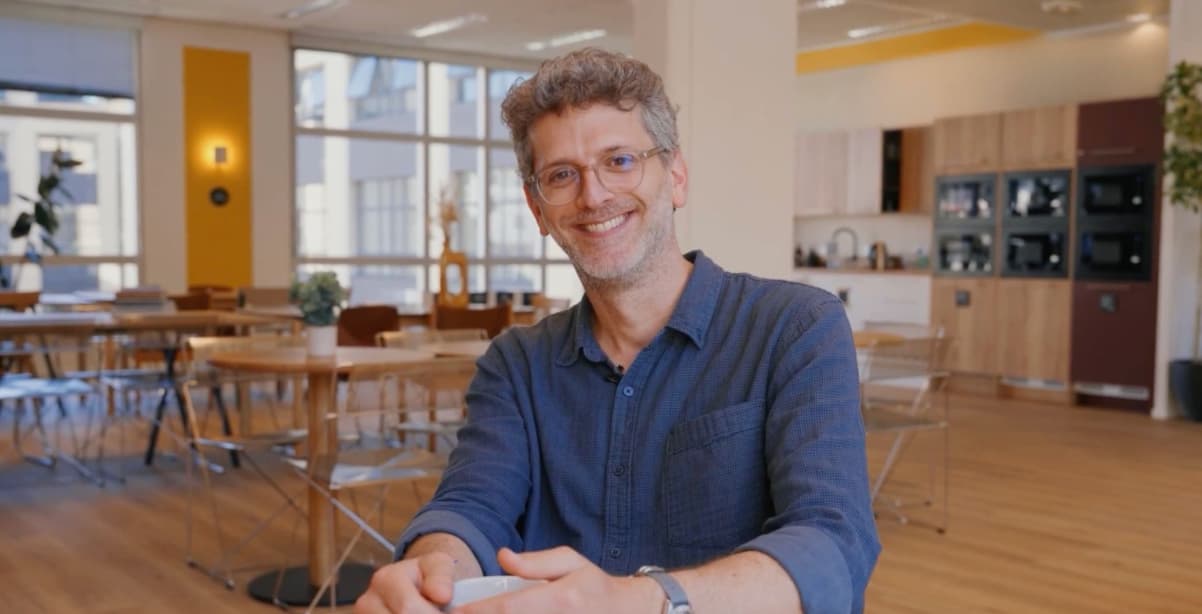
To discuss these practices in concrete terms, Marie Barbier, HR Director at Morning, explains the measures put in place within our organisation.

What is Morning’s approach to parenthood?
At the start of the Morning adventure, there were only two parents in the team: Clément Alteresco (Morning’s founder) and myself. Suffice to say we were starting from a long way back on parenthood: no processes, but a close eye on our collective agreement and support handled case by case. That is our guiding principle: staying attuned to new parents and keeping things flexible around working patterns so as to ease everyone’s scheduling constraints.
For the first three months of pregnancy, it’s an appointment a week with a two-hour wait. However long is spent in the waiting room, we will not ask our staff to take a day off to go, and that is why internal communication is extremely important.
Over the years, the “happy events” have followed one after another. Today, Morning has more than 40 parents with close to 50 children. (Editor’s note: to see a few little faces from the children’s Christmas, it’s here). In other words, 15% of our workforce are parents. We have had to get organised on the HR side to support everyone properly.
There have been a few major, structuring milestones. In 2020, Morning signed the “Parental Act”, a scheme aimed at promoting equality between men and women. As a signatory, we committed in particular to extending the second parent’s leave to a period of at least 4 weeks, paid at 100% by the employer. The idea is to encourage co-parents to take leave so as to promote an equivalent work-life balance for both parents. In July 2021, the Castex government kept pace by granting a paternity leave, though it excluded same-sex-parent families.
At the end of 2021, Morning signed the “Parental Challenge”. In the same vein as the “Parental Act”, this 12-point programme – launched by Selma El Mouissi and Judith Aquien – served as a charter committing the signatory companies. On the list of commitments: improved compensation for parental leave, the removal of length-of-service conditions, maximum flexibility for new parents, greater information for staff, and so on.
Generally speaking, we pay close attention to what is happening around us. The government’s plan for the birth leave (Jan 2024) looks like a great opportunity to move towards a working world that is more inclusive of parents and less discriminatory towards women.
The good old parental leave of 1977 deserves a dusting-off. That said, better pay for the leave and allowing both parents to be with their child for six months is seriously ambitious. Compensating an employee for 6 months is a real economic challenge for a company, especially when a replacement has to be found. We can’t wait to see how the State is going to help us fund all this.
How does Morning support its employees in their parenthood?
Morning goes further than its collective agreement provides for when it comes to compensating mothers’ leave. The length-of-service condition no longer comes into play for maternity leave, and mothers are compensated in the same way from their very first day of work. At the same time, the level of compensation has also been raised, thereby minimising the loss of income, particularly during the final month of absence. As a result, mothers see their salary maintained at 90% throughout the entire period.
Another point worth noting: maternity leave does not mean a career freeze. Pay rises, bonuses… Our new mums are entitled to everything, just as if they had never been away. That too is the kindness we want to cultivate.
As mentioned earlier, we have also decided to go beyond the legal framework by extending leave for the second parent. We are convinced that both parents should be able to make the most of a child’s arrival, without stress and without guilt. But rest assured, we impose nothing on anyone. We talk openly with our staff to understand their needs and, together, come up with the best solutions.
Some delicate situations lead us to innovate. In particular, when members of staff have confided in us that they had suffered a miscarriage, we felt the need to support them. It is impossible to treat it as a simple bout of flu, and we had to come up with a solution that measured up to the situation, which gave rise to the miscarriage leave that we compensate at 100% from the very first day.

Some parents also struggle to have a child and turn to assisted reproduction (IVF and similar) treatments. It is an uphill battle, both physically and emotionally. So we have made sure they can juggle their medical appointments and their job, without feeling guilty. Because we know it is already complicated enough as it is.
Beyond miscarriages and assisted reproduction, every parent has their own path, their own challenges. One of our members of staff had a baby with health problems. To support her through this very stressful period, we did everything in our power to be there for her, by adjusting her leave and providing regular follow-up. At times like these, work has to take a back seat.
We obviously don’t always have all the answers. We learn as we go, by listening to our staff and trying to understand their specific needs. That is the advantage of being a small outfit: we can be responsive, flexible and attentive.
Is there a support programme for parents?
We offer all our staff the chance to follow the excellent Nid-e programme. From the fourth month of pregnancy, this platform is there to answer all their questions, ease their worries and help them look ahead to this new adventure with peace of mind. They run group workshops to share experiences, with individual follow-up for those who need it.
After the birth, they also provide follow-up and support new parents in adapting their working patterns (remote work, adjusted hours, tailored leave).
Internally, we have created an Asana project that lists all the tasks to be carried out as soon as a happy event (paternity or maternity) is announced to us. It is built around 3 key stages:
> Before the birth: sending a guide to the coordinator, obtaining the maternity schedule, a coordinator/HR check-in to ensure a smooth transition, and so on.
> During the leave: sending the new-baby gift.
> On the employee’s return: a get-together, a professional review, a medical check-up, and so on.
The Parental Challenge has allowed us to communicate better with all our staff, to show everyone what they can access to feel reassured. We have put in place a well-honed process so that every parent-to-be feels supported from the moment the happy event is announced.
We send an ultra-comprehensive email setting out all the rights and benefits, from compensation in the event of a child’s illness to continued salary with no waiting period. Because transparency is the foundation of a relationship built on trust.
What is the biggest challenge when it comes to parenthood?
Our main challenge is to leave no one out. To find solutions for every situation, even the most complex ones. Premature births, miscarriages, adoption journeys… We want to be there, at every stage, to offer the best solution.
This ambition comes up against an economic reality. We have to strike a balance between our desire to support our parent employees and the resources we can allocate. We would love to be able to offer childcare to all our parents, or a nursery place. But we’ll be honest, it is quite a challenge, both financially and logistically.
A nursery place costs around €30,000 a year per child. Multiply that by the number of parents in the team, and you end up with a nursery budget that would make the largest CAC 40 companies green with envy. And then you also need suitable premises, you have to meet a raft of standards, hire qualified staff… We have even considered creating our own facility. It is a whole operation.
Even though we don’t yet have the same resources as the giants of the sector, we keep thinking about solutions, every day. We are on the lookout for any good ideas our staff might suggest. Because in the end, that is what drives us: to keep moving forward, to keep improving what we offer, so that parenthood is no longer a brake on a career.
We hope one day to be able to compensate maternity leave at 100%, we could imagine partnerships with childcare providers at reduced rates, a concierge service to help them with their paperwork, more flexibility in working hours… And why not create our very own Morning nursery?
***
☞ Parental Challenge: 12 measures for a smoother transition into parenthood
☞ “Parenthood in the workplace: there’s still work to do!” with Flore Villemot, HR Director at The Boson Project
Our team is available to assist you.

Download our new study
Nouveaux bureaux : ce qu'attendent les salariés
.png)

.jpg)