

Flex office is transforming the way we work, and it is not about to stop. Between making the most of space and new team dynamics, let's discover together the secrets of a successful rollout of flexible offices. And since we like things done properly, we are going to explain it all to you, step by step.
What is flex office?
Are you weighing up flex office for your company? You are not the only ones. This approach to workspace design is shaking up our habits, and with good reason: it responds to very concrete challenges in how organisations are changing.
What exactly are we talking about? The most widely accepted definition of flex office describes a way of organising work that does away with closed offices and workstations assigned to each employee. In a flex office organisation, the company premises lay out various workspaces, allowing staff to settle wherever they wish within open-plan areas where the workstations are shared. Flex office is, above all, a philosophy of organisation in which workspaces adapt to the real needs of staff. Out go fixed personal desks, in come modular environments where everyone chooses their space depending on the tasks of the day. Flex office rests on 3 pillars:
☞ A fitting organisation : Adopting flex office is not just a question of moving desks around. It is above all about a match between organisation and company culture. For flex office to be effective and to become fully part of your everyday, it must be part of your company's HR policy . Closely linked to your remote-working practices, it must also be promoted through effective communication, to the company as a whole and at the level of each team.
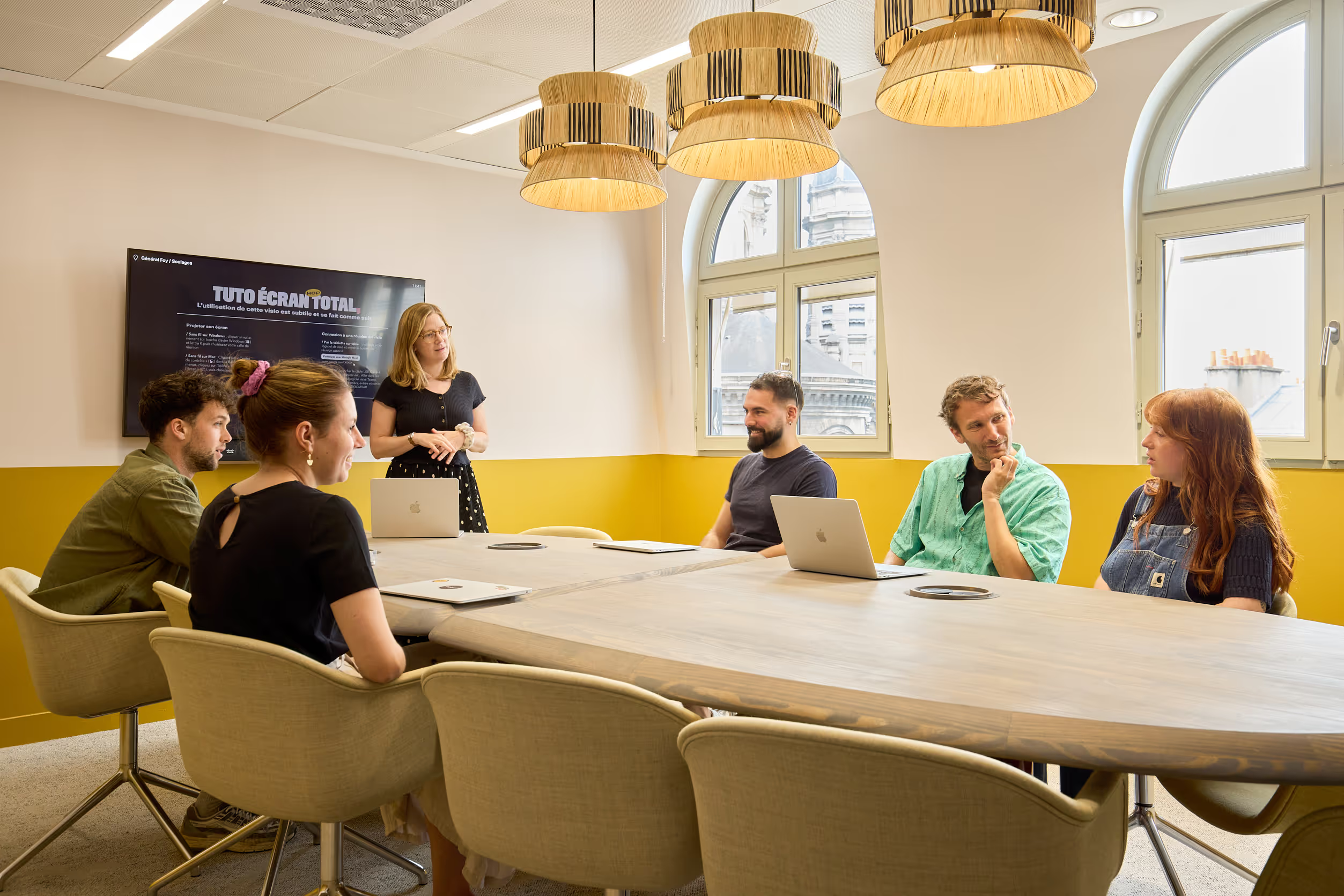
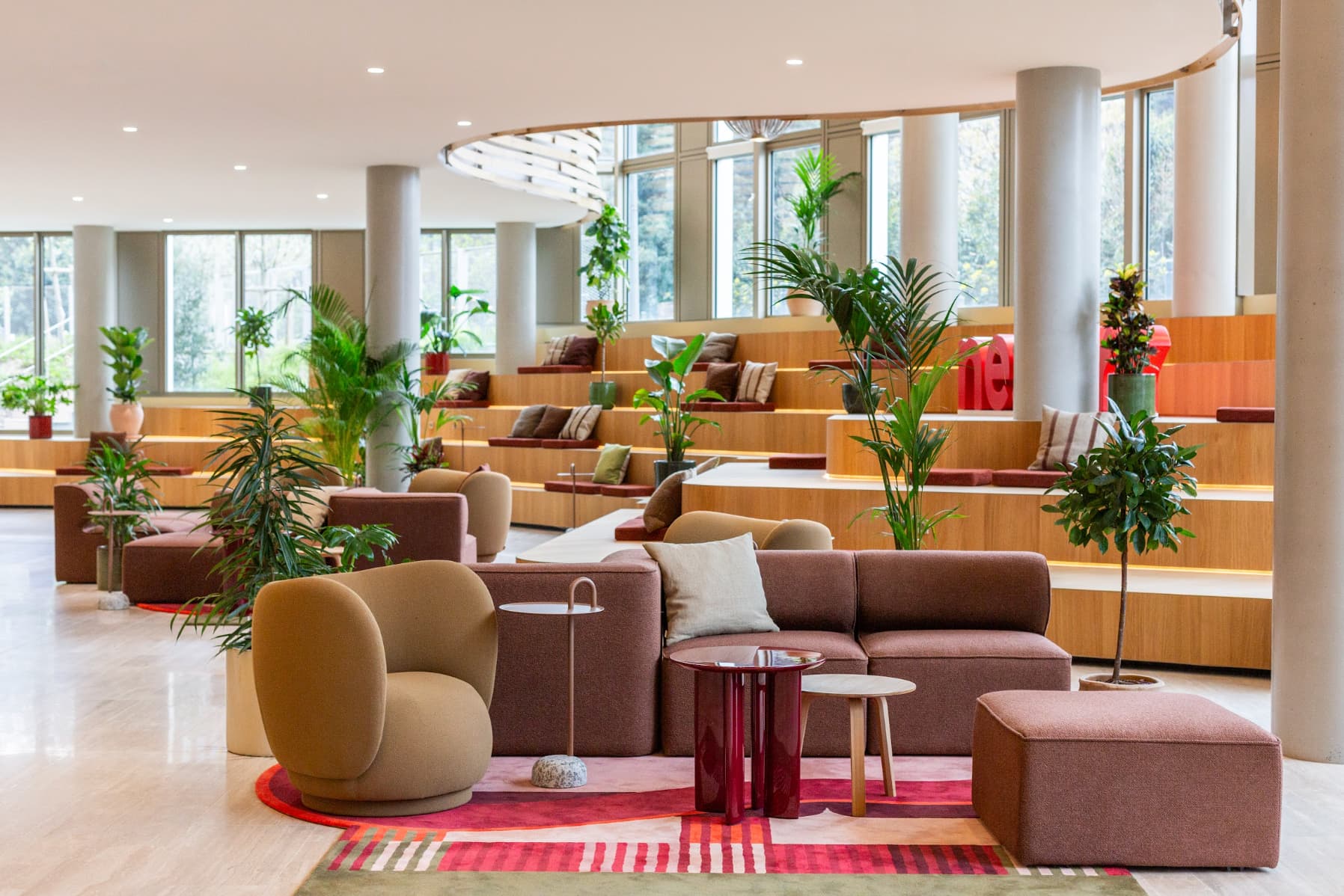
☞ Spaces designed for every use: The key to flex office is the diversity of working environments. Whether you work in a standalone building or on an office floor, the idea is to create, within spaces tied to their uses. Quiet zones for focused work, collaborative spaces to encourage exchanges within teams, but also informal corners to leave room for spontaneous conversations.
☞ Collaborative tools: Beyond a high-performing wifi network, it is about equipping yourself with high-performing collaborative tools, including in particular space-booking solutions and equipment that allows for friction-free mobility. Without this solid technical foundation, even the best intentions quickly come up against the reality on the ground.
To support this transformation, Morning offers a range of solutions tailored to companies, whether a single workstation or an entire building

The advantages and challenges of flex office
A change that makes everyday life smoother...
On the company side, let's talk efficiency first. By doing away with assigned desks, flexible offices make it possible to make the most of every square metre. The result? Significant savings on property costs and smarter use of space. Companies also gain in agility: they can easily reorganise their spaces to suit their needs, whether to welcome new teams or adapt to remote work.
But flex office goes well beyond economic considerations. It naturally creates more interaction between teams. Gone are the silos between departments: when people regularly change places, they exchange more with colleagues they would not otherwise cross paths with. These new connections spur innovation and strengthen company culture.
And for staff? First and foremost, flexible offices offer them a precious freedom that fits with the rollout of remote work. This flexibility improves not only their well-being at work, but also their work-life balance. This way of working also multiplies interactions, with spaces suited to the various tasks to be carried out throughout the day. Flex office thus meets a twofold challenge: allowing companies to make the most of their resources while offering staff a working environment better suited to their needs. An approach that makes sense at a time when the world of work is reinventing itself with the arrival and massive adoption of remote work.
... But one that brings its share of challenges
Flex office is not all advantages. This transformation of work comes with challenges that need to be anticipated, both for companies and for teams.
For companies, the first challenge is cultural. Supporting this change takes time and resources: training teams, putting suitable tools in place, and above all, a solid technological infrastructure. Because without high-performing wifi or an efficient booking system, flex office can quickly turn into a headache. The question of team cohesion also arises: how do you maintain strong bonds when staff are constantly changing places?
On the staff side, the challenges are just as concrete. Gone is the personalised desk with its well-ordered daily routine: this loss of bearings can be unsettling. In an open, shared space, managing noise and distractions becomes a daily challenge. Some may also feel isolated, struggling to maintain solid relationships with their colleagues. Not to mention access to resources: finding a meeting room or specific equipment can sometimes feel like an uphill battle.
How do you set up flex office?

Survey your staff's needs
The essential first step: ask your workforce in order to gauge precisely the real and potential flows of your staff. What are everyone's working habits, along with the actual and desired attendance rate at the office (vs. remote work)? The questionnaire should make it possible to filter the data at team level. Some will be more flexible than others: sales teams may often need to be together to support one another, while developers might be more inclined towards remote work. In this way, you will be able to assess the actual need in terms of the number of workstations precisely, by team, according to the days of the week.
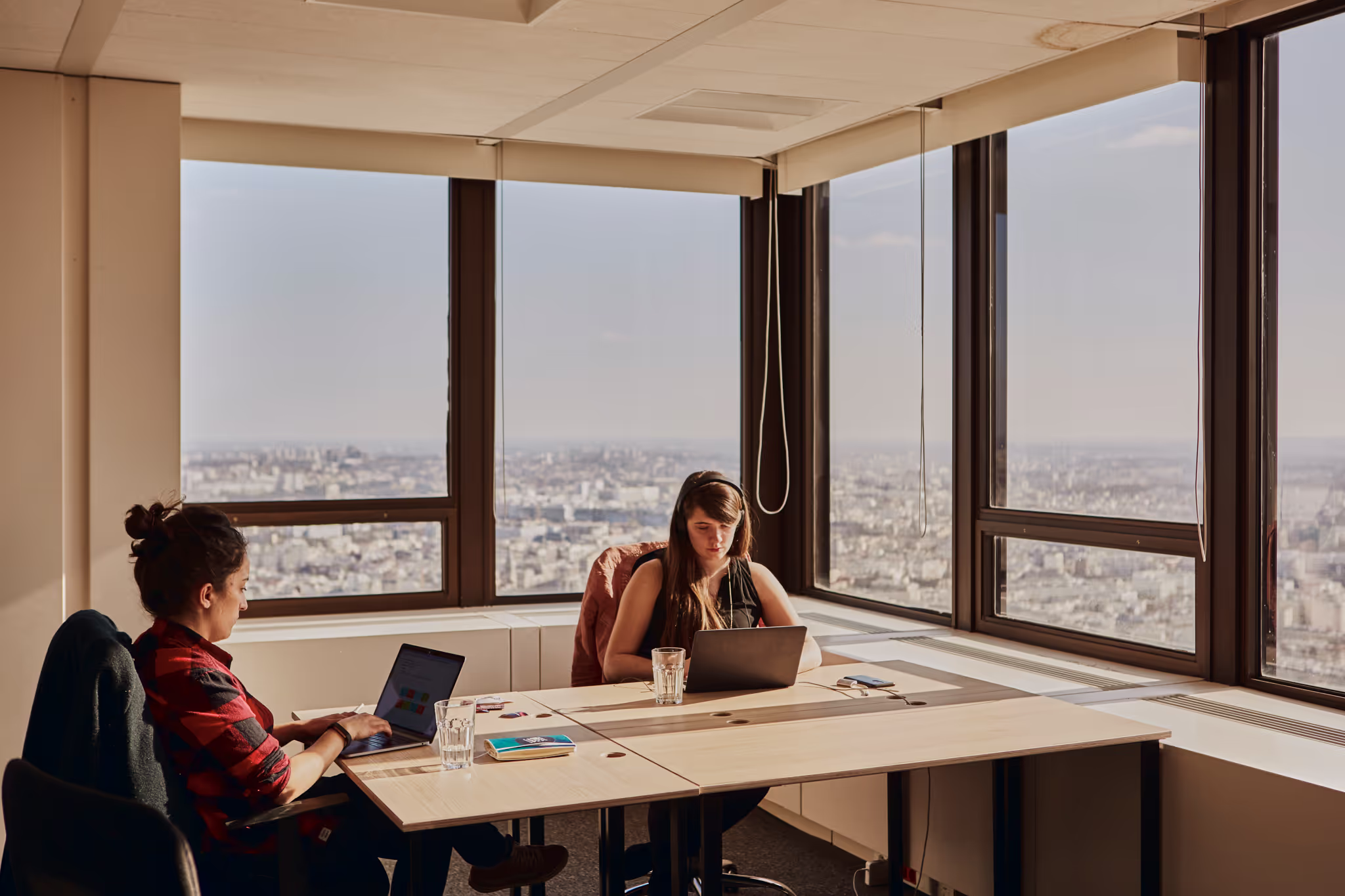
With the growing practice of remote work, office occupancy rates tend to fall, prompting companies to make the most of their spaces and adopt flex office. To make a success of this fit-out, it is essential to properly assess the number of workstations and to design spaces dedicated to various uses: quiet zones, collaborative spaces, and places for informal exchange. Make sure, too, that you have quiet bubbles for concentration, lockers for storage, and a fast, reliable internet connection.
To find out more about the optimal layout of a flex office, you can read the full article here
Establish rules
Here are a few essential rules for making this new way of organising a genuine asset for your company. First of all, the "clean desk" rule is your best ally. When you leave, do not leave anything on your desk - it is the clear signal that it is available for another member of staff. Store your personal belongings in your dedicated locker. Next, do not monopolise an empty spot by leaving your things on it if you are not using it; free it up for your colleagues. This helps to encourage flow and exchange within teams. When it comes to shared spaces, adopt the right habits: use the phone boxes for your calls, favour dedicated spaces for your impromptu meetings, and keep the quiet zones for silent work.
Measure the improvements and adjust them continuously
How do you know whether your flex office is working? By measuring its impact! Define key indicators that make sense for your organisation: space occupancy rates, team satisfaction, quality of collaboration... The aim is not to drown yourself in figures, but to understand what works and what deserves to be adjusted. Regularly organise check-in points to gather feedback from your teams.
A poorly used space? Tools that do not suit? This feedback is invaluable for steering your flex office in the right direction. In short, setting up flex office is a journey rather than a destination. It is by staying attuned to your teams and being willing to adjust course that you will create a working environment that truly matches your company. So, ready to take the plunge?
8 questions to ask yourself before switching to flex office
- What are our main objectives in considering flex office (making the most of space, improving collaboration, reducing costs, more flexibility)
- What is our company's current culture and how would flex office fit into it?
- How do our employees currently work and what are their preferences when it comes to flexibility?
- What is the current state of our technological infrastructure?
- Which types of workspace are currently underused, and how could a flexible layout make the most of them?
- What are the costs and the human and financial resources needed to switch to flex office?
- What are employees' potential concerns about flex office, and how can we address them?
- How will we measure the success of flex office once it is in place?
Why choose a flex office management tool?

Save time
How much time do your teams lose looking for a free desk? These precious minutes add up and have a direct impact on your staff's productivity. Flex office management tools solve this problem in a few clicks. Instant booking, an overview of available spots, simplified planning... Your teams can finally focus on what matters: their work!
Improve your teams' daily life
Fulfilment at work cannot be decreed; it is built. With a suitable management tool, your staff gain in autonomy and flexibility. They can choose their workspace depending on their needs of the day: a quiet desk to concentrate, a collaborative space for a brainstorm, or even working remotely. This freedom of choice is not just a detail: it is a genuine lever for satisfaction and engagement.
Make the most of your workspaces
Do you really know how your workspaces are used? Flex office management tools give you a clear, precise view of how your offices are used. No more empty meeting rooms and overcrowded open-plan areas! Thanks to the data collected, you can adjust your layout in real time and plan your future investments on an informed basis.
In short, a management tool is not simply an optional extra in your transition to flex office: it is the cornerstone of a successful transformation. It is not just about making the most of square metres, but about creating a working environment that is smoother, more pleasant and more effective for everyone.
So, ready to take the plunge?
Some examples of flex office management tools
Are you embarking on the flex office adventure and wondering how to manage it all effectively? The market now offers several solutions for managing flexible spaces. Here are a few examples of tools available in 2025:
Among the existing solutions, there is Coworks, a platform offering space-management and booking features. OfficeRnD, meanwhile, is geared towards hybrid working environments. Other players such as Deskworks offer cloud-based solutions, while Spacebring and Nibol will help you manage the booking of desks and meeting rooms.
There are plenty of other solutions on the market, and the choice will depend on your specific needs. We encourage you to compare the various options and to try out those that best suit your context.
The alternatives to flex office: a solution that suits you better?
Flex office does not suit every company, and that is just as well! Other options exist, sometimes better suited to your company culture and your objectives. Let's take a tour of the most relevant alternatives.
Let's start with the most classic: assigned desks. No, this is not old-fashioned! For some companies, particularly those that prioritise stability and constant team interaction, it is even the ideal solution. After all, why change a formula that works?
At the opposite end of the spectrum, fully remote work is gaining ground. No more need for physical offices; teams work entirely remotely. A particularly appealing option for digital companies, but be careful: it requires a solid company culture and high-performing collaboration tools to avoid feeling isolated.
Between these two extremes, several hybrid formulas deserve your attention. Hot desking, for example, works like flex office but without booking in advance. Simpler, more spontaneous, but perhaps less organised. Coworking spaces represent a particularly flexible alternative. You rent only the space you need, when you need it. Ideal for startups or growing companies wanting to avoid heavy property commitments.
Finally, satellite offices are an interesting option: small workspaces spread out geographically, closer to your staff's homes. An excellent compromise between proximity and collaboration.
The key? Choosing the solution that truly matches your company's DNA.
Because in the end, the best working model is the one that allows your teams to perform while remaining fulfilled.
Our team is available to assist you.

Download our new study
Nouveaux bureaux : ce qu'attendent les salariés
.png)


.jpg)