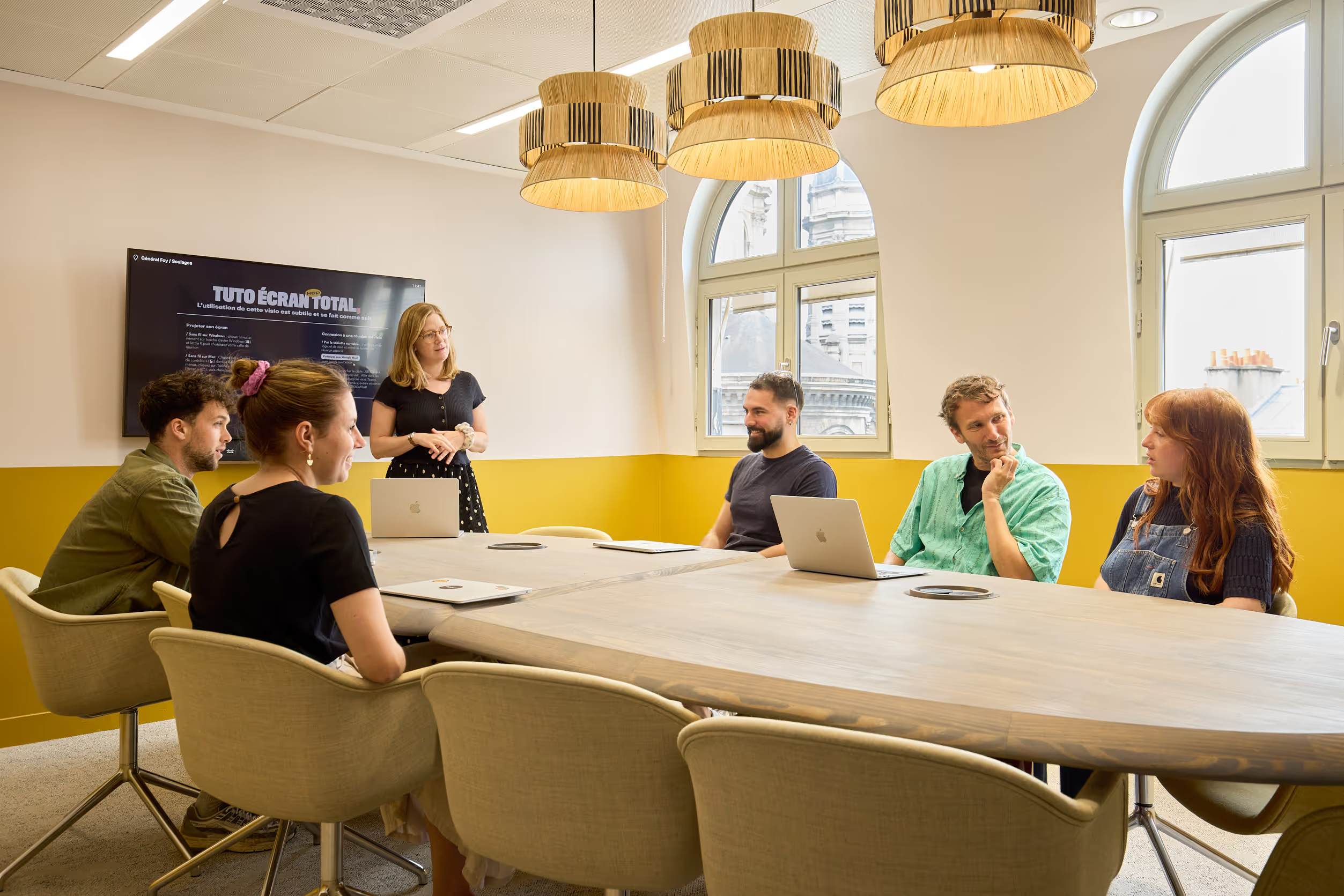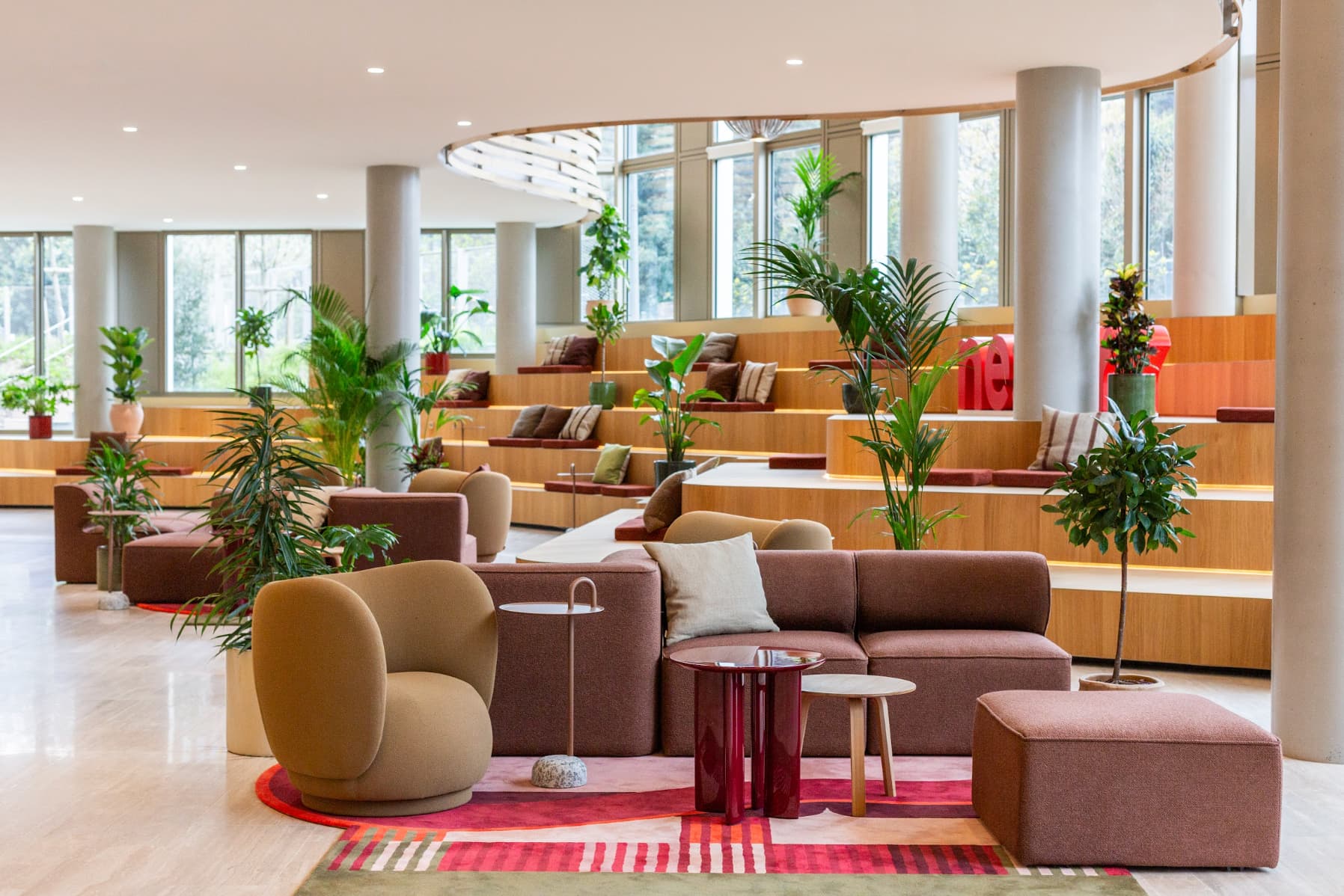


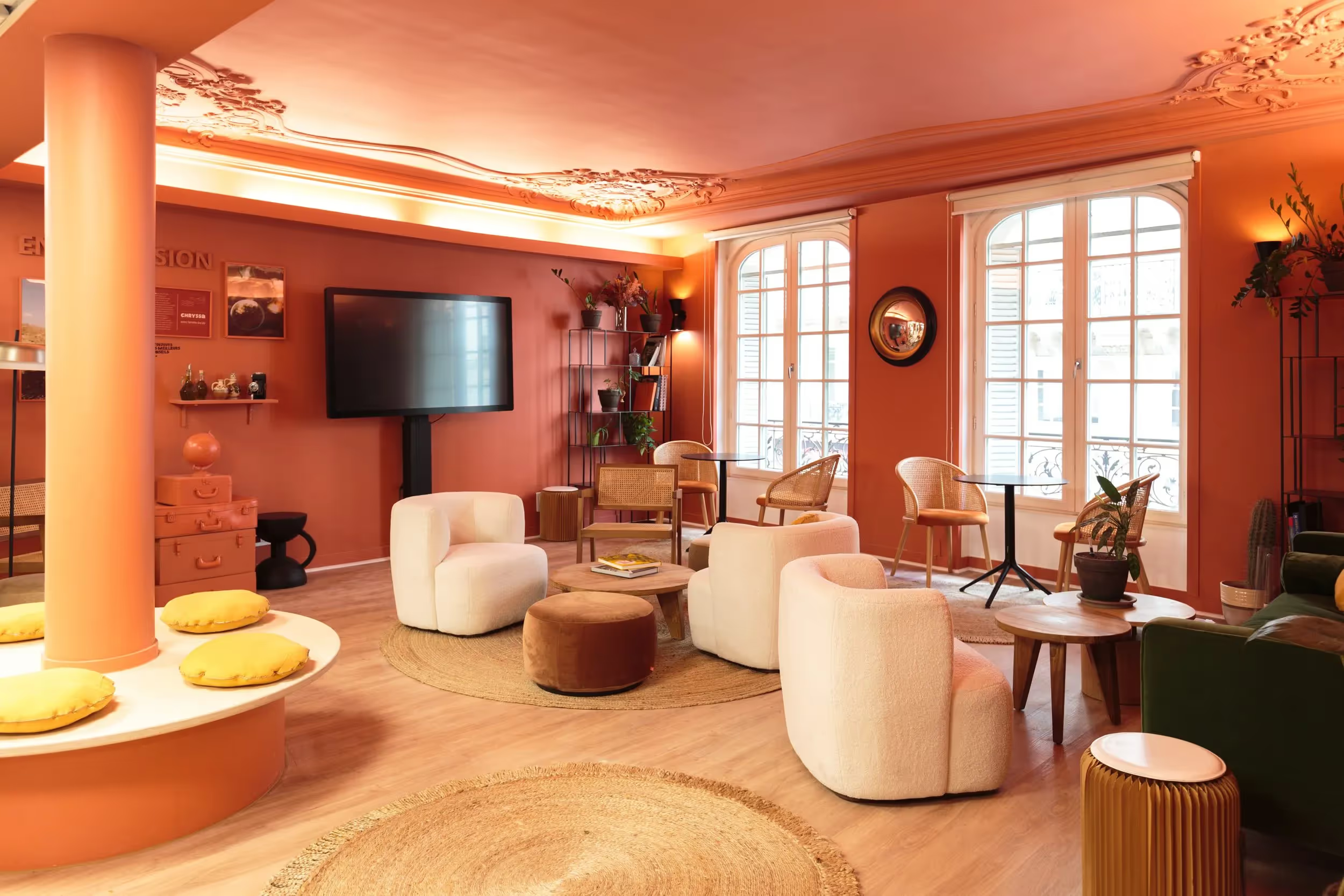
In recent years, one phrase has been making its way through the world of work: "hybrid working". This approach is redefining not only our workspaces, but also our working relationships and our very conception of productivity. Let's take a look at this transformation that is upending our habits.
Definition and principles of hybrid working
What is hybrid working?
Hybrid working embodies the subtle art of combining the best of on-site and remote work. Far from being a mere alternation between office and home, it is a complete overhaul of the way work is organised. This approach rests on three fundamental pillars that reshape the contours of our working lives:
☞ spatial flexibility: employees can choose their place of work according to their tasks and their needs.
☞ temporal flexibility: working hours become more flexible, allowing for better time management.
☞ responsible autonomy: team members gain independence, but must also show greater responsibility.
Beyond these practical aspects, hybrid working embodies a genuine philosophy. It places trust and results at the heart of the relationship between employer and employee.
The benefits of hybrid working
Hybrid working represents a concrete and innovative response to the complex challenges of today's professional world. Its growing appeal among businesses can be explained by numerous benefits that redefine the very notion of performance at work.
One of the major benefits lies in the optimisation of space. Gone are the days of oversized, underused offices. Hybrid working makes it possible to rethink the layout of premises from the ground up, turning them into more functional and welcoming places.
In an increasingly competitive job market, this approach is becoming a real asset for attracting the best talent. It answers the aspirations of the new generations, who prize flexibility and a balance between work and personal life.
Improving employees' quality of life is another benefit not to be overlooked. By reducing commuting time and offering more flexibility in the way work is organised, the hybrid model allows team members to better reconcile the different spheres of their lives, thereby fostering their well-being and their engagement.
(Discover our workspaces suited to hybrid working)
The challenges of hybrid working
Despite its many strengths, hybrid working is not without its challenges. Putting it in place raises complex questions that call for careful thought and innovative solutions.
One of the first issues concerns the digital divide. Not all employees have the same level of technological skill, which can create inequalities. It is therefore necessary for businesses to put in place training and support programmes to ensure that everyone can move forward with confidence in this new working environment.
Managing company culture represents another sizeable challenge. How do you maintain a sense of belonging and team cohesion when team members are physically dispersed? This question is at the heart of the concerns of managers, who must reinvent their practices to create connection in a hybrid context.
Finally, the right to disconnect takes on a new dimension in the context of hybrid working. The boundaries between working life and personal life can become blurred, increasing the risks of mental overload and burnout. It is essential to put safeguards in place.
(Read also: Organise flex office, simply)
The steps for putting hybrid working in place
Assessing the needs of the business and its employees
.jpeg)
The first step, often neglected, is nonetheless fundamental. It involves precisely assessing the needs of the business and its employees. This audit phase makes it possible to understand what each party expects and to identify potential obstacles.
Start by surveying your teams. What are their preferences in terms of place and hours of work? What barriers do they anticipate? On the business side, analyse existing processes. Which of them can be adapted to remote work? Which require a physical presence?
This initial assessment will give you a solid foundation on which to build your hybrid strategy. It will keep you from falling into the "one size fits all" trap and will allow you to develop a bespoke approach, suited to your company culture.
Developing a hybrid working policy
Once you have assessed your needs, it is time to formalise your hybrid working policy. This framework document must be clear, precise and accessible to all employees.
Your policy must be clear, fair and aligned with your company's values. It must address essential questions such as: Which days should employees be present at the office? How will meetings be organised? What are the expectations in terms of availability and communication?
It is also important to define performance indicators suited to hybrid working. The emphasis must be on results rather than on time spent at the office.
But beyond the practical aspects, your policy must address the legal aspects, such as the right to disconnect or the covering of costs linked to remote work.
Training managers and employees
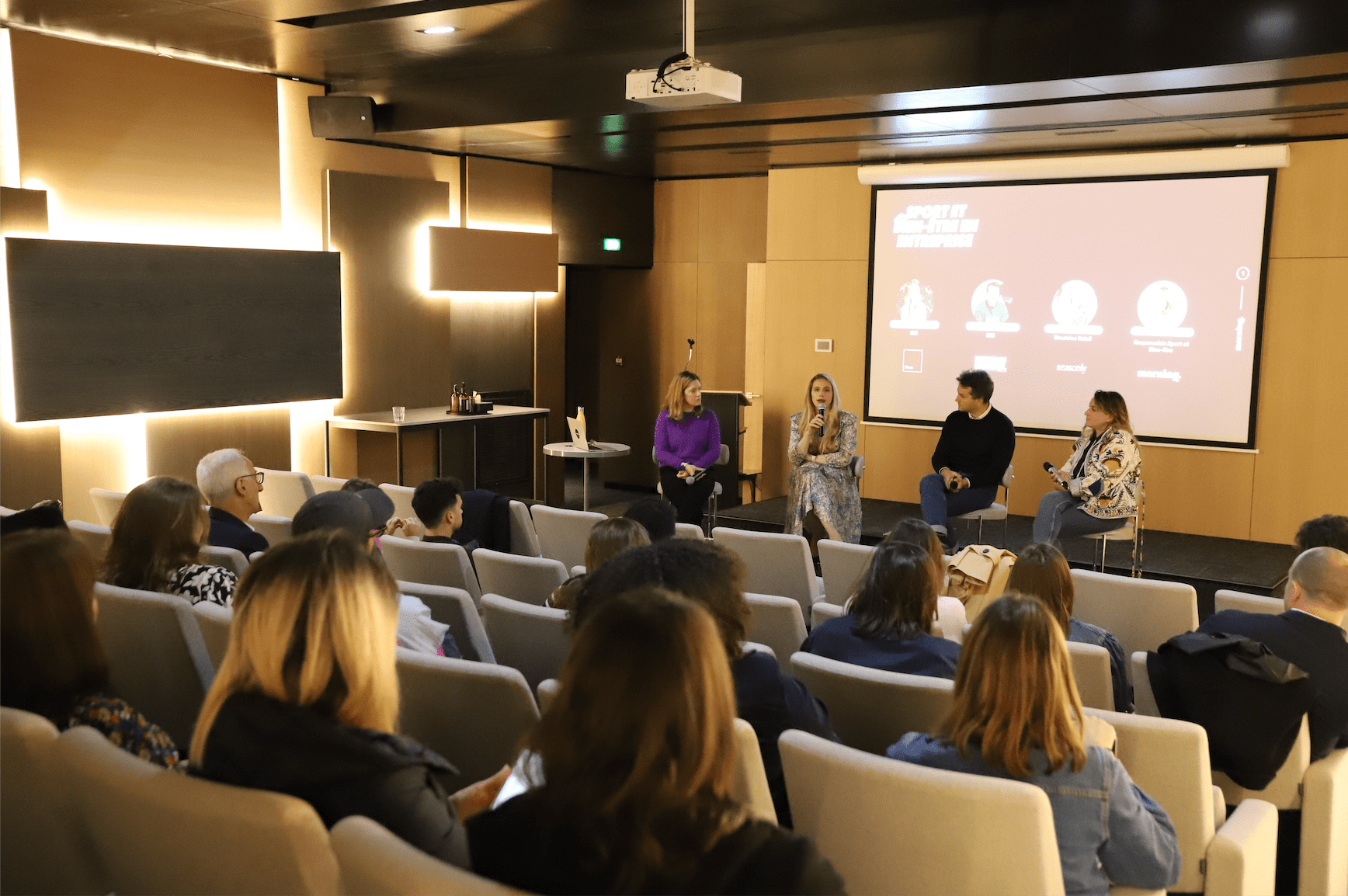
Training is an essential pillar of the success of hybrid working. It makes it possible to ensure that everyone, from top management to field staff, has the skills needed to thrive in this new working environment.
For managers, the shift to a hybrid model represents a sizeable challenge. They must learn to manage dispersed teams, to maintain cohesion and to assess performance remotely. Training must therefore focus on skills such as remote communication, project management in hybrid mode, or inclusive leadership.
On the employee side, training must focus on autonomy, time management and the effective use of collaborative tools. It is also important to raise their awareness of good practice in cybersecurity, a major issue in remote work.
Don't forget to include training on well-being at work and stress management. Hybrid working can be a source of anxiety for some, and it is important to give them the tools to cope with it.
Putting in place the necessary tools and infrastructure
The final step, but by no means the least, concerns putting in place the tools and infrastructure needed for hybrid working. This is where Morning's expertise in workspace design comes into its own.
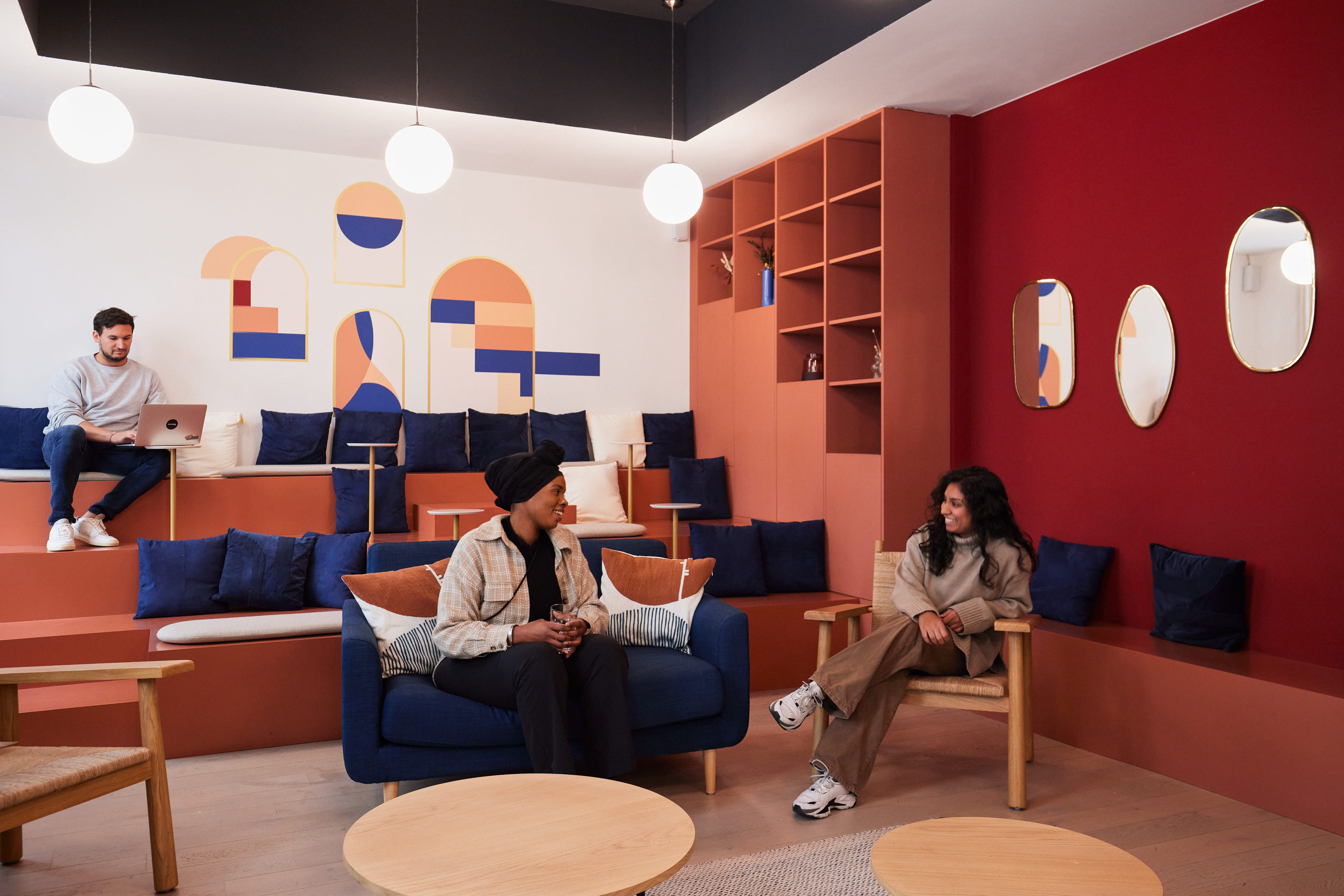
In a hybrid model, the office is no longer simply a place of work, but a space for collaboration and socialising. The office fit-out must be rethought to foster spontaneous interactions and collaborative work. This is what will make employees want to come to the office.
On the tools side, opt for intuitive, integrated solutions. A good video-conferencing system, a collaborative project-management platform, and real-time document-sharing tools are indispensable. Don't forget security: VPN, two-factor authentication and data encryption are all elements to take into account.
Finally, think about the ergonomics of the home workstation. Provide your employees with the equipment they need to work in good conditions: a screen, a keyboard, an ergonomic chair. It is an investment that will pay off over the long term in terms of well-being and productivity.
Ensuring a smooth transition to hybrid working
Communication and transparency
Communication is necessary in any business transformation, and the shift to hybrid working is no exception. Clear, regular and transparent communication is essential to reassure teams and guide them through this transition.
Start by clearly explaining the reasons for this change. What are the expected benefits for the business and for its employees? Be honest about the challenges ahead and any difficulties that may arise.
Put in place a variety of communication channels to reach all your team members: team meetings, newsletters, a collaborative platform... Don't hesitate to use several formats to ensure that information circulates effectively.
Maintaining company culture
Hybrid working can undermine company culture if you don't pay attention to it. How do you maintain a sense of belonging and shared values when teams are dispersed?
The solution lies in reinventing your company rituals. Afterworks become more regular; team meetings turn into remote team-building sessions. The aim is to create moments of sharing and conviviality, even from a distance.
At Morning, we have rethought our offices to turn them into genuine places to live and connect. In a hybrid model, the office must become an appealing place, one that makes team members want to make the journey. We create spaces that foster spontaneous collaboration and the sharing of ideas.
Make sure your company values are reflected in your hybrid working policy. If you champion autonomy and trust, your hybrid model must give your employees a great deal of freedom in how they organise their work.
(Read also: Company culture at Morning)
Monitoring and evaluating the rollout
The transition to hybrid working is not a fixed process. It is crucial to put in place monitoring and evaluation mechanisms to adjust your model over time.
Regularly run surveys among your teams to gather their feedback. Which aspects are working well? What difficulties are being encountered? This feedback is invaluable for continually improving your hybrid model.
Hybrid working is a territory that is still largely unexplored. You have to dare to try new approaches, analyse the results and adjust accordingly. That is how we will build the working models of tomorrow.
Best practice for successful hybrid working
Case study - Evaneos hybrid working
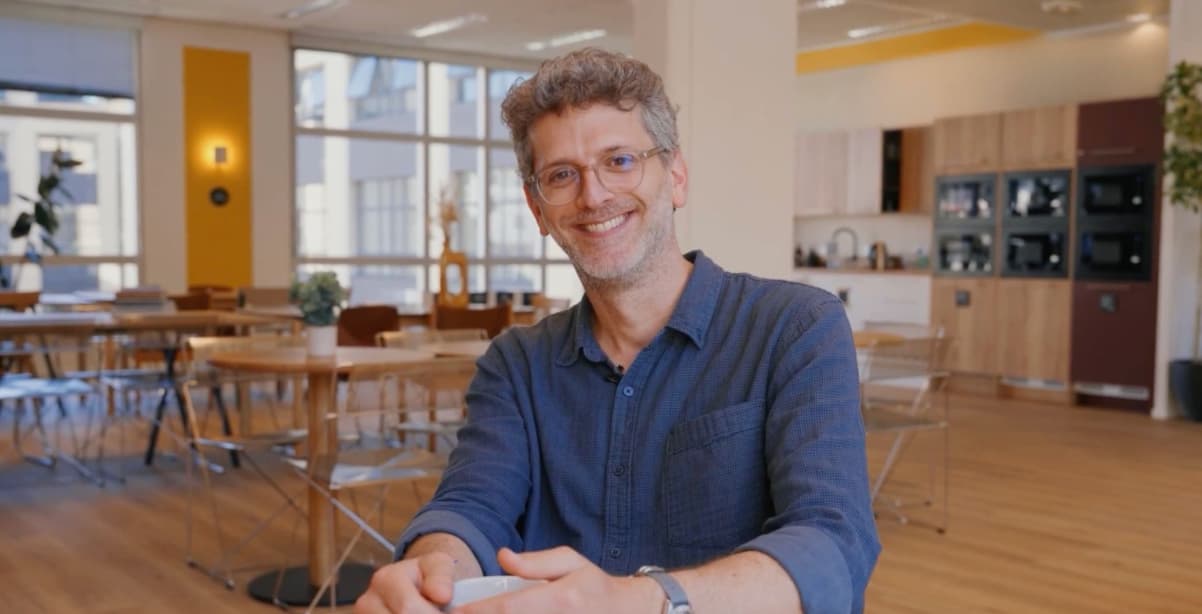
“The bulk of the work was finding a balance between spaces to live in, spaces where you can work, quiet zones and meeting rooms” confides Clément Feld, brand strategist at Evaneos.
Evaneos has been the pioneer of impact travel for nearly 15 years. The platform offers an ethical alternative to mass tourism, envisioning travel as an experience off the beaten track.
To create the offices the Evaneos teams dreamed of, Morning had to rise to two sizeable challenges:
- Designing spaces that are hybrid, adaptable and suited to how team members work;
- Putting the space in the company's colours so it feels like home.

Before the health crisis, Evaneos's offices had a classic layout: benches, desks, meeting rooms… It was with the rise of remote work, full remote and new ways of working that the organisation wished to redesign its workspace. “With the return to the office, our teams' needs in terms of layout evolved. That's why we turned to Morning to design hybrid offices that match the new ways of the working world”.
On average, between 40 and 60 team members are present at the office each day. Marion Garnier from the communications team explains: “2 days a week, the whole team is in. So the spaces have to be adaptable to variations in numbers within the walls!”
For Guillaume Lalau, accounting and finance manager at Evaneos, this layout motivates the teams to come back to the office. “The redesign prompted a collective ‘wow' among team members. What's more, more and more of us are coming back to the office!”
☞ The bespoke fit-out of Pretto's offices, by Morning.
☞ 4 good reasons to transform your workspace
☞ The fit-out of Monisnap's offices by Morning
Our team is available to assist you.
Download our new study
Nouveaux bureaux : ce qu'attendent les salariés
.png)

.jpg)