

The Fondation Entreprendre - created in 2008 and recognised as a public-interest body in 2011 - is a structure dedicated to purpose-driven entrepreneurship. In 2015, it became a host foundation for mission-led charities that it houses at La Filature - at 32 rue du Faubourg Poissonnière, in Paris.
The Foundation lets workstations at favourable rates, while supporting those it hosts as they grow. It currently welcomes 6 charity organisations: Entreprendre pour Apprendre (EPA), 100 000 entrepreneurs, Action'elles, la Communauté des entreprises à mission, Y Croire et Agir and la Fondation Tocqueville. These charities bring together close to 50 people who work at La Filature.
Alongside its coworking activity, La Filature also hosts the events of Fondation Entreprendre, which provides content for its ecosystem of charity players, patrons and philanthropists.
Yet, despite a one-of-a-kind industrial setting and a remarkable community, La Filature had not managed to break even after 6 years in existence. In February 2021, the team of Thibault de Saint Simon (Managing Director of the Foundation) called on Morning to rethink its business model and carry out the fit-out that would follow from it. The Morning team - led by Aude Valtier (key-accounts project manager) - rose to the challenge by proposing a mentoring engagement of 8 months in total (including 3 months of works), which drew on the Foundation's team and the resident charities. The project, which came to a close in October 2021, aims for a 27% gain in revenue for La Filature within a year. Here's how.

Taking a step back
by drawing deep inspiration to dream up solutions
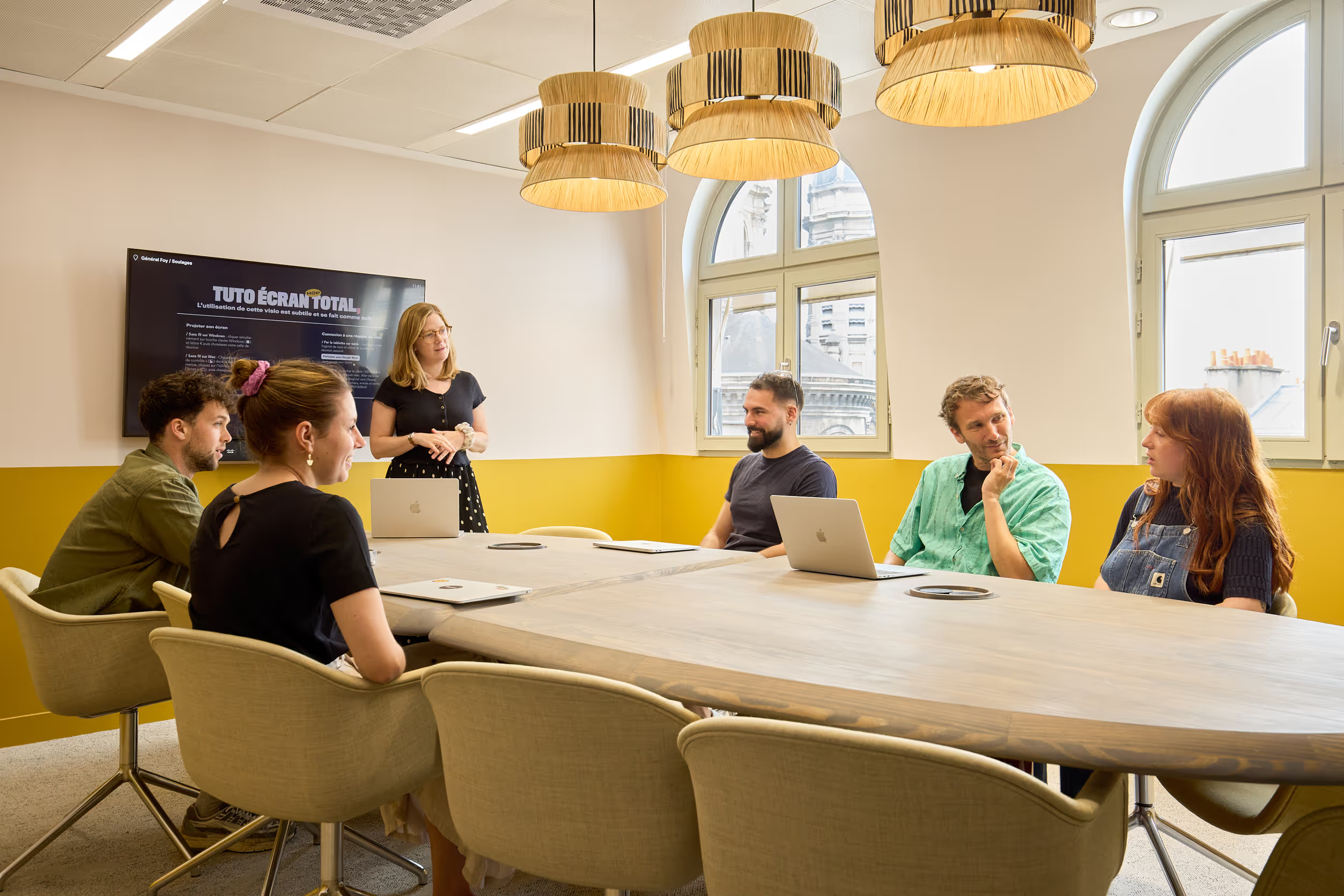
The first phase of the engagement aims to articulate the various needs of Fondation Entreprendre and to become aware of the levers to pull. To feed the exercise and take the necessary step back, inspiring visits and co-creation workshops are set up.
☞ A phase of inspiration alongside experts.
Observing best practice at other players allows you to probe the field of possibilities and pick up ideas. Every discipline is involved, from analysing the business model to space management, animating the community and organising events. Various formats are on offer:
* Learning expeditions to the Philanthrolab and the Maif Social Club, on 26 April and 6 May. Two hours of immersion to observe the specific practices of each organisation, in particular the layout of their space and the way they welcome outside visitors (meeting room, events)
** Business and creative brainstorming with Clément Alteresco (founder of Morning) to review the levers to pull in the search for new sources of revenue (denser workstation layouts, room booking, events and so on) and the related processes (badges, booking interface, pricing policy, subscriptions and so on).
*** Sharing practical cases with Morning managers, the company counting around thirty spaces in Paris and several thousand residents. The speakers, in charge of a variety of areas (management, logistics, events, community), looked back at best practices, the tools, and certain pitfalls to avoid. The management tools and the types of community activity were of particular interest to the teams.
☞ A phase of workshops, with the Foundation's team
Following this first breath of inspiration, initial lines of action are shared by the Morning team. Workshops are organised to bring out fresh ideas in the light of the lines shared. Beforehand, questionnaires and interviews are circulated to all those hosted to design the workshops as effectively as possible.
* Workshop #1: On the fit-out
Objective: understand how the occupants use the place, the issues they face and generate fit-out solutions accordingly. First mood and atmosphere ideas.
Duration: 3 hrs with 8/10 participants from the various resident charities (being able to talk and compare their experiences with the others)
Protocol: exercises in sequence in small groups with feedback phases.
Deliverable: space planning of the areas and furniture moodboards.
** Workshop #2: On life within the space
Objective: define the future services of La Filature (according to the needs expressed by the participants), the new rules of life between residents and the participatory activities.
Duration: 3 hrs with 8/10 participants from the various resident charities.
Protocol: exercises in sequence in small groups with feedback phases.
Deliverable: activity schedule, service offering and rules of life.
Putting the ideas into practice
At the level of the processes and the transformation of the place
At the end of the first phase of work, the Morning team draws up a summary of the actions to put in place: adapt the workstations to hot-desking, develop tools accordingly, make it easier to welcome visitors, improve the flow of movement through the space. Every area is involved.
Each objective is tied to concrete recommendations, some linked to new management processes, others linked to the redesign of the space - the high point of La Filature's transformation. These recommendations are brought together in a strategic development report, starting from the findings in figures and proposing solutions that can be put into action easily, with no notable extra cost.
☞ Streamlined management processes.
The recommendations relating to the running of the place can be grouped into 3 sets:
* Introduction of hot-desking with additional badges for each charity and flexible pricing to optimise workstation occupancy and free up space. This rationalisation of the floor area will, moreover, lead to a little-used former meeting room being reconfigured into an office of 10 workstations available to let.
** Standardisation of the contracts of those hosted through a common billing interface. Tracking and chasing of invoices will be automated, as will the updating of legal documents.
*** Optimisation of the service offering by proposing a booking plan for the meeting rooms and the “event” space (a credit system + payment on overrun) with a more flexible, more accessible plan for the resident charities.
☞ A redesigned and revalued space.
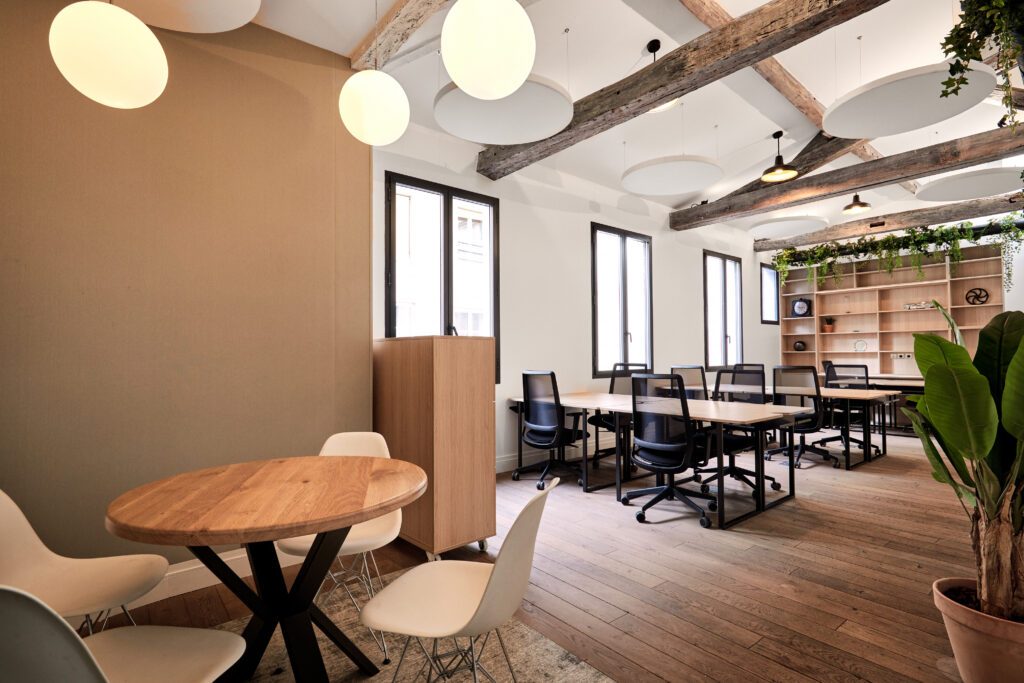
The new fit-out of La Filature must of course meet the recommendations set out above, but also respect the spirit of La Filature - property of the Mulliez family, which in its day housed the Phildar workshops.
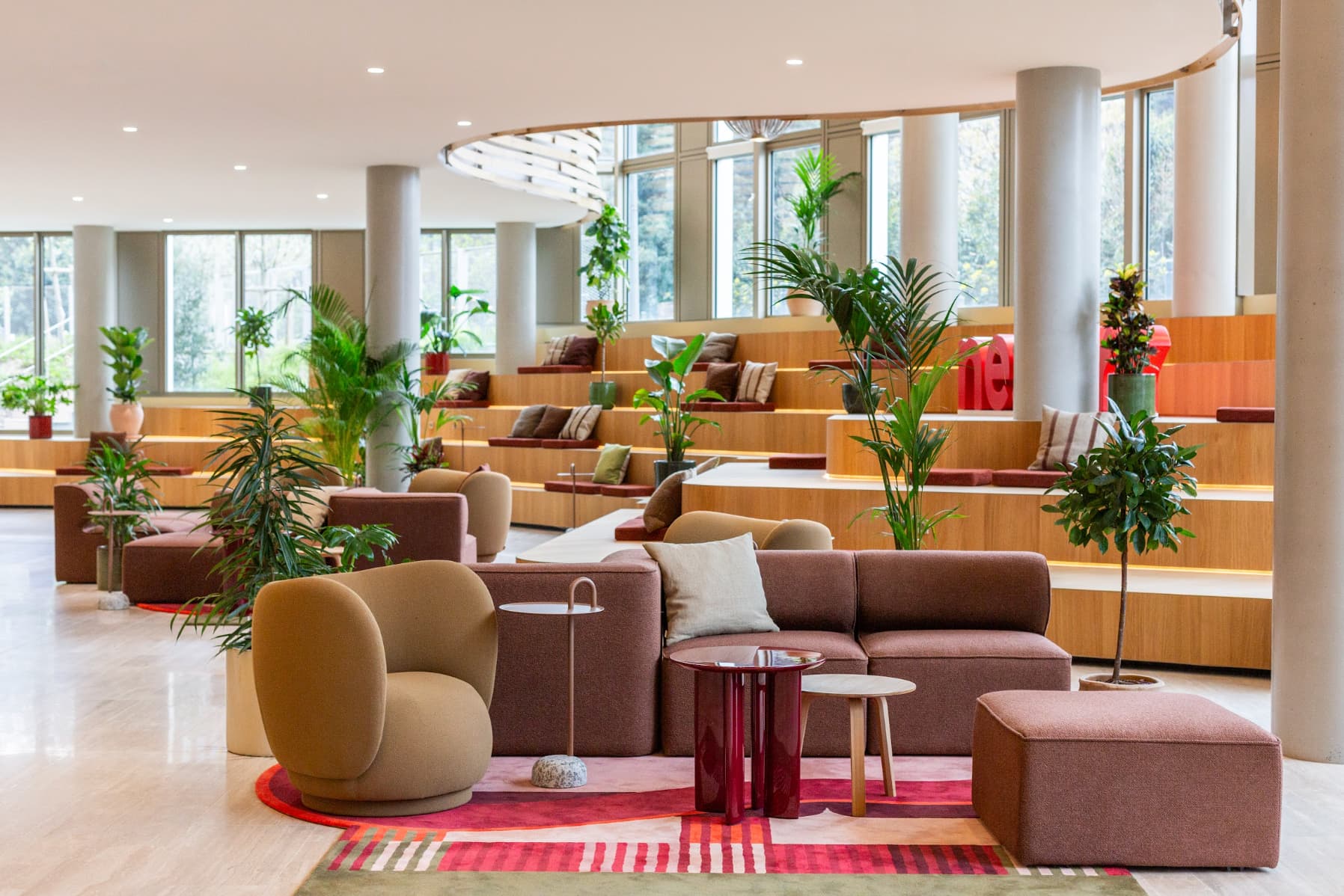
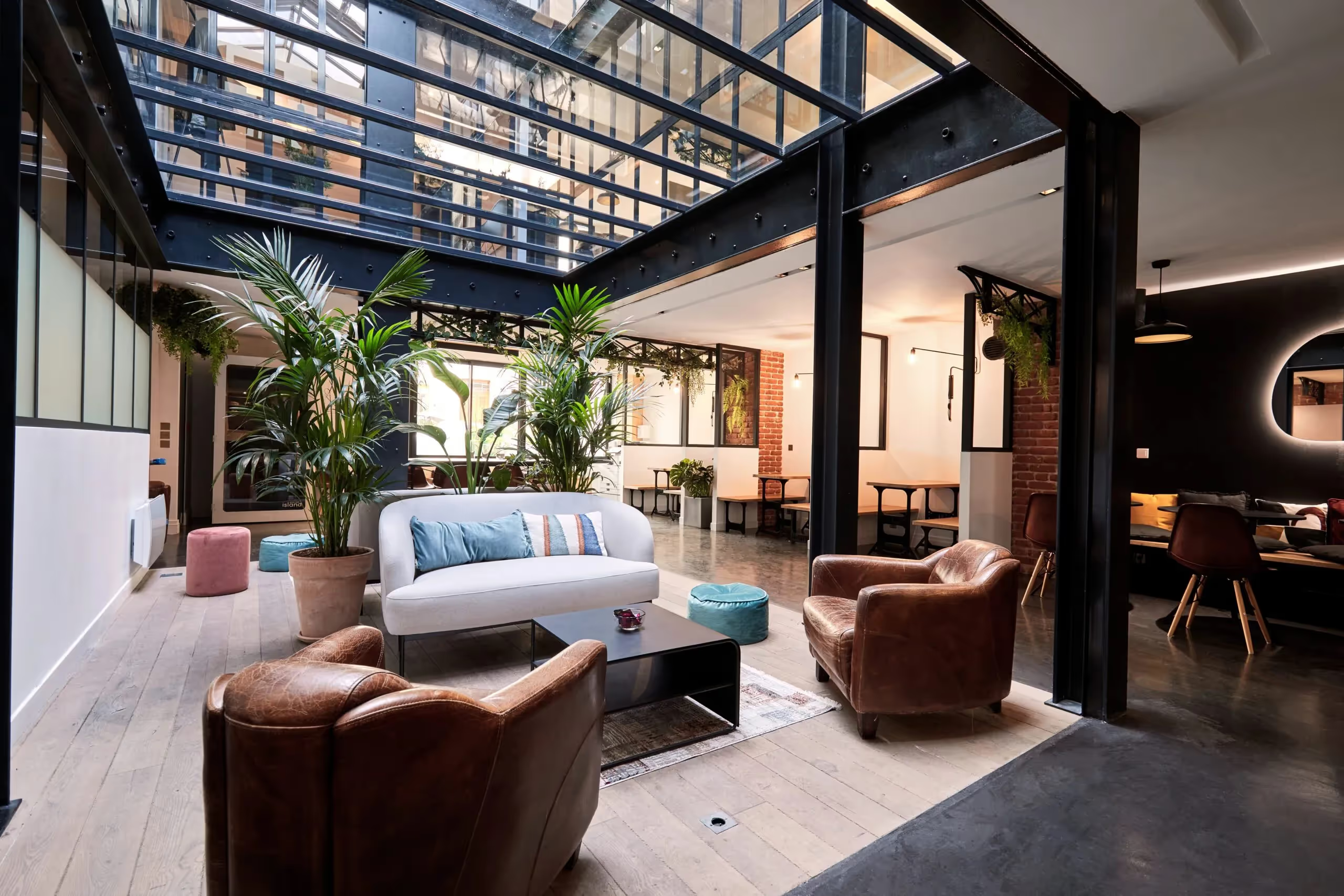
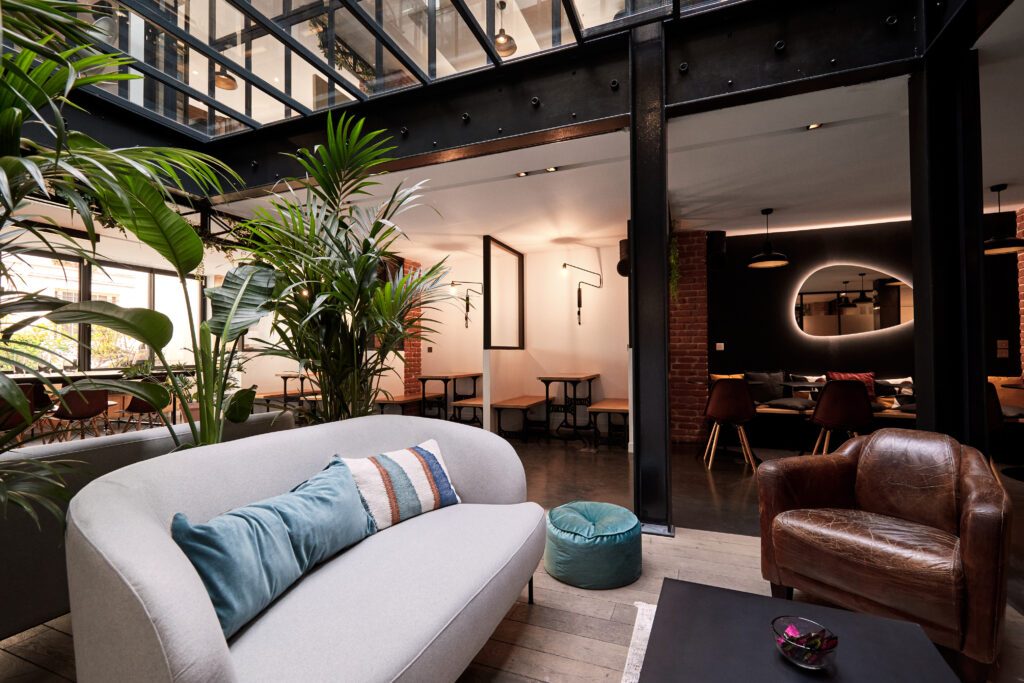
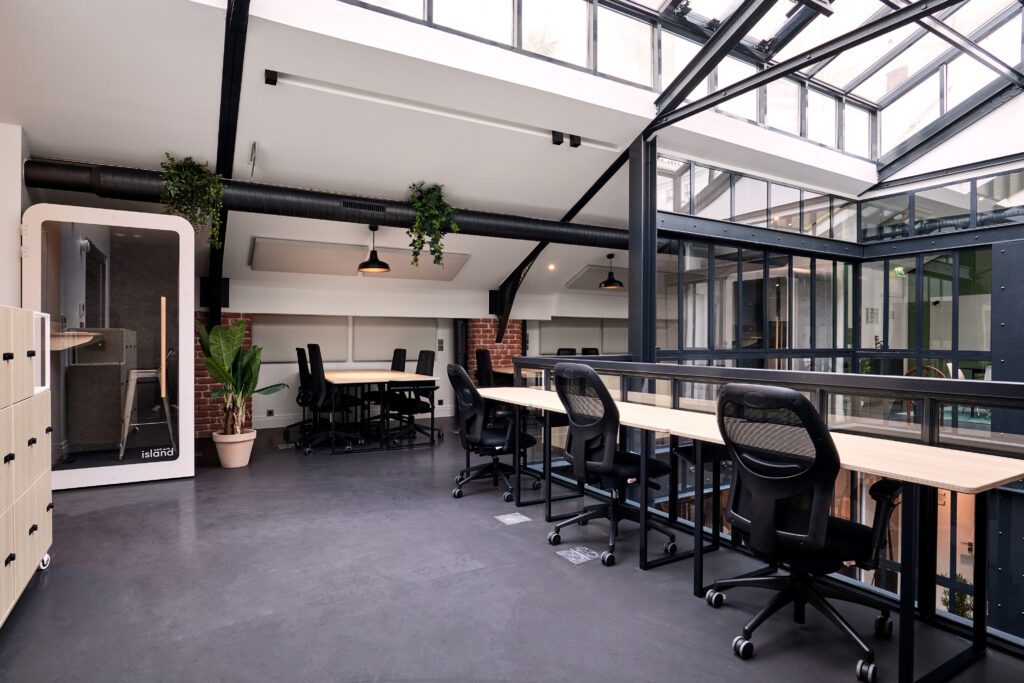
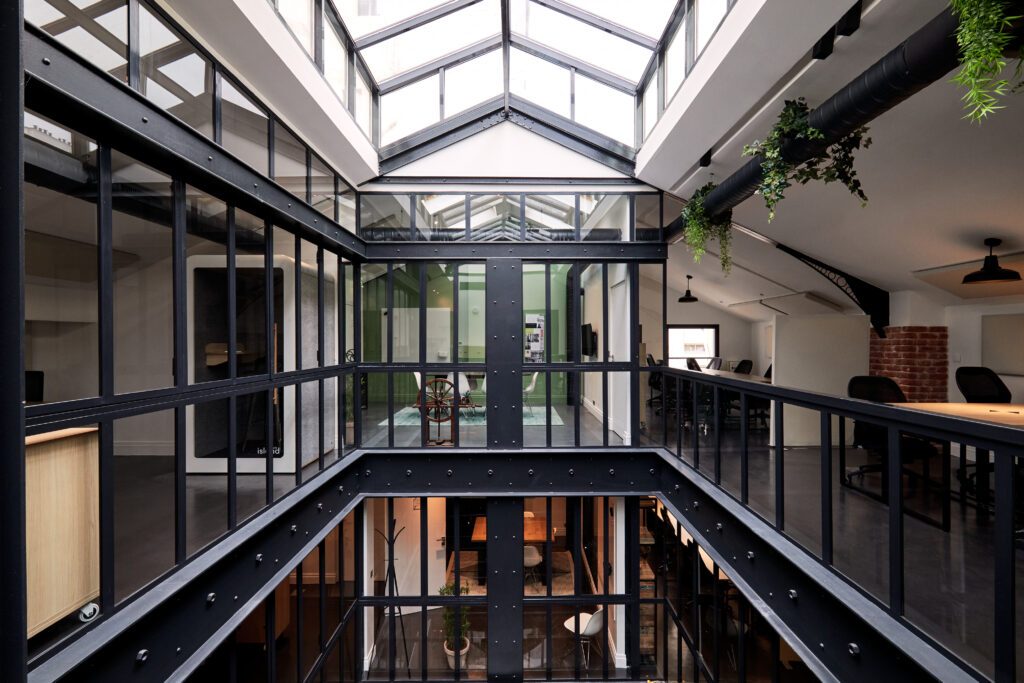
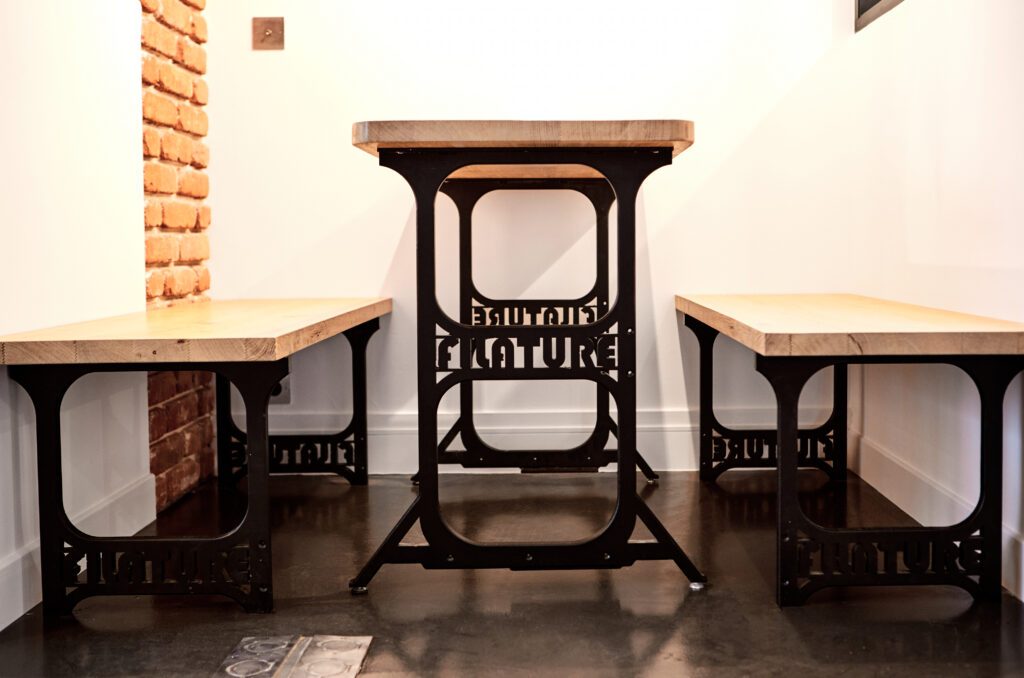
To achieve this, Mathilde Lavrilleux and her architecture-and-works team at Morning revisited the industrial tones (metal and leather) while bringing greenery into the place. As much furniture as possible is reused, in particular the pieces forged with the name of La Filature. This practice is taken up naturally by the Morning teams, well versed in the challenges of reuse. (See also: “Morning Cléry, the workspace that reduces its environmental impact”)
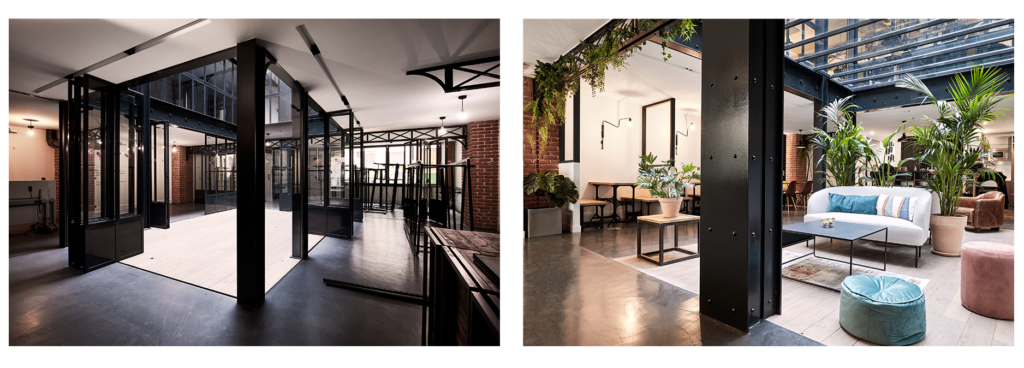
The fit-out of La Filature also takes into account the recommendations arising from the workshops. As a result, the ground floor is opened up like an agora. The offices located in this space are moved to the upper floors, freeing up a vast patio to host the Foundation's events.
Numerous meeting rooms are arranged all around the patio and a nomadic zone occupies the back of the space to welcome members of charities attending training. A large open kitchen also serves as a meeting point. Given that the tea points on the upper floors are removed, the ground floor becomes the main place of sharing for residents, who make the most of the large lounge. The ground floor is soundproofed thanks to the installation of a glazed ceiling above the patio.
On the upper floors, the circulation zones are also smoothed. Each level is redesigned to address the challenges of soundproofing and natural light. Acoustic panels and rugs are placed everywhere, lighter tones are favoured and light fittings are chosen to open up each floor, which keeps a meeting room and an additional phone box.
***
In October 2021, after 3 months of works and 8 months of engagement in total, the team of Fondation Entreprendre and the charities were able to discover their new premises, tailored to their needs and to the economic challenges of La Filature. This transformation should allow Fondation Entreprendre to achieve a 27% gain in revenue.
Our team is available to assist you.
Download our new study
Nouveaux bureaux : ce qu'attendent les salariés
.png)

.jpg)