


With 48% of French employees experiencing psychological distress*, more and more companies are placing mental health at the heart of their HR policy.
But there's still a long way to go. Tossed about between taboos and preconceived ideas, sitting on the boundary between the professional and the personal, mental health remains a sensitive subject, too often associated solely with suffering and stress.
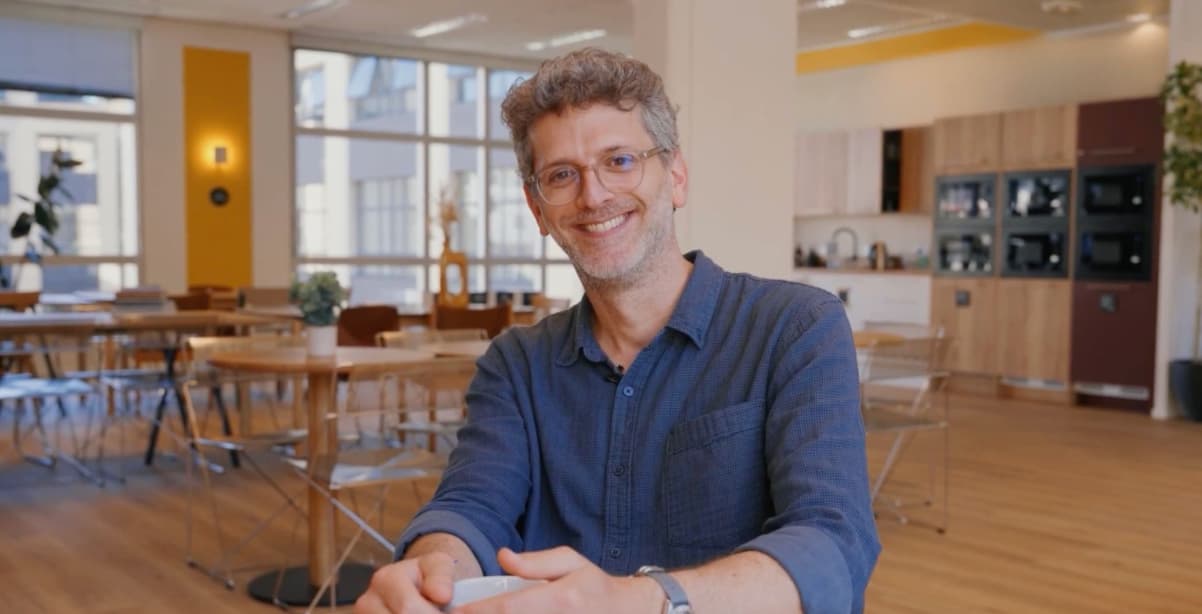
Gilles Meyer, an expert in positive mental health, shares here 5 concrete tips to move into action and transform our approach to well-being at work.
Tip no.1. Define mental health properly (to clarify the scope of your actions)
When we talk about mental health in the workplace, we often narrow the subject down to problems of stress, burnout, anxiety... But the reality is far richer and far less bound up with suffering. The WHO (World Health Organization) offers a precise definition of mental health as "a state of well-being that enables each person to realise their potential, cope with the normal difficulties of life, work successfully and productively, and be able to make a contribution to their community".
This definition distinguishes two complementary aspects. On one side, positive mental health: everything that strengthens our good mental fitness, our capacity to flourish and to meet everyday challenges. On the other, the reduction of suffering: the prevention and treatment of mental disorders.
It's like a set of scales: on one side you strengthen the positive, on the other you reduce the negative. The two aspects are inseparable and equally important in building an effective approach.
Tip no.2. Embrace the company's (shared) responsibility on the subject

The question of the company's responsibility is often raised by HR teams, faced with a subject that sits on the boundary between the professional and the personal. Organisations must nonetheless take a stance on it in order to better support their employees – who are, of course, the only ones able to act in the end.
The company cannot develop employees' mental health on their behalf. It's too personal and subjective. That said, the company has a key role to play: creating the conditions favourable to good mental health. It must put the framework in place and set the rules. It can also offer resources and put people in touch with health professionals when necessary.
This shared responsibility is the key. The company cannot remain passive in the face of mental health challenges. But nor can it manage everything. The employee is the only one able to take up the tools and resources made available to them. It's a new paradigm: the company opens the door, the employee takes the step.
Tip no.3. Strengthen the positive to prevent the negative

As the WHO puts it, mental health includes two poles of action that are complementary. The first concerns employees' good mental fitness, while the second focuses on reducing suffering when disorders appear.
Placing positive mental health as the starting point gives a different tone to the whole strategy and helps prevent future troubles. It's like rugby: why do players spend four days a week in the weights room? First, to be at their best during the match – to go faster, tackle harder, jump higher. But in doing so, they avoid injury. The more muscular they are, the less they get injured.
Mental health follows the same logic. By strengthening the positive, you naturally prevent the negative. This approach – alongside measures to prevent and treat mental suffering – makes it possible to look beyond burnout and psychological distress. For HR teams, it changes everything: no more beating about the bush. At last we can talk about mental health without taboo.
Tip no.4. Build on what already exists
Most companies put in place initiatives that contribute to mental well-being, even if they don't identify them as such.
Do you offer meditation sessions? Training on stress management? Workshops on mindset? Congratulations, you're already doing positive mental health. The challenge now is to identify these initiatives, to give them value and to enrich them in order to build a genuine positive mental health strategy.
This approach makes it possible to build on what already exists rather than reinventing everything, which is often more effective and more readily accepted by teams.
Tip no.5. Bet on small actions, day to day.
There's no need to overhaul everything overnight. The key to success lies in putting in place small, concrete, regular actions.
If, for example, a source of well-being identified by your team is removing the energy "parasites" from your day (constant notifications, back-to-back meetings, emails checked late at night, and so on), you need to choose one aspect to act on and put in place a simple action.
Action plans must be concrete and achievable. These small changes, applied regularly, can have a significant impact on your mental well-being.
***
In 2024, with 42% of workers experiencing psychological distress*, these tips make complete sense. Positive mental health isn't a magic wand, but a concrete approach to building a healthier working environment. It reminds us that looking after our mental health isn't a luxury, but a necessity. For more tips, do sign up to Gilles Meyer's newsletter.
*According to the Empreinte Humaine x OpinionWay barometer published in September 2024.
Our team is available to assist you.

Download our new study
Nouveaux bureaux : ce qu'attendent les salariés
.png)

.jpg)