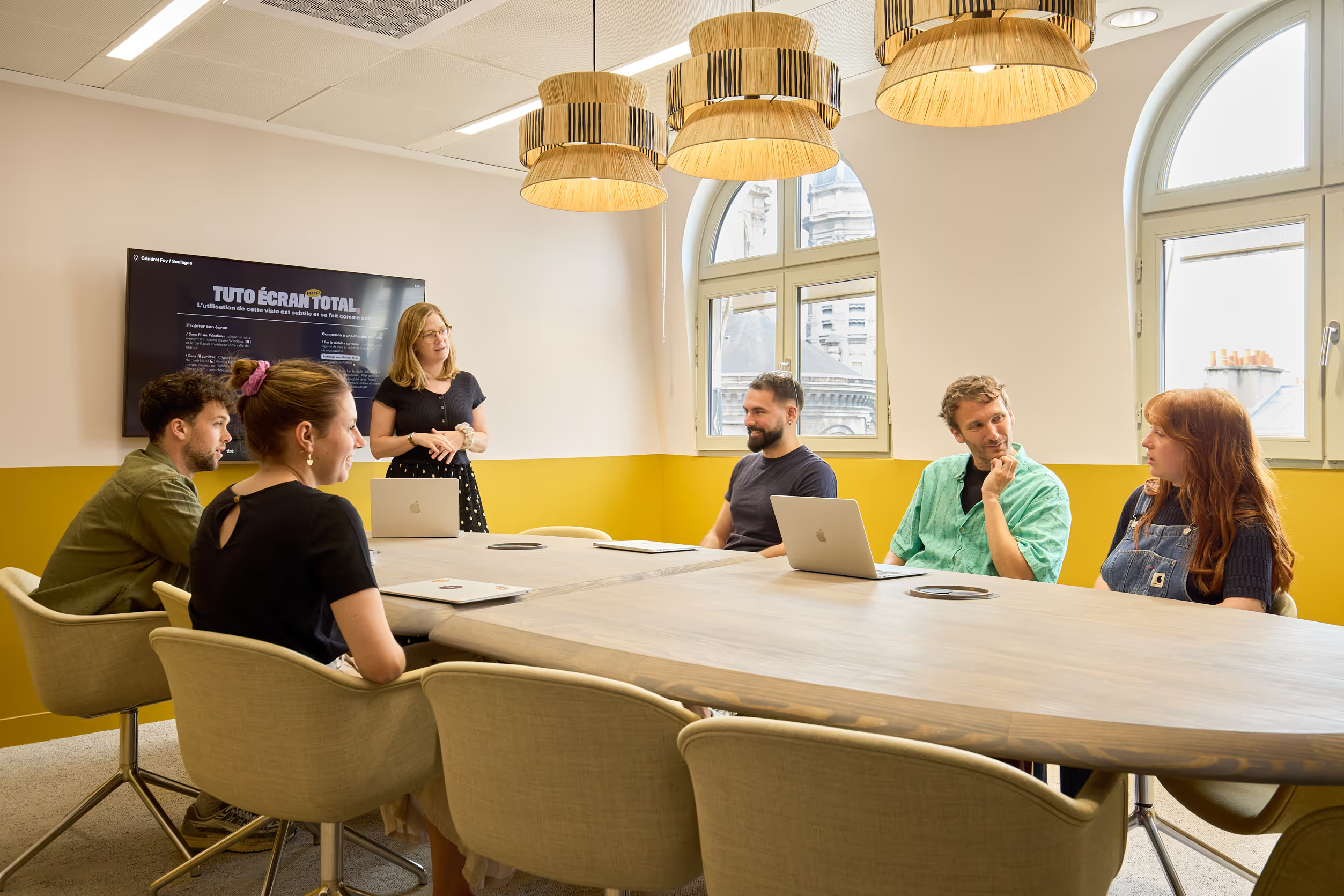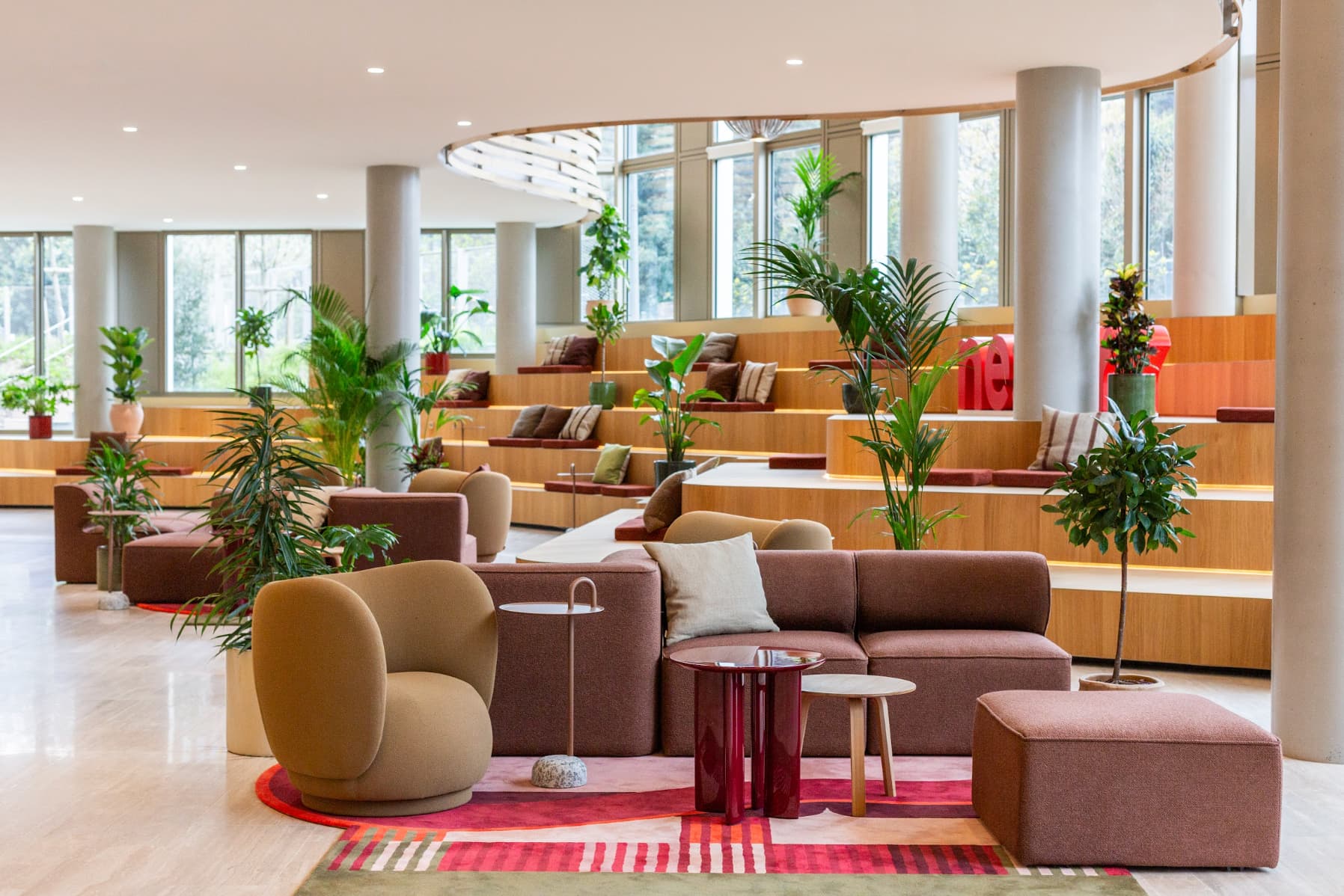


The Morning Bourse-Vivienne space has just opened its doors in the 2nd arrondissement of Paris, at 9 rue des Filles Saint-Thomas. The 1,700 m2 space is already home to 190 occupants from all walks of life. Morning Bourse-Vivienne can accommodate large groups and SMEs just as easily as start-ups / scale-ups.
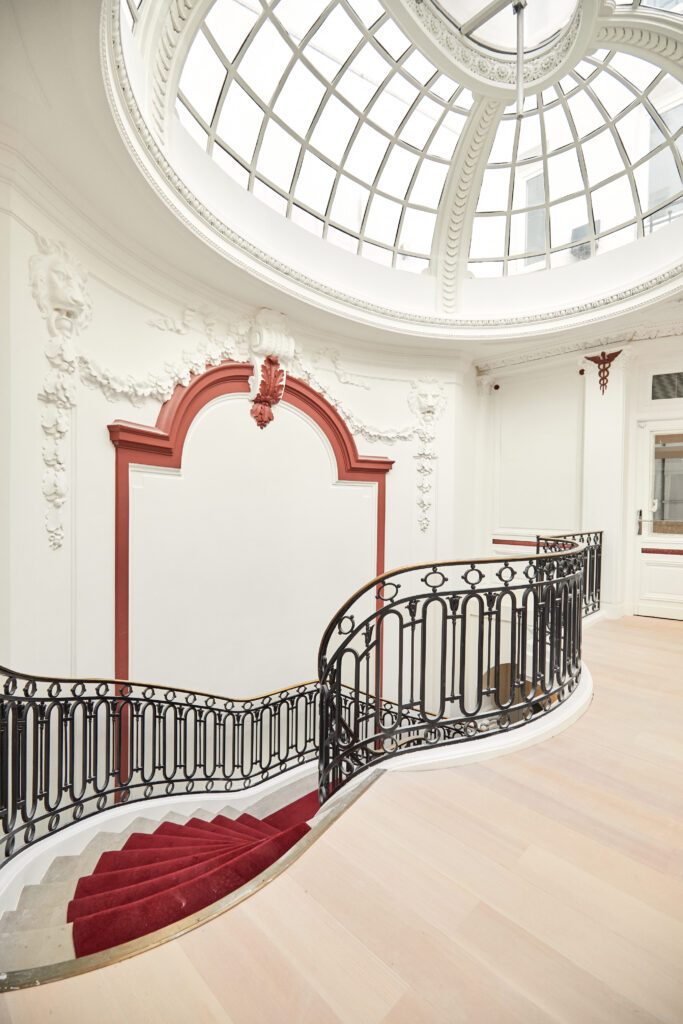
Housed in a 6-storey building, this workspace enjoys a unique setting, characteristic of Second Empire architecture, with a monumental hall and a central staircase crowned by a glass dome. To create a workspace here that would feel welcoming to occupants, Gabrielle Valentin, interior architect at Morning, chose a "Parisian bistro" feel to counterbalance the grandeur of the setting, while working towards a resolutely responsible design.
A "Second Empire" showcase,
For an eclectic-styled space
The freshly inaugurated space occupies a former bank in the Bourse district, in a style typical of the Second Empire era. Originally built over 2 storeys, the building grew by a further 4 storeys in Haussmann's day.
In the second half of the 19th century, majesty was at the heart of architectural creations. Second Empire architecture is marked by an eclectic style that blends classical Greco-Roman inspiration, Renaissance lines and the neoclassical style. The primary aim of this eclecticism is, much like the Opéra Garnier and the Hôtel-Dieu hospital built in the same period, to take visitors' breath away. The majesty of the ornamentation, the ceiling mouldings and the wrought-iron staircase railing are all intended to produce these effects.
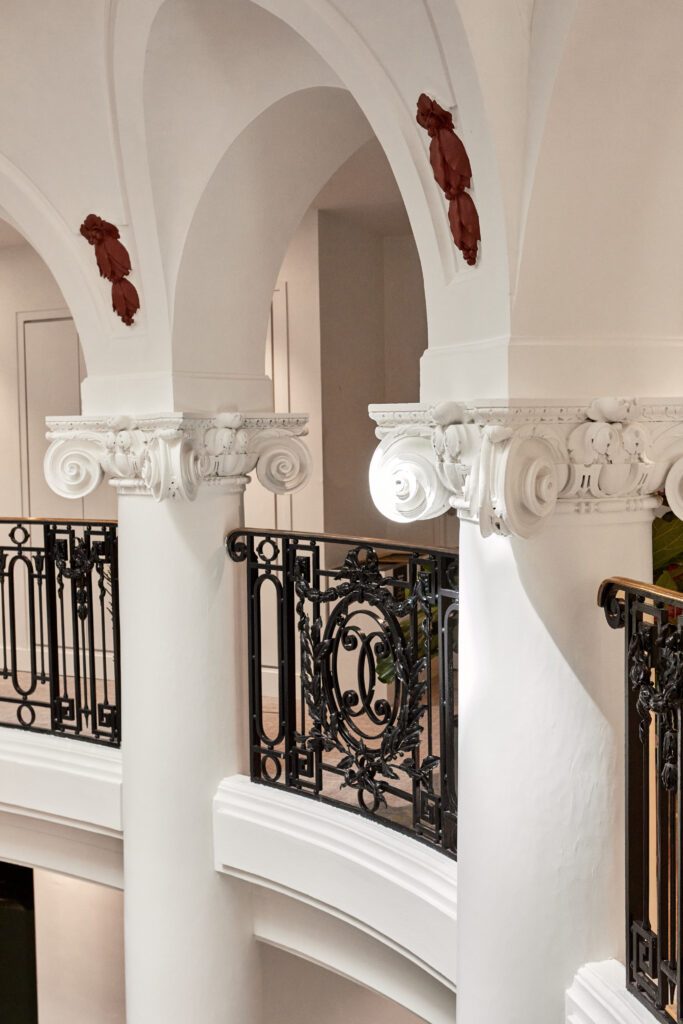
Morning Bourse-Vivienne bears witness to this impressive eclecticism through its magnificent hall, its grand central staircase and its floors arranged over small levels. The façades and interior spaces have an "ornate" look, which they owe to a subtle interplay of relief, volume and curves.
The world of the Parisian bistro,
To bring residents closer together
In fitting out Morning Bourse-Vivienne, Gabrielle Valentin opted for a Parisian-bistro-style design to counterbalance the grandeur of the setting.
Historically established in this part of Paris, these traditional bistros are known for their warm atmosphere, which the architect set out to recreate: "The "bistro" feel helps warm up the atmosphere of this vast, impressive volume. The primary aim was to create - together with the works team - a convivial, warm workspace in a place of great majesty. It was no easy challenge to meet." Gabrielle points out. That said, care had to be taken to achieve the right marriage of the two styles. "To respect the Second Empire shell, I added to the bistro feel some voluptuous decorative elements that echo the original eclecticism".
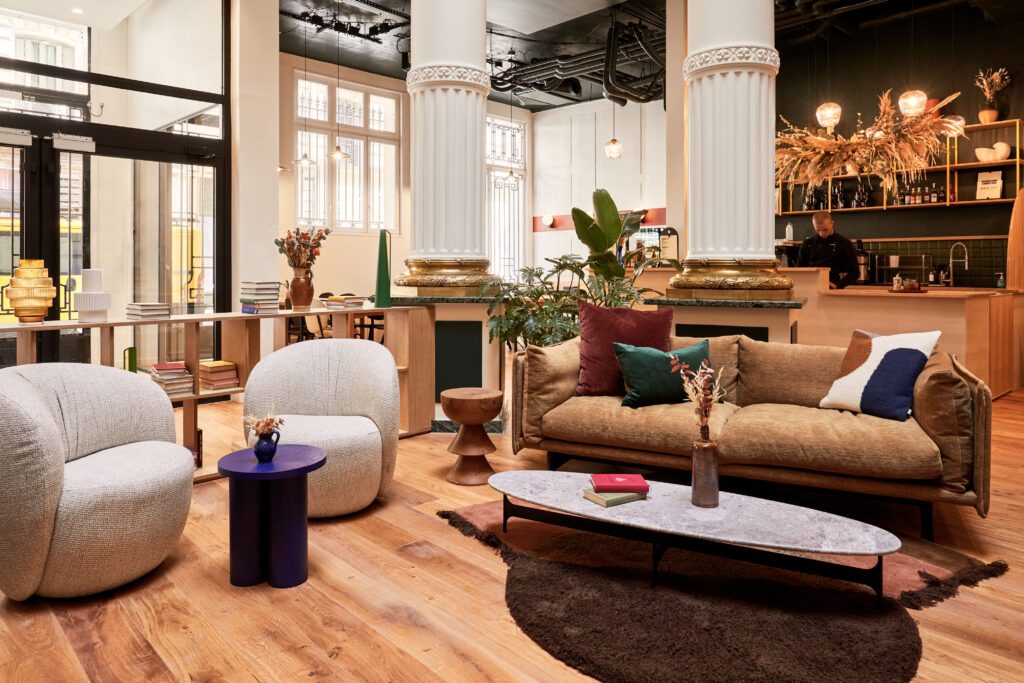
The dominant empire green and red tones echo the sumptuousness of the Napoléon III building. Terracotta, for its part, brings a rustic, warm touch. For Gabrielle, the pairing of these three colours is not merely an aesthetic choice. "With such a high ceiling, the most important thing is to bring warmth without losing brightness. Empire green gives the space a dimension that is both noble and intimate, while terracotta brings the authenticity and conviviality needed to create a Morning workspace".
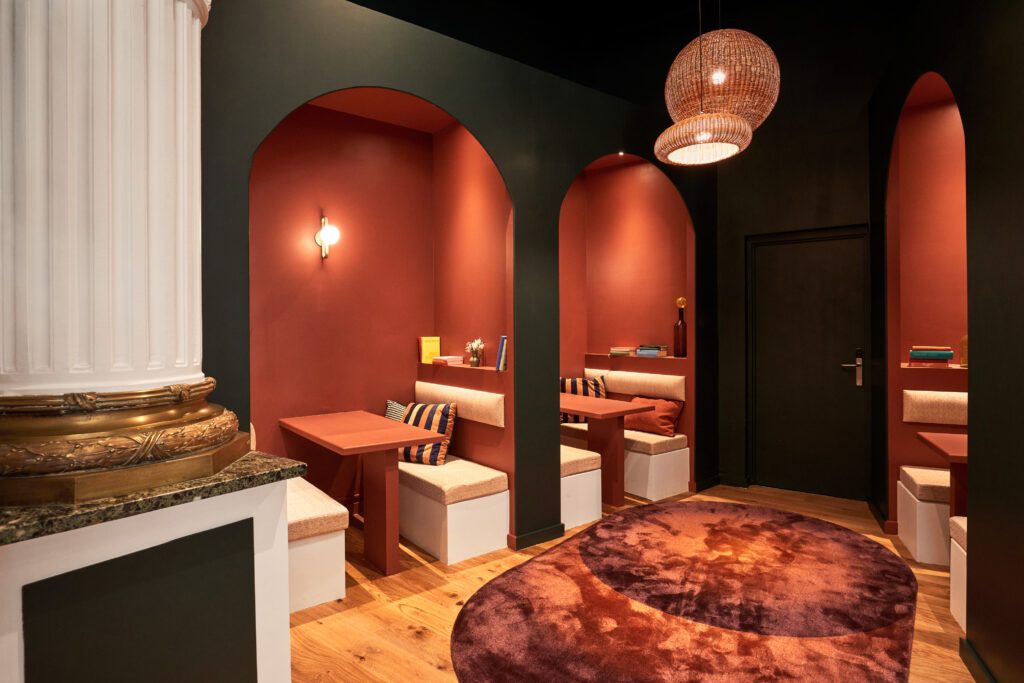
The original mouldings are echoed by certain purple chromatic details and the bespoke frescoes created by Amandine Jasawant, artistic director. Each of the frescoes takes up the colour scheme of the space, while echoing the oval of the central staircase.


A more responsible space,
Favouring European sourcing and reuse
The fit-out of Morning Bourse-Vivienne favours responsible waste management, European sourcing and reuse.
From the very start of the works last February, waste was meticulously sorted, then recycled by Partenaire service. In addition, sorting the waste generated by the running of the space will be made easier thanks to Lemon Tri, a preferred partner of Morning.
The space features numerous pieces of furniture sourced in France and Europe, among them the large eco-responsible tables made by Morning. Made from French materials and assembled in France, they are (eco-)designed to seat up to 6 people. Just the thing to encourage exchanges, both formal and informal in the space!
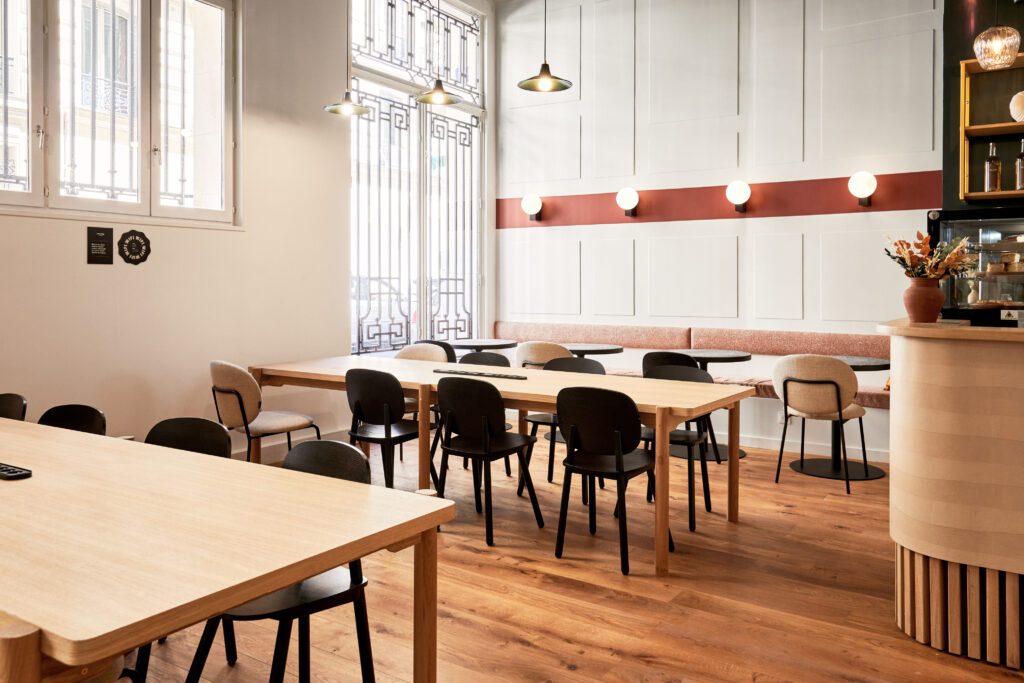
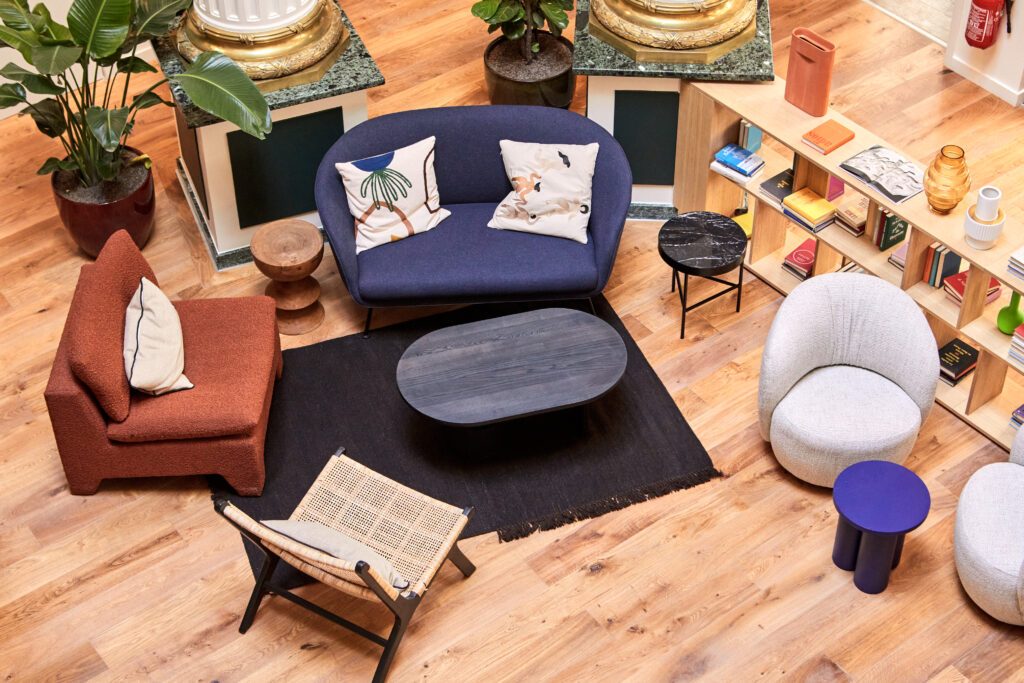
Other furniture comes from European manufacturers, such as Cruso (a Belgian supplier), La Quincaillerie moderne (a French lighting manufacturer) and La Chaise française. Reused furniture also dresses the premises. The bamboo pendant lamp, the olive green Holy chair and the low rattan chair placed on the ground floor and in the meeting rooms were salvaged from Morning Penthièvre. The second-hand books in the ground-floor library come from Boulinier, a French bookshop house entirely focused on reselling second-hand books. The books were refurbished there, and their original covers replaced.
***
☞ Discover the design of Morning Penthièvre
☞ Everything about Morning Cléry, the workspace that reduces its environmental impact
☞ Eco-design in 10 questions
Our team is available to assist you.

Download our new study
Nouveaux bureaux : ce qu'attendent les salariés
.png)
.jpg)