

Over successive refits, workspaces can become spaces of learning; the workspace can then become a university. The layout of workspaces (whether third places, coworking spaces, or “totemic” company head offices) is operating in an ever more flexible, ever more open way. These transformations are not without echoes - to a certain degree - of the spatial logic of the university, derived from the Latin universitas, which denotes a community, an assembly.
Today, the spatial organisation of the university and of the company are converging in many respects, in a dynamic of mutual influence. While on the one hand the university is regaining a more practical and less lecture-theatre dimension, the company for its part is opening up more in order to move beyond its own boundaries and create places of gathering, communities of sharing.


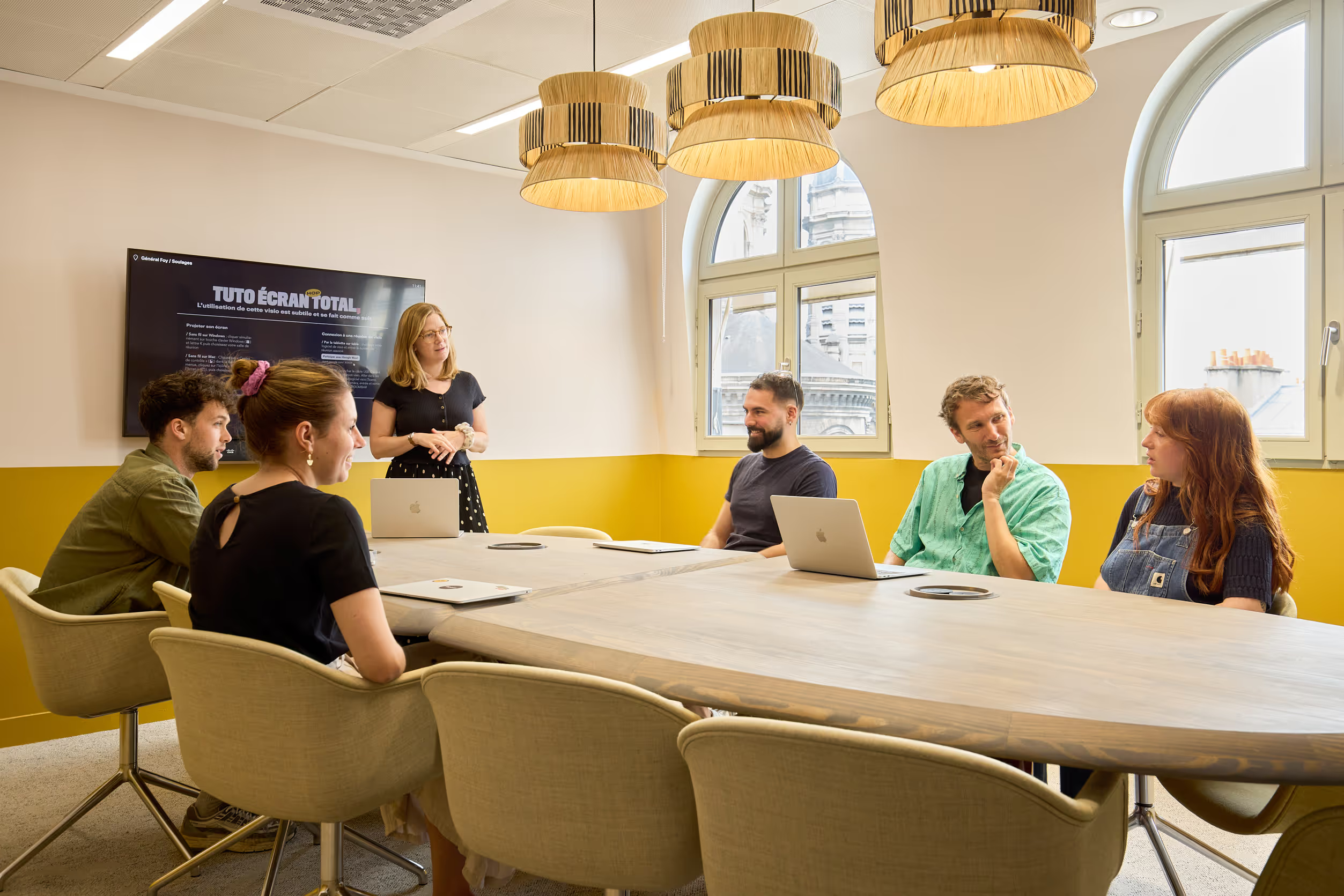
"80s partitioned office" vs "17th-century amphitheatre at the Sorbonne"
The office: an ever more learning-focused place?
Over the course of its history, the workspace has evolved a great deal, with a more or less “learning-focused” dimension depending on the era, the sector of activity and the role granted to workers. Between the artists' workshops of the Renaissance and the factories of the 19th century, the training of workers was worlds apart. As for the office of the Trente Glorieuses, so fond of partitions, it was more a marker of status than a place of sharing and learning. But since the 1990s things have been shifting towards a more collaborative model, and ever since, everything has been speeding up.
Architecture in the service of knowledge
In 1995, in Berlin, a group of computer scientists came together to share their knowledge and experience of free software. And so the first coworking space, called C-Base, was born. The space drew on hacker mythology, with corridors inspired by science-fiction films and a large meeting area with a bar, tables and armchairs. On the walls, projections evoked the atmosphere of a spaceship. At the time, these revolutionary layouts hosted the teams of Wikipedia, Ubuntu and Mozilla.
In the early 2000s, the model spread to San Francisco. The programmer Brad Neuberg and the designer Chris Messina created Spiral Muse and The Hat Factory. These venues followed the same architectural concept: large spaces with open work areas, and points to meet and relax on every floor. The rest of the story would be taken up by the great wave of coworking: the workspace would from then on be a place of learning by its very nature. Its physical organisation would be designed so that encounters there would be more frequent and more fruitful.
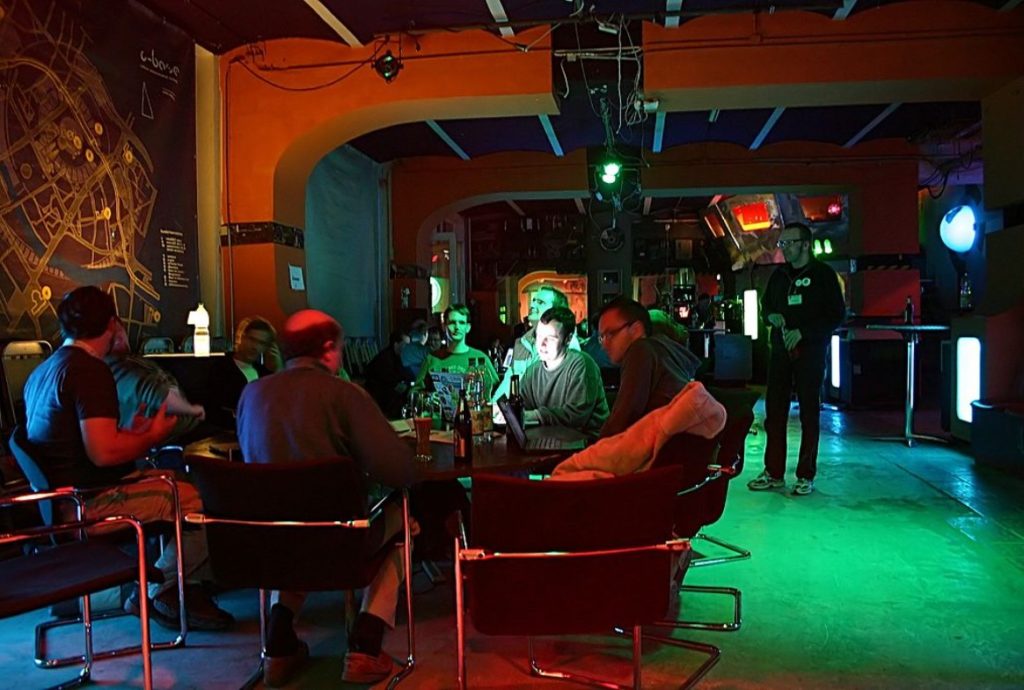
Wikimedia Conference at the C-Base in Berlin
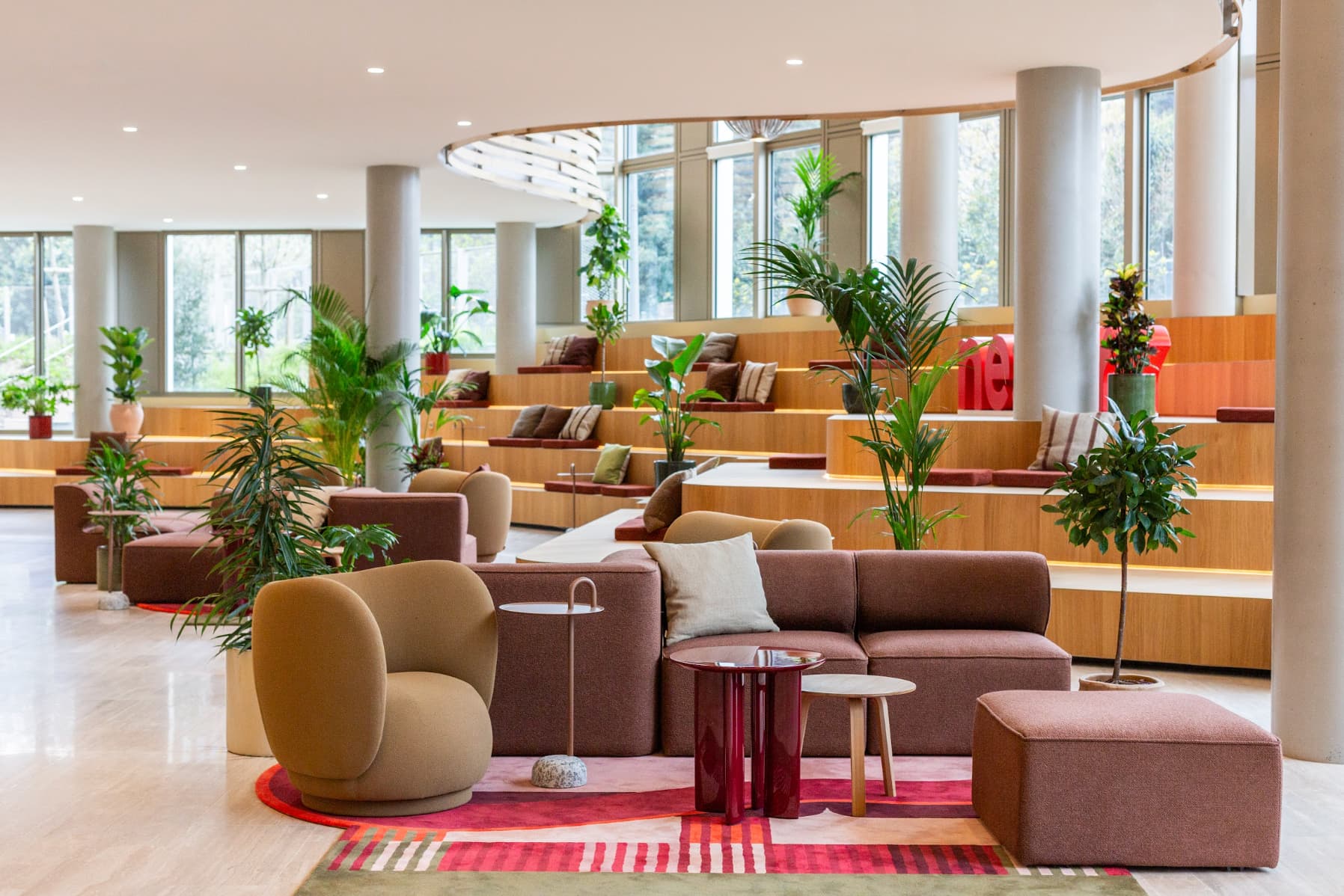
The communications agency BETC has turned its head office in Pantin (the former Magasins Généraux building) into a future-facing workspace. Its more than 20,000 m2 of floor space features non-assigned desks, and different work and leisure zones are designed like a little town. Streets, gardens and walkways help to promote exchange and sharing among the people who work there.


BETC's head office in Pantin, a place that opens onto the city.
Creating experiences and situations of learning
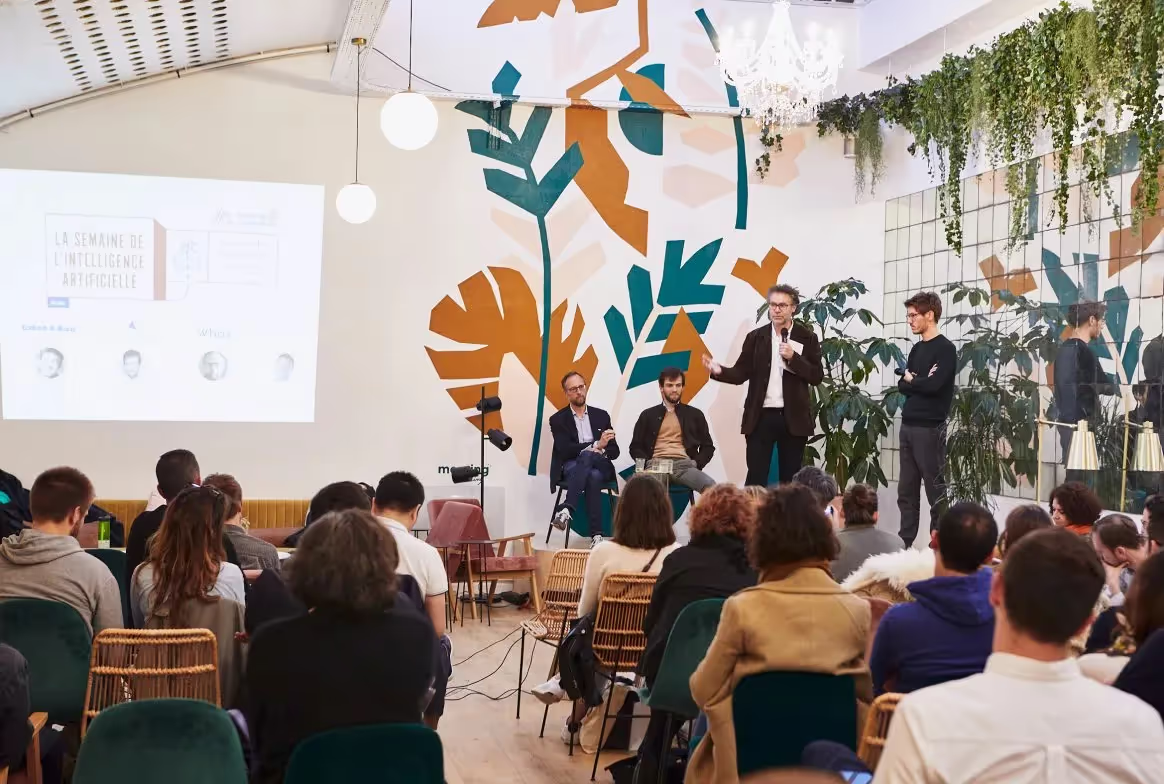
To make the most of these architectures, office furniture has to adapt. The challenge is to invent the new forums, agoras and platforms of the 21st century, capable of temporarily hosting events. Shared spaces, offices, journeys and meeting rooms - every detail is geared towards sharing, by suggesting moments of exchange at different levels of formality. Thus, at Morning Balard, bespoke tiered seating recalls lecture theatres. The aim is to multiply the opportunities for dialogue and the number of people you can talk to.

Semaine de l'Intelligence Artificielle, at Morning République
Beyond its physical qualities, the workspace can become a university if it offers genuine situations of learning. The company must offer a true experience of lifelong learning and provide various events, whether physical or virtual: training sessions, workshops, webinars, conferences, round tables.
When the university takes inspiration from the company
Today, the university is being transformed: the integration of digital technology, the promotion of entrepreneurship, project-based working, and so on. With the digitisation of resources (MOOCs) and of documentation tools (Gallica, Moodle), universities are adapting their own spaces.
The large lecture theatres for lectures are losing ground to new personalised learning spaces that favour workshops and other more practical forms of training.
Towards the coworking university?
On university sites, the various places devoted to study and work are being reorganised and redesigned, so as to better accommodate students and encourage their exchanges within a framework of collaboration and creativity.
Alongside the traditional libraries, dark and uninviting study rooms are giving way to large, open and light-filled spaces. The aim is to offer a more relaxed study setting and to encourage exchanges between students.
A perfect illustration of this new momentum, the University of Bordeaux has launched its own incubator, UBee Lab, on the Bastide campus. Both an ideas laboratory and a coworking space, it supports 90 students, all invited to develop their projects and their networks.

The coworking space at UBee Lab, an initiative of the University of Bordeaux
New applications are coming along to support this spatial shift. After Hangouts (Google), Skype and Zoom (Microsoft), it is the company Glowbl that is offering a solution tailored to the needs of universities. The tool provides genuine online workspaces for students and teachers and makes it possible, among other things, to create virtual classes. Everyone can experience being on-site in order to counter the dehumanisation of social exchanges and the loss of bearings. Lyon 3 University is one of the first to adopt this solution.
https://www.youtube.com/watch%3Fv%3D0zUBRKZFqwU
Towards university coworking?
The health crisis hit universities hard, forcing them to introduce occupancy caps and limit their capacity in order to comply with health rules. As a result, a whole population of students found themselves without a place to work. To remedy this situation, coworking spaces made workstations available for students.
At Morning, a service specially dedicated to students was created recently. Within the Morning Marcadet space, 15 free workstations are available from now on, in an effort to ease the effects of the isolation caused by the health crisis.
To support the professional activities of students at the University of Montpellier, the institution's alumni association has set up a partnership with Bureaux & Co, a coworking space and place to live. Thanks to this partnership, members can enjoy preferential rates when they choose this convivial and creative setting for their work. Bringing students closer to companies at an early stage allows them to benefit very early on from contact with professionals, while combining theoretical grounding with practical experience.
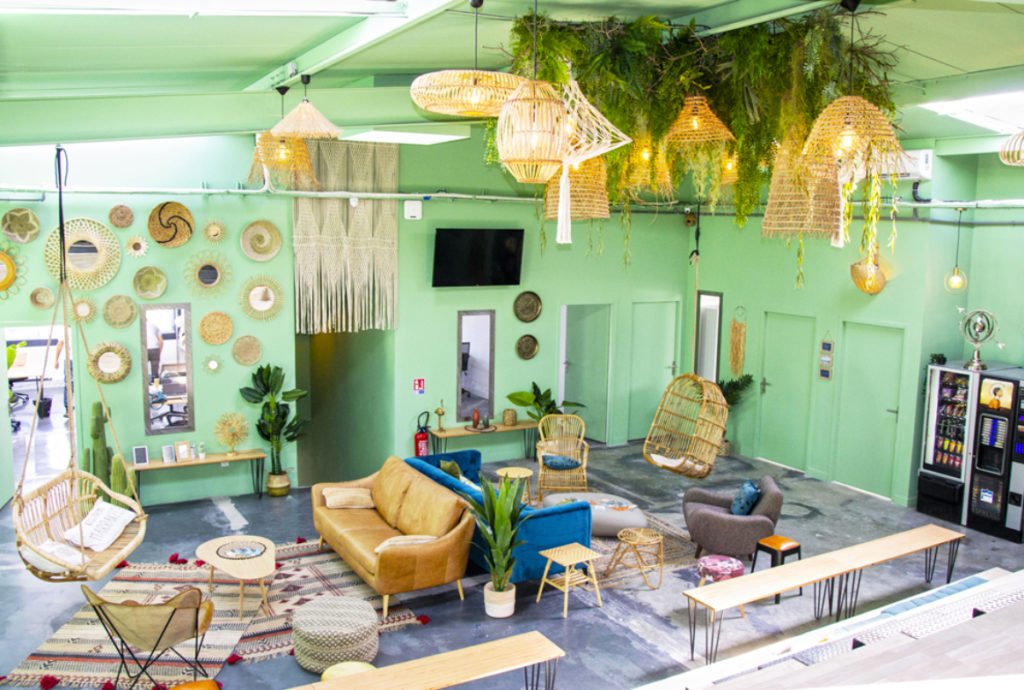

Bureaux & Co in Montpellier / Morning Marcadet, in Paris
More and more coworking spaces are teaming up with universities to bridge the gap that has opened up between the classroom and practice. Even setting aside the Covid crisis, third places and coworking spaces are attracting more and more students.
The initiative launched by General Assembly is interesting in many respects. Originally a coworking space, it has become a genuine “learning experience” halfway between school and the professional world. Specialising in training in the most sought-after professional skills today, General Assembly already has campuses in 20 cities, including Paris, and more than 35,000 graduates all over the world.
The workspace, the new university classroom?
So what will the next step be? Will the new workspaces go so far as to replace the university? Everyone will have their own hunches... The fact remains that this trend - beyond the transformation of spaces into new classrooms - allows people of different ages to come closer together. If students are already familiar with these workspaces, what about older people? When we know that this part of the population is growing steadily, we can imagine that there is a key challenge here in the ability of workspaces to accommodate them.
Our team is available to assist you.

Download our new study
Nouveaux bureaux : ce qu'attendent les salariés
.png)

.jpg)