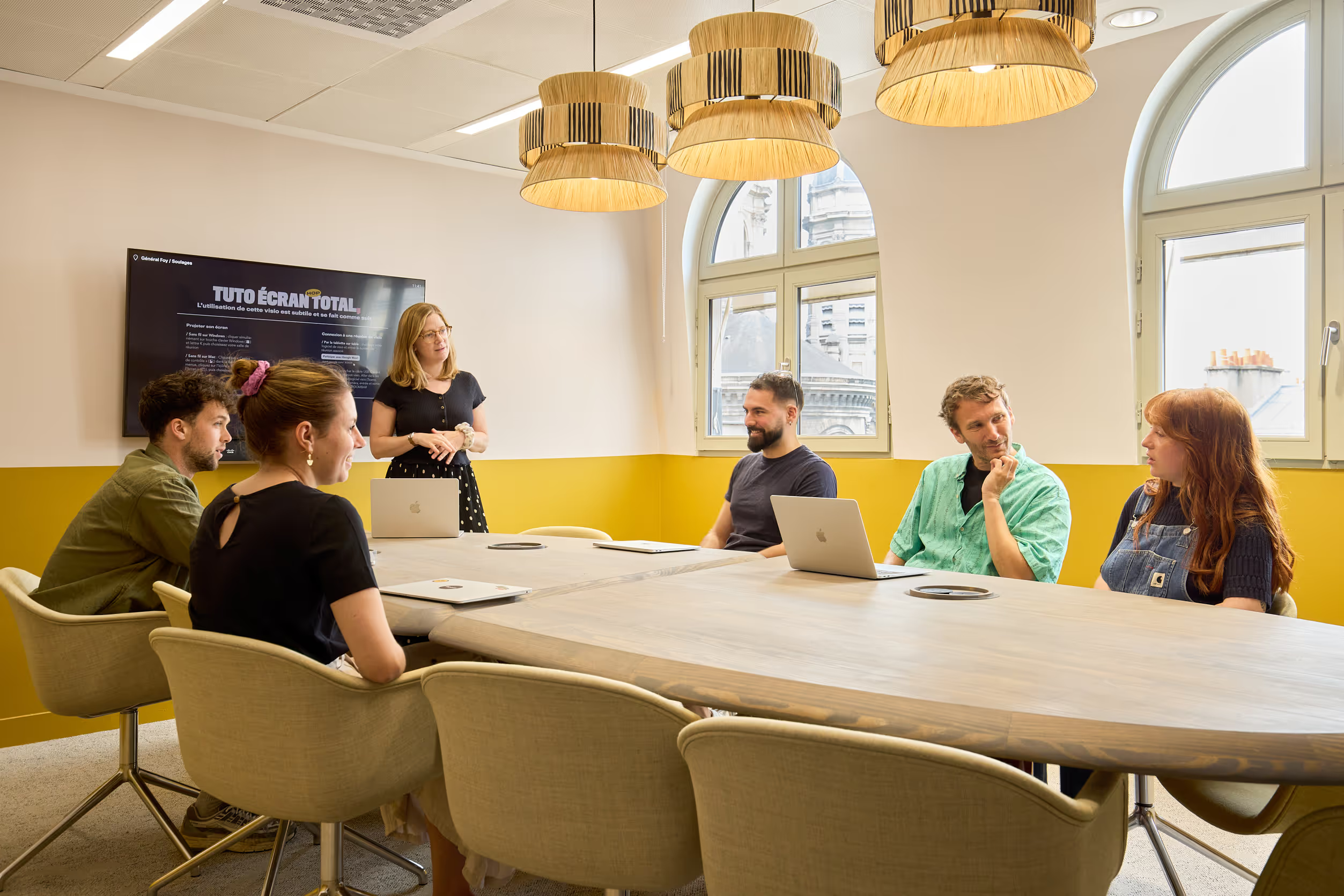



Since March 2020, the many months of lockdown and the widespread take-up of remote work have highlighted the fact that a great number of people across the Ile-de-France region can work from home. When something close to normality returned in September 2021, an entire country found itself able to choose its workspace: at home or at the "traditional" office.
Between these two options, a third path is emerging: that of the in-between spaces making the most of the transformation of the urban fabric and the new forms of mobility unfolding right across the Ile-de-France region.
The Ile-de-France worker and the "city of tomorrow": new forms of mobility and workspaces woven into the urban fabric
All across the Ile-de-France region, the workspace is embedding itself in a new kind of urban life. With the growing popularity of the concept of the right to the city (so dear to the philosopher and sociologist Henri Lefebvre) and the various movements calling for a more democratic city and equal access to urban resources, workspaces are multiplying to offer workers alternatives. Before long, it will no longer be a matter of travelling to your usual office every day, but of making the most of other spaces closer to home, suited to your daily life.
☞ Towards shorter commuting times for workers.
"A working resident of the outer suburbs spends an average of 2 hours 20 minutes commuting every day." This figure, cited by Bruno Marzloff at the Maddy Keynote 2021, speaks volumes about the mobility challenges facing the Ile-de-France region, a territory that is the catalyst for every transformation of the workspace.
For the man who coined the concept of de-mobility, town planning must move beyond Le Corbusier's approach, which envisaged spaces by function (work, leisure, retail). Today the imperative is to reduce residents' journeys by creating multi-functional urban anchor points. Stations - initially dedicated solely to carrying passengers - must therefore be able to accommodate workspaces, shops, sports centres and more.
Today's major town-planning projects follow this logic. Inclusive by design, they aim to curb journeys as well as the emission of pollutants, while improving the living environment of the people who live and work there. By breaking down the silos between its activities, the city of tomorrow (aka the fifteen-minute city) is giving rise to new types of workspace: micro-working, cafes, coworking spaces, and so on. So-called in-between spaces that are all alternatives to the home office and the traditional office.
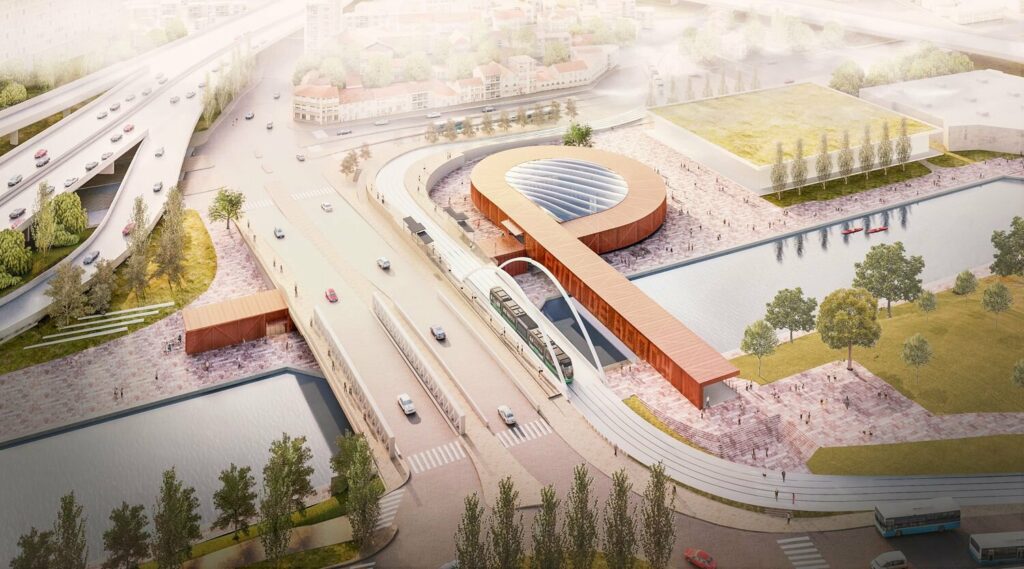
While every conurbation is changing, some Ile-de-France towns are about to undergo a genuine metamorphosis. By 2030, the vast Grand Paris Express (GPE) works will give rise to 33 station districts springing up along the railway lines.
Within a radius of 800 metres around each GPE station, 5.8 million m2 of office space will soon be available*. People in the Ile-de-France region will have access not only to the workspaces of the capital (and its outskirts) but also to everything on offer in mid-sized towns. Connected to their neighbours, they will all become more attractive. It is fascinating to see how these workspaces are taking root in the urban fabric.
☞ Workspaces that open onto the city.
Workspaces are now built into the town-planning projects that seek to offer more equal access to urban resources. Access to offices is made easier by shorter commuting times (see above), but also by the way the office opens onto the city. This openness rests on a harmonious integration into the urban fabric on the one hand, and a warm, sociable design on the other.
Workspaces, as semi-public spaces, will offer familiar layouts that recreate the city we know inside the buildings. What is more, these complexes will also blend into, and even merge with, the surrounding urban fabric. From now on, the office is no longer closed off and turned in on itself; instead it must face outwards towards its surroundings, through multiple entrances and shared areas.
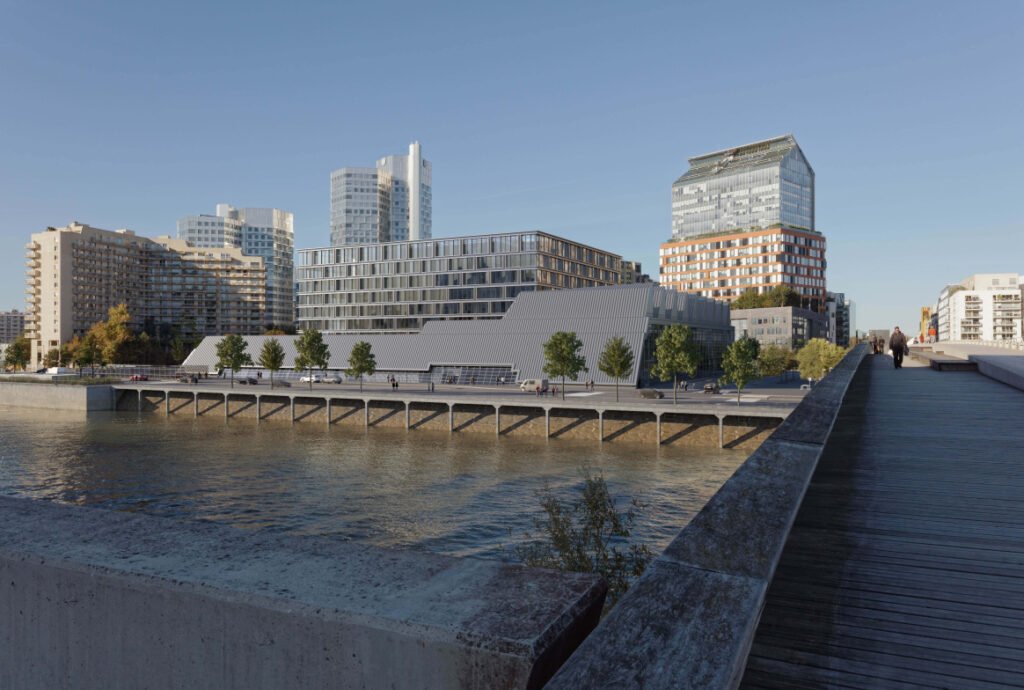
BNP Paribas's future head office - located on the Île Renault in Boulogne-Billancourt - is a good illustration of this openness. Named Metal 57, the project involves the complete redevelopment of Claude Vasconi's historic building, which housed the Renault workshops in 1984. The architect Dominique Perrault is giving the building a new lease of life by incorporating numerous adaptable spaces while preserving its original architectural qualities. "An office building that fosters experimentation, a workplace that opens onto the city" in the words of its designer.
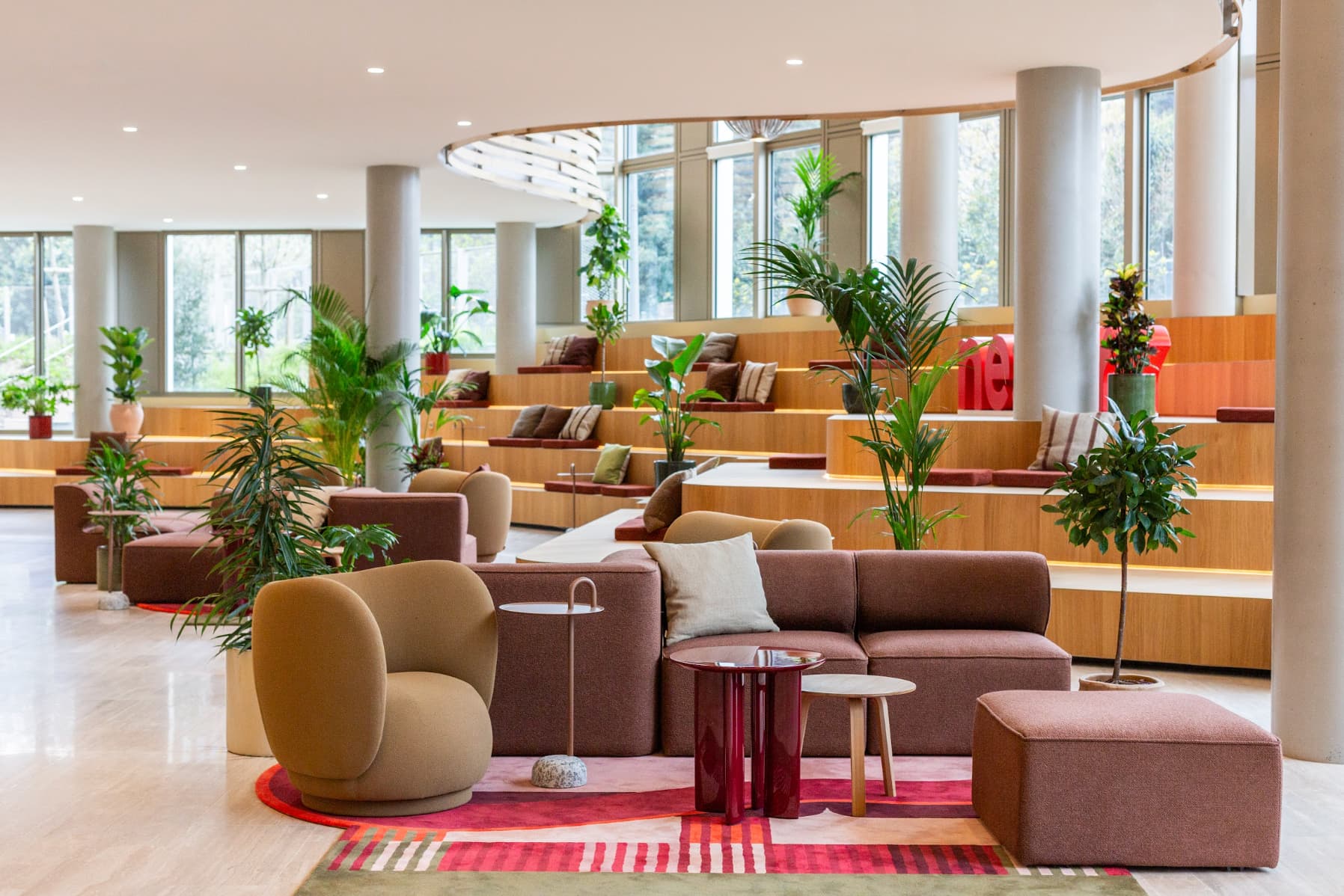
The workspace invites itself into the city, but it also invites the city inside. And so the designers of new workspaces seek to recreate particular moments of social interaction that belong to everyday urban life. These forms of layout treat the workspace as a genuine, familiar place to live. Shared spaces are designed to offer members a time and a place apart from work, where people can meet and talk about the most varied subjects under the sun over a coffee or a tea.
These sharing areas combine the collective and the intimate, work and leisure, city and nature, to meet a range of uses depending on the situation. Occupants can make them their own however they wish, whenever they wish. All in an environment that brings things together. The workplace is first and foremost a place to live, one that must offer an experience open to the city.
Manifold spaces to meet varied needs
But behind these spaces open to the city, spread right across the Ile-de-France region, lies a wealth of offers that makes it possible to meet specific needs.
☞ Workers who are ever more nomadic
The range of workspaces in the Ile-de-France region can be broken down (among other ways) into three categories:
* the traditional office: whether it is the company's head office or a subsidiary, a dedicated or a shared space, the traditional office is a fixed/regular workspace where teams come together day to day.
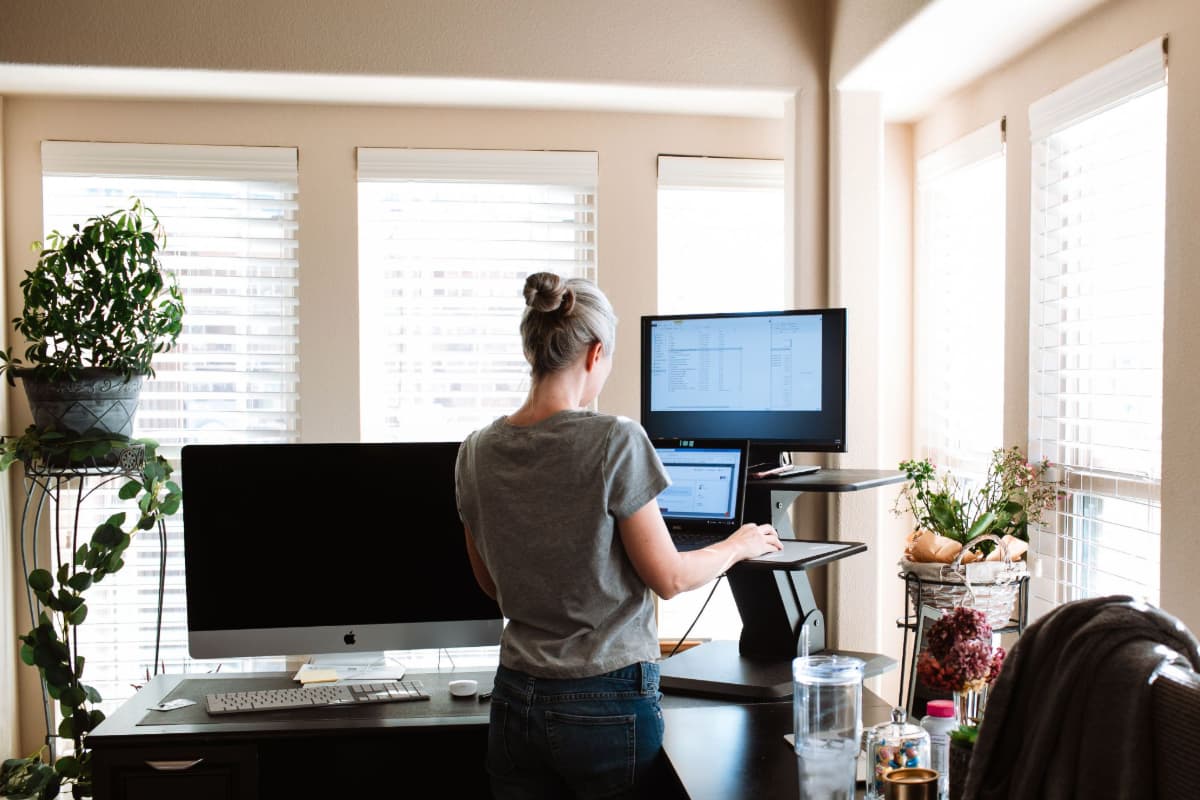
** the home: the great "winner" of lockdown, which captured a large share of the population, forced into home office working. While this notion is quite distinct from remote work (read this article), there is no denying that home sweet home is now regarded as a workspace in its own right.
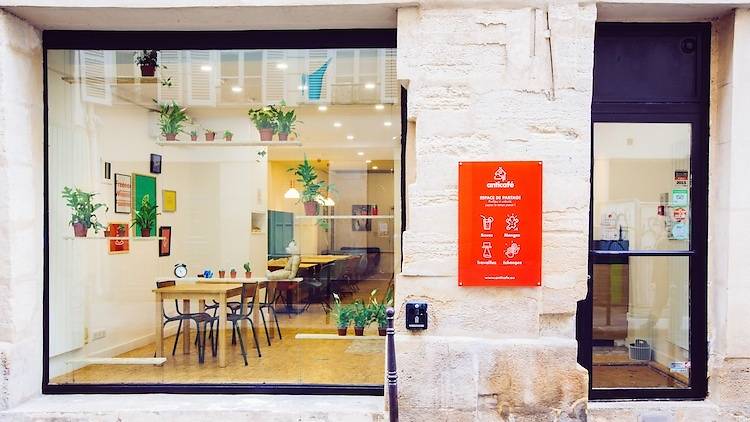
*** the in-between space: a rather handy label - covering a wealth of spaces (coworking, micro-working, cafes, nomadic spaces) that make it possible to accommodate particular "work situations" that cannot be handled by the traditional office or the home.
The constant evolution of digital tools, combined with the transformation of the city, is turning old, fundamental oppositions into complementary alternatives: physical-virtual, in-person-remote, synchronous-asynchronous, continuous-intermittent, and so on. Practices such as remote work and nomadic working are becoming ever more established in the life of companies. A wealth of in-between spaces on offer: a closer look at micro-workings, small players in the towns served by the Grand Paris Express. Nomadic offers from the coworking players.
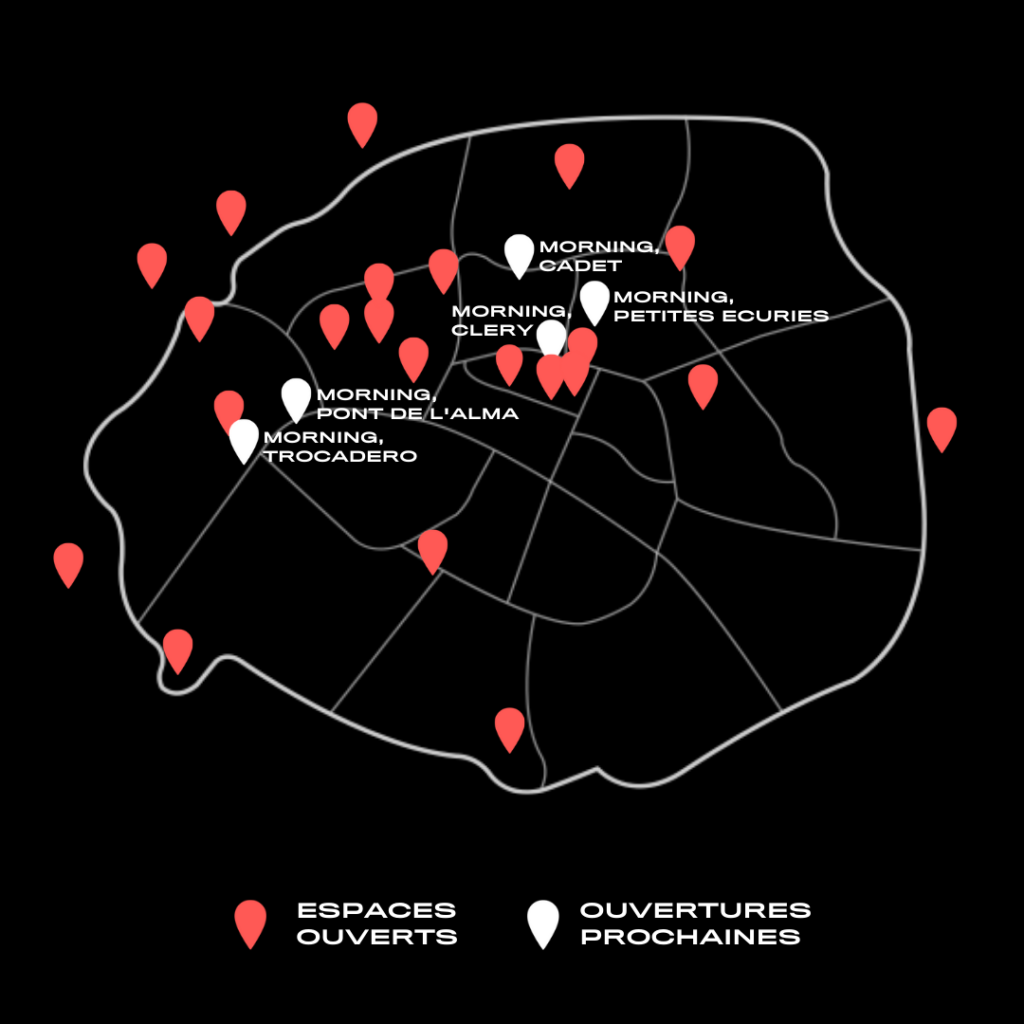
the concept of peak / off-peak hours? of micro-working.
☞ Needs that vary according to each person's space and time
Prolonged working from home has triggered isolation, ergonomic concerns and, at times, the risk of employees disengaging. All of this has prompted a search for solutions to counter the potential drawbacks of remote working: a gradual return to the office, adjustments to working hours and more understanding workplaces, mechanisms for integrating staff.
Work is therefore adapting to every lifestyle and to our new means of communication, and keeping pace with staff mobility is becoming a must in order to stay attractive, especially to the younger generations. In the end, they become more inclined to work a little, all the time, everywhere, as long as it lets them juggle the various arrangements of their lives.
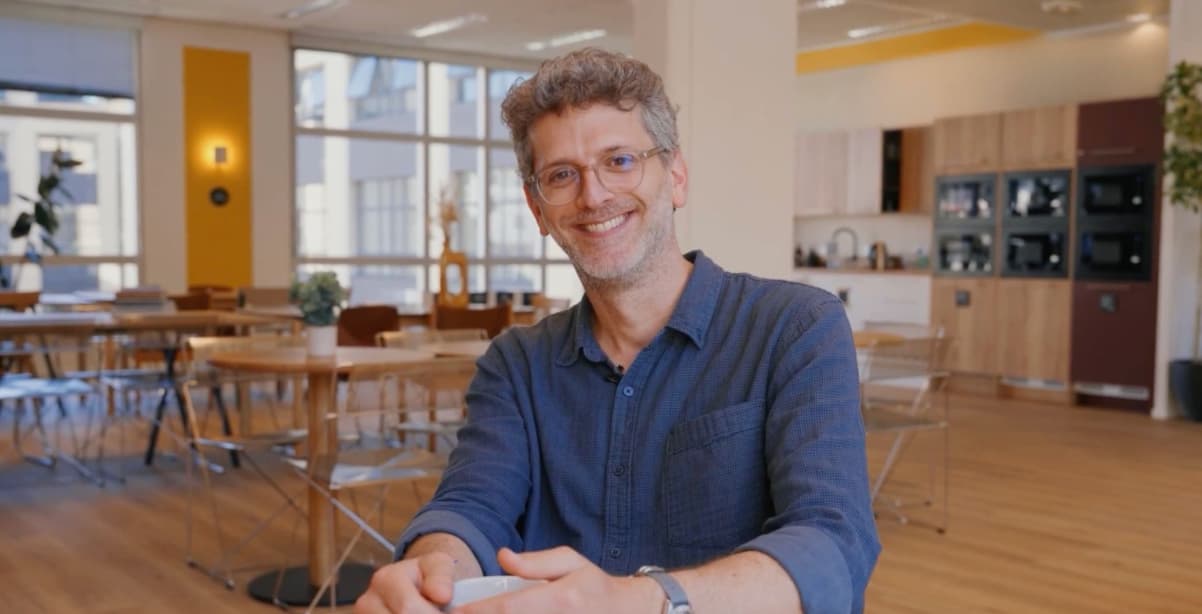
Clément: "employees are taking back control of their own 'space and time'. That doesn't mean everyone is going to stay at home. There need to be spaces with a strong, distinctive culture, and there are other places that will be located closer to where people live, to design spaces in which to work and concentrate. The in-between space - or 'fifteen-minute office' - This last kind of place will be used on more or less occasional, more or less frequent occasions; for logistical, domestic or practical reasons. These in-between spaces will be located close to home or elsewhere, between two meeting points. The worker and the many mobility options open to them.
Demand for proximity is very strong, and according to Bruno Marzloff, a sociologist of work, this trend can be found even across widely varying sectors: "hospital managers are calling for the big teaching hospitals to be broken up, in favour of small local hospitals." Every company, every person will have their own constraints and criteria. The workspace has to be able to meet them.
Age, occupation: "The older you are, the more children you have, the more experience you have, the more you can work remotely. We are learning as we go; there isn't a single company that works the same way, every request is unique. Those just starting out in their working life will have far greater need to be at the workplace."
For Clément Alteresco, "working from home, all the time, can be dreadful. The moment an individual is able to work remotely, from home, it should mean a gain in autonomy and freedom, not the opposite." Employees are taking back control of their own "space and time", but that doesn't mean everyone is going to stay at home. There need to be spaces with a strong culture, while other places - perhaps closer to where people live - will be designed for working alone and concentrating without needing direct interaction with colleagues. work / life. It is possible to work from home, but the long months of home office working have exposed some fundamental gaps, first among them the richness of face-to-face relationships. Some professions more than others: sales teams need to talk to spur each other on together. Developers will feel this need less. Offices will have to take these differences into account.
***
conclusion: what about tomorrow? nomadic working / network of spaces / open plan / peak hours off-peak hours. the idea of a networked hub.
sources: * Within a radius of 800 metres around each GPE station, 5.8 million m2 of office space will soon be available.
Read also:
☞ Flexoffice: fewer desks and more room for staff?
☞ "The Grand Paris stations: welcoming lands for the offices of tomorrow"
☞ "Grand Paris: coworking, a solution to relieve congestion in the metropolis."
Our team is available to assist you.

Download our new study
Nouveaux bureaux : ce qu'attendent les salariés
.png)
.jpg)