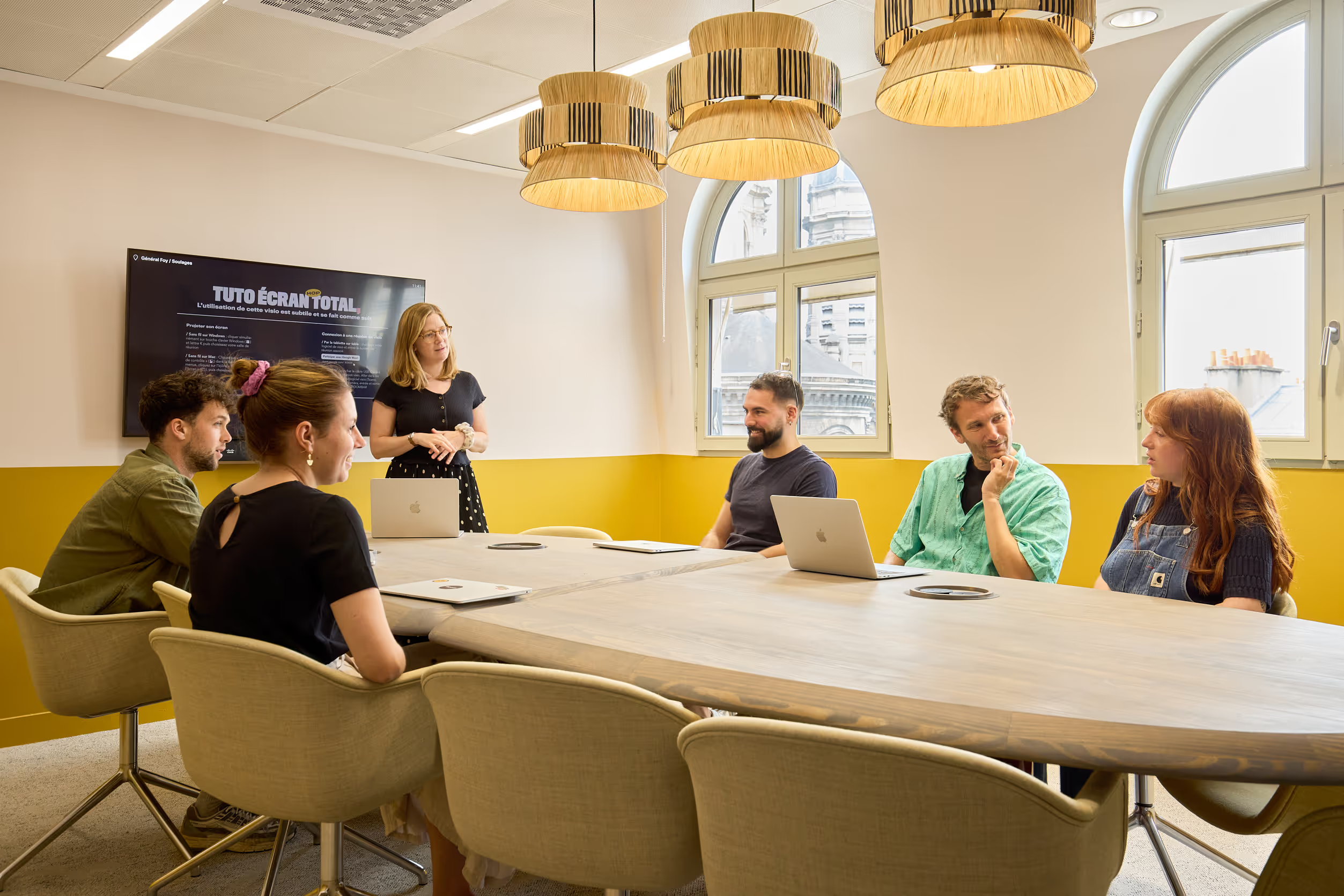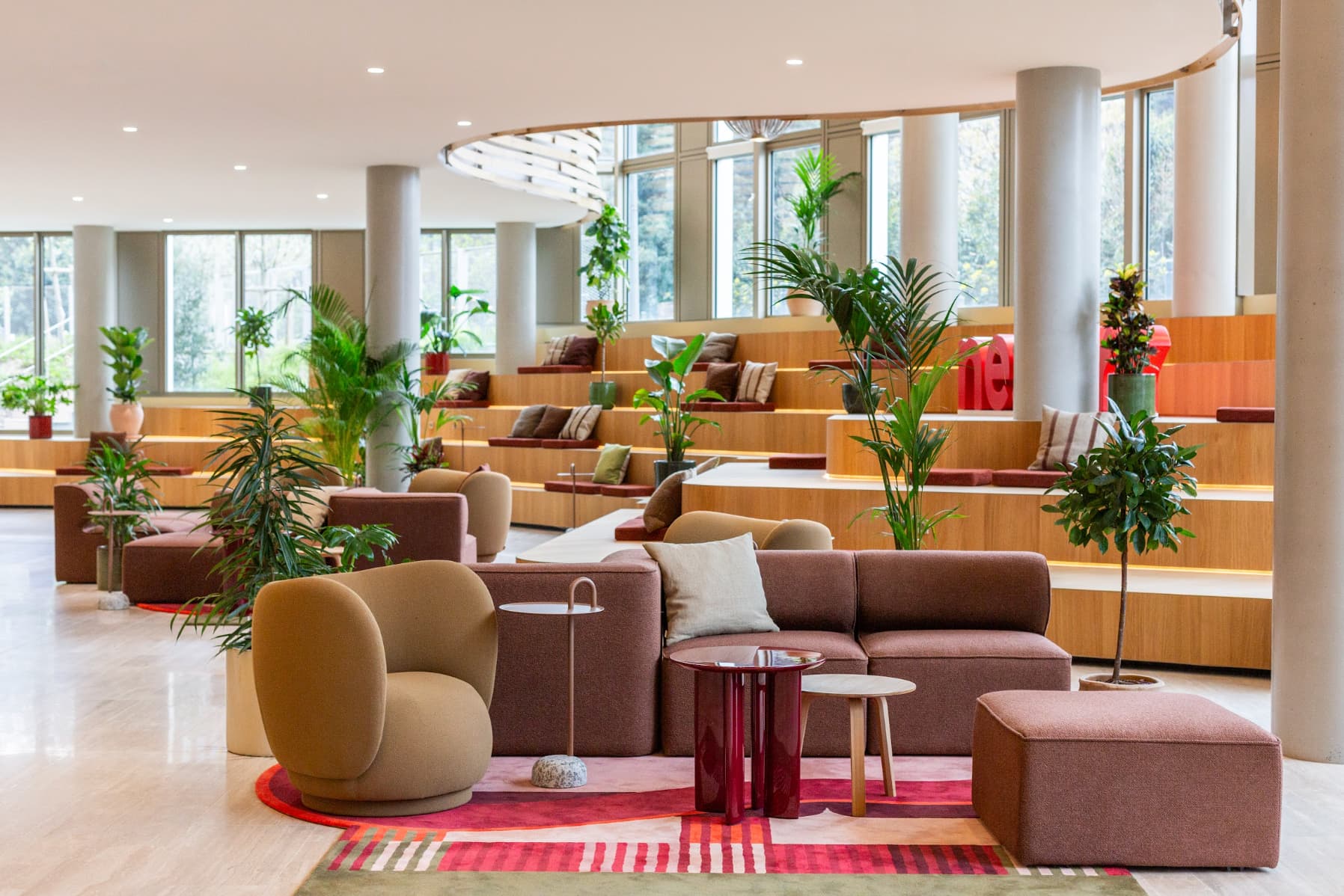


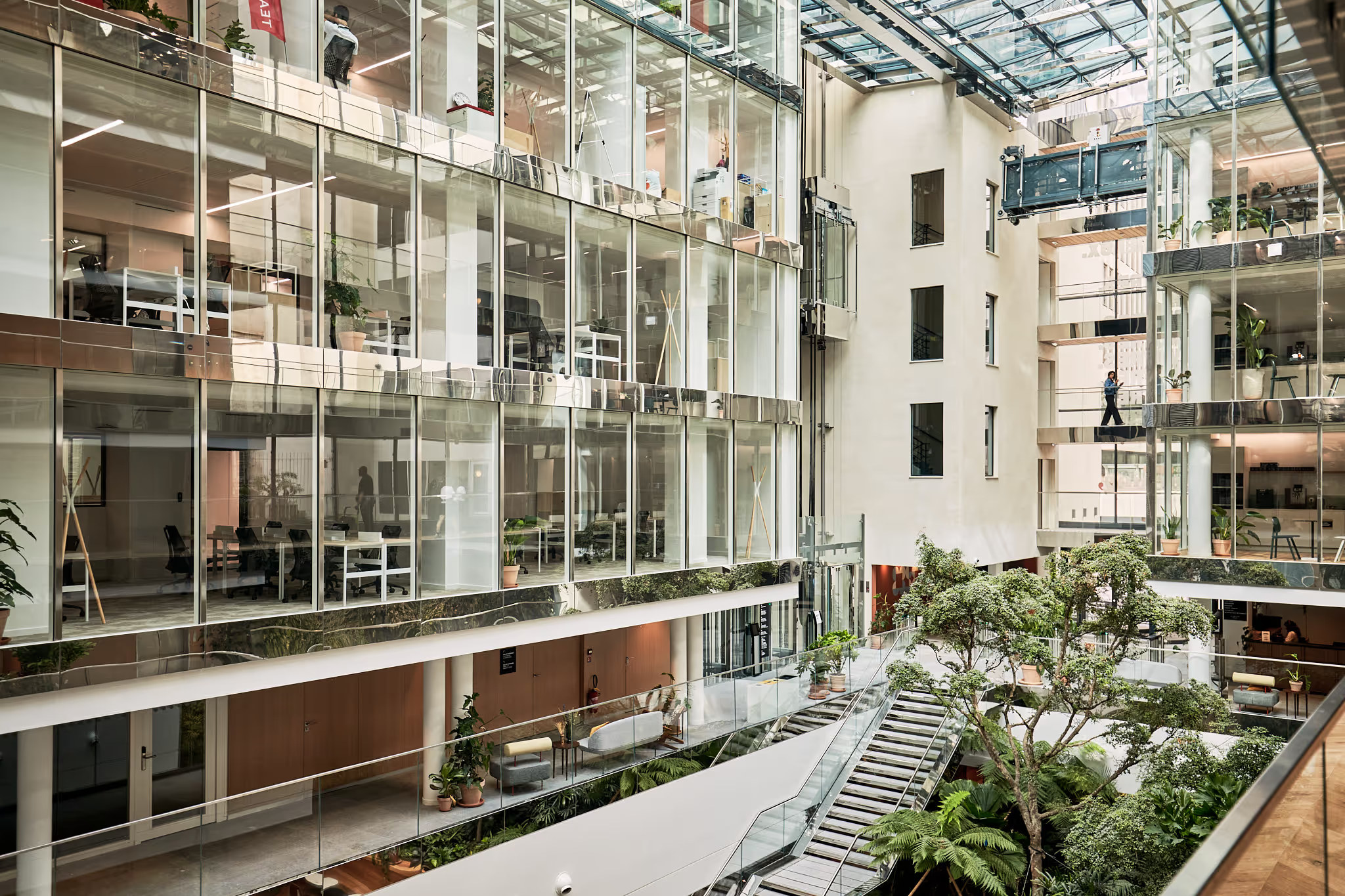
In 2024, companies face a complex equation: reducing their property costs while creating spaces that make teams want to come and work at the office. Mission impossible? Not so sure.
Because while remote work has developed on a massive scale – rising from 9% of employees in 2019 to 26% in 2023 – the return to the office is paradoxically becoming a major issue.
The reason? Social relationships are one of the main protective factors for mental health, and the office remains the prime place for these interactions. To meet this twofold challenge of optimisation and conviviality, companies are fundamentally rethinking their office design, notably with the rise of flexible layouts. But how do you pull off this transformation?
From ergonomic furniture to the "village square", by way of acoustic solutions and connected technologies, here's a quick overview of the innovations that reconcile team well-being with the optimisation of resources.
Flexibility at the office: the new codes of the workspace

Idea no.1 // The village square
To bring your teams together and connect them
The "village square" concept is establishing itself as the cornerstone of the new office layouts. But what is a true village square?
Far more than a simple sociable area, it's a social hub that reinvents office life. At the heart of these new spaces is a convivial tea point where informal conversations strike up naturally. All around, modular collaborative tables adapt to the needs of the moment, while acoustic alcoves offer bubbles of calm to withdraw into. The whole is designed to encourage spontaneous encounters while respecting everyone's need to concentrate.
This approach to office design fosters team cohesion and helps to create a genuine company culture.
Idea no.2 // Modular spaces
To adapt your spaces in real time
Adaptability becomes the watchword in 2025. Spaces now transform like a well-choreographed routine. In the morning, they welcome employees in an individual-office configuration. In the afternoon, these same spaces become dynamic meeting rooms. Come the evening, they can even turn into event zones ideal for networking.
This flexibility rests on innovative solutions perfectly integrated into the office design: mobile acoustic partitions that glide silently, furniture on castors that moves as needs dictate, digital booking systems that smooth out the use of the space.
Comfort at the office: the keys to a high-performing environment

The Nordic countries have been showing us the way for years. And the figures prove them right: according to the Actineo 2023 barometer, a majority of French employees confirm that their quality of life at work is one of their foremost concerns. Investing in well-being at work is no longer an option in contemporary office design.
Idea no.3 // Acoustic solutions
To create bubbles of concentration
Acoustics is becoming a major concern in the design of workspaces. From wall coverings to suspended panels, by way of acoustic barriers in false ceilings, solutions are multiplying to create environments conducive to concentration. In open-plan spaces, acoustic bubbles and phone boxes are establishing themselves as havens of calm, allowing you to withdraw for a call or a session of focused work.
For the most unusual spaces, such as those with high ceilings, a full acoustic study makes it possible to identify the most suitable solutions. An investment that has become strategic at a time when noise is identified as one of the main sources of stress at the office.
Idea no.4 // Ergonomic furniture
To take care of your employees
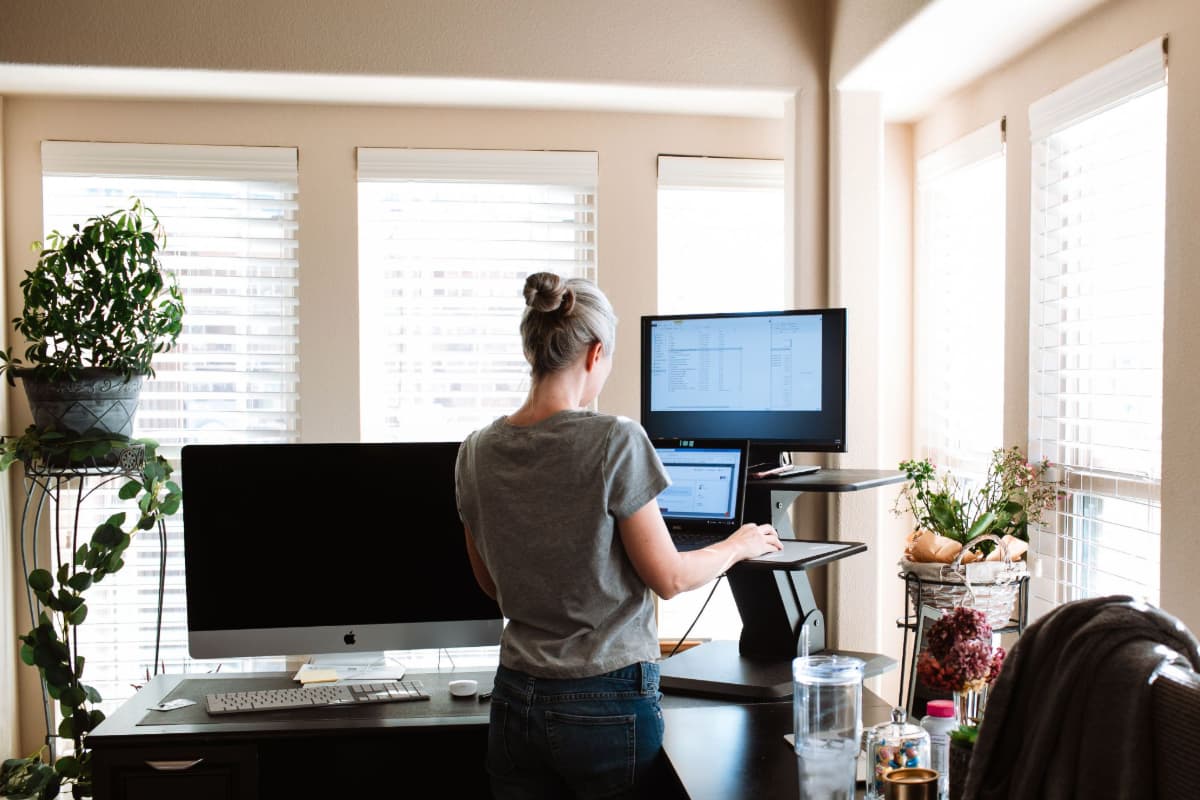
While the Nordic countries have been showing the way for years when it comes to ergonomics at the office, France is gradually catching up. Ergonomics is becoming a priority investment, with a more professional approach to furniture: gone are the purely aesthetic choices, in come certified adjustable chairs and height-adjustable desks.
Although the initial outlay is more substantial, it's a worthwhile choice that directly affects team well-being. Because after three hours of meetings, it's the truly ergonomic chairs with armrests and castors that make the difference, not the beautiful designer chairs.
Technology and sustainability: the winning alliance
Idea no.5 // Smart technologies
To optimise your resources
Artificial intelligence is revolutionising the management of workspaces and transforming office design. Occupancy sensors analyse the use of the space in real time, allowing continuous optimisation. The temperature adjusts automatically according to the number of people present, while the lighting adapts to natural light. Sophisticated sensors even monitor air quality, guaranteeing a healthy, productive environment.
These technological innovations aren't just a matter of comfort. Smart sensors make it possible to optimise the occupancy of spaces and to automatically adjust temperature, lighting and ventilation, thereby generating significant savings on energy costs while ensuring a more comfortable working environment.
It's proof that investing in well-being can also be profitable for the company.
Idea no.6 // Furniture from reuse
For your savings and your impact

The trend is clear: more than half of medium-sized companies in France are now committing to an eco-responsible approach (according to INSEE). Reconditioned furniture is establishing itself as an obvious choice, making it possible to halve office design costs while reducing the carbon footprint by 70%. Beyond the figures, it's a powerful message to employees about the company's environmental commitment.
"Made in Europe" is also establishing itself as a decisive criterion of choice. Companies now favour local suppliers and sustainable materials, aware of the environmental impact of long-distance transport. An investment that is sometimes larger at purchase, but more coherent over the long term.
Interested in this subject? We tell you more over here: "Reuse of professional furniture: there's still work to do!"
Towards a new definition of performance
The highest-performing companies have understood that the pursuit of profitability (the "office" is a company's 2nd largest source of expenditure) and the optimisation of comfort and interaction at work don't necessarily stand in opposition. The key lies in a holistic approach that harmoniously marries flexible, modular spaces, ergonomic and sustainable furniture, smart technological solutions and a coherent environmental approach.
This transformation of workspaces isn't just a question of design: it's a company-wide project that touches on culture, performance and team well-being. The offices of tomorrow won't just be places of work, but genuine catalysts for innovation and collaboration.
Are you thinking about transforming your spaces? Our experts support you in designing a bespoke project that combines cost optimisation with team well-being.
Our team is available to assist you.

Download our new study
Nouveaux bureaux : ce qu'attendent les salariés
.png)
.jpg)